REVIEW · ROME
The Genius of Caravaggio: Rome Private Tour
Book on GetYourGuide →Operated by Crazy4rome srls · Bookable on GetYourGuide
Caravaggio in Rome hits hard. In just 3 hours, you’ll move from church to church to see the paintings that launched his career and kept his name alive for centuries. I especially love the way the tour connects the art to the places that originally commissioned it, and I also like how you get practical, story-rich guidance on what you’re actually looking at. One thing to keep in mind: this is a walking-heavy route through active church interiors, so comfortable shoes matter.
I also appreciate the small-group feel. With a private guide, you’re not stuck with a noisy herd, and guides like Chiara and Maria stand out for being engaging and sharply prepared. If you’re short on time in Rome, this tour is a focused way to get a lot of Caravaggio context without turning your day into an all-day museum marathon.
The main drawback is simple: the schedule is tight, and each church visit is timed. If you want extra time to linger on details by yourself, you might wish you had a bit more breathing room between stops.
In This Review
- Quick hits before you go
- Why Caravaggio’s Rome Feels Personal
- Pricing for a Private Group Up to 4 (and when it’s worth it)
- How the 3-Hour Route Works: Via del Governo Vecchio to the Churches
- Stop 1: Santa Maria del Popolo and Two Signature Works
- Stop 2: San Luigi dei Francesi and Caravaggio’s Saint Matthew Stories
- Stop 3: Rione IV Campo Marzio and the Streets Between the Paintings
- Stop 4: Sant’Agostino (Basilica of St. Augustine) and The Madonna of Pilgrims
- What You’ll Learn About Caravaggio’s Technique (Without Getting Lost)
- Private Guide Details That Actually Make the Day Better
- Should You Book The Genius of Caravaggio Tour?
- FAQ
- How long is The Genius of Caravaggio: Rome Private Tour?
- What is the group size and price?
- Where does the tour start?
- Where does the tour end?
- Which churches will you visit?
- Do you need tickets?
- What languages are available for the guide?
Quick hits before you go
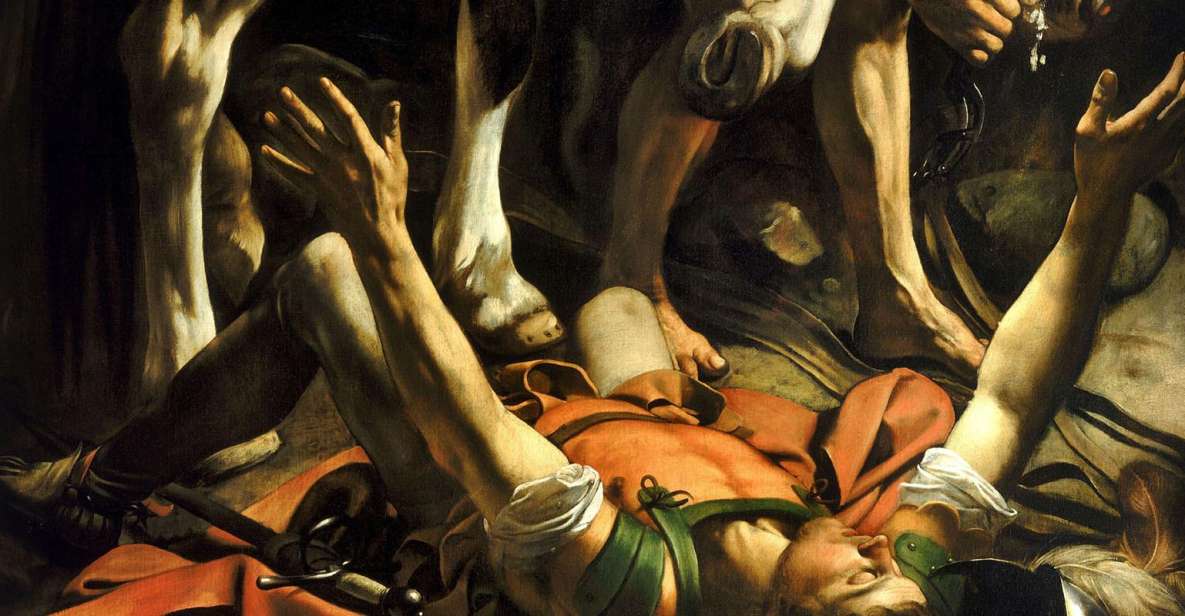
- Paintings named and placed in the exact churches that commissioned them
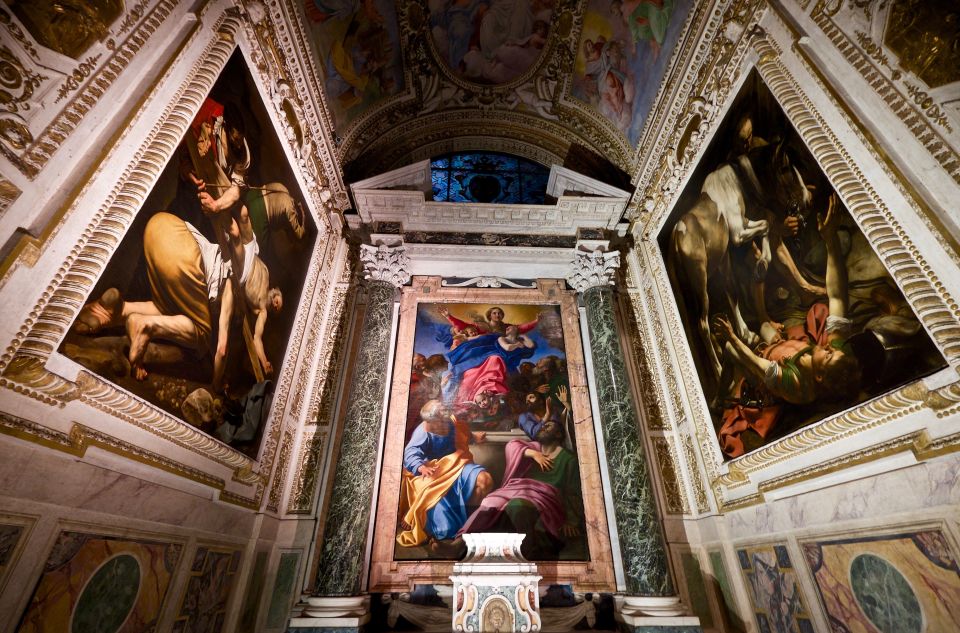
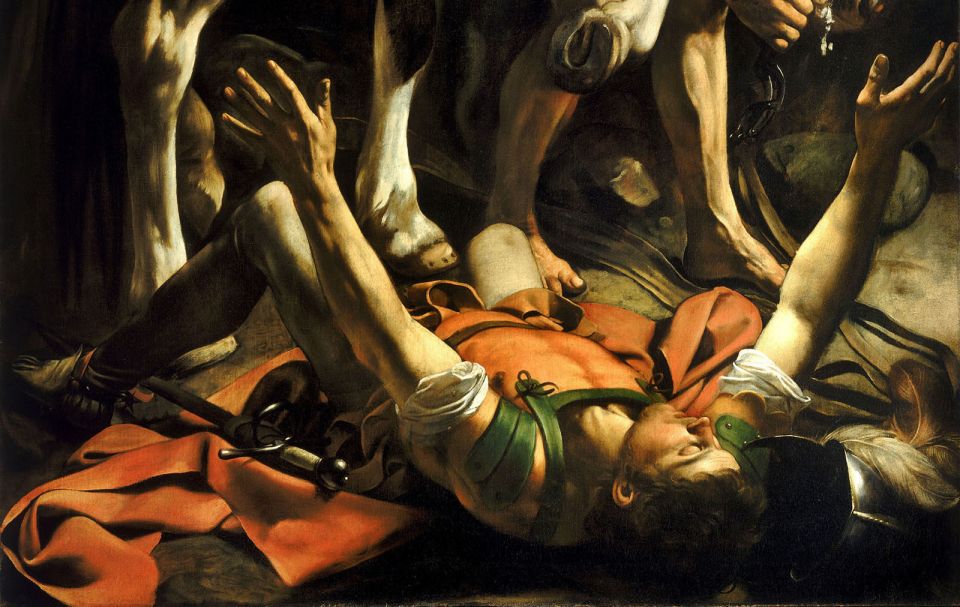
- Santa Maria del Popolo for Saint Paul’s Conversion and the Crucifixion of Saint Peter
- San Luigi dei Francesi for Caravaggio’s first Saint Matthew altarpieces
- Sant’Agostino (St. Augustine) for The Madonna of Pilgrims
- Rione IV Campo Marzio streets that frame Caravaggio’s working life
- Private guide language options including English, Spanish, French, German, Italian, Arabic, Portuguese, Russian
Why Caravaggio’s Rome Feels Personal
Caravaggio can be loud on the page, but in Rome he’s even more immediate. You’re not only looking at famous works; you’re stepping into the very church environments where they were first seen and judged. That matters, because Caravaggio’s style isn’t just about technique. It’s also about drama, timing, and how the image meets the viewer in a real space.
What I like most is the tour’s mix: you get art history, yes, but you also get the “why now” story of how Caravaggio moved through Rome at the end of the 1500s. He was born in Milan in 1571, and by the end of the 1580s he was in Rome—so these stops feel like a snapshot of his adoption into the city’s artistic world.
And you’ll feel the emphasis on looking, not just listening. You’ll stand where the paintings live, study what makes them work, and leave with a clearer idea of what “mastery” means in Caravaggio’s hands.
You can also read our reviews of more private tours in Rome
Pricing for a Private Group Up to 4 (and when it’s worth it)
This tour costs $456.21 per group, up to 4 people, for 3 hours. On the surface, that’s not “cheap.” But for a private guide in Rome, you’re not paying for a ticket—you’re paying for expert attention at the exact moments you need it.
Here’s when it’s a strong value:
- You’re traveling with up to 4 people and you want a tailored route.
- You care about understanding what you’re seeing in specific churches, not just checking off names.
- You want the guide to point out details that usually go unnoticed in busy public sightseeing.
If you’re traveling solo and you’d rather wander at your own pace, a group or self-guided approach can be cheaper. But if you want the benefit of someone who can explain composition and context while you’re standing in front of each work, this private format can make your time feel far more “earned.”
How the 3-Hour Route Works: Via del Governo Vecchio to the Churches
The tour starts at the exit of the Book Store Altroquando, Via del Governo Vecchio, 82. From there, you’ll visit several major church sites connected to Caravaggio’s commissions. The itinerary is structured in timed blocks: guided time at each church, plus a short street segment in Rione IV Campo Marzio.
The overall pace is efficient. You’ll have enough time to settle in, but not so much that you lose the thread. The tour includes private guide service plus an official expert guide, so you’re getting more than generic storytelling.
One practical note: the itinerary says the finish is back at Piazza di Spagna, while the activity summary also says it ends back at the meeting point. Since both details are listed, it’s worth confirming your exact end point when you book, so you don’t plan your next stop on the wrong plaza.
Stop 1: Santa Maria del Popolo and Two Signature Works
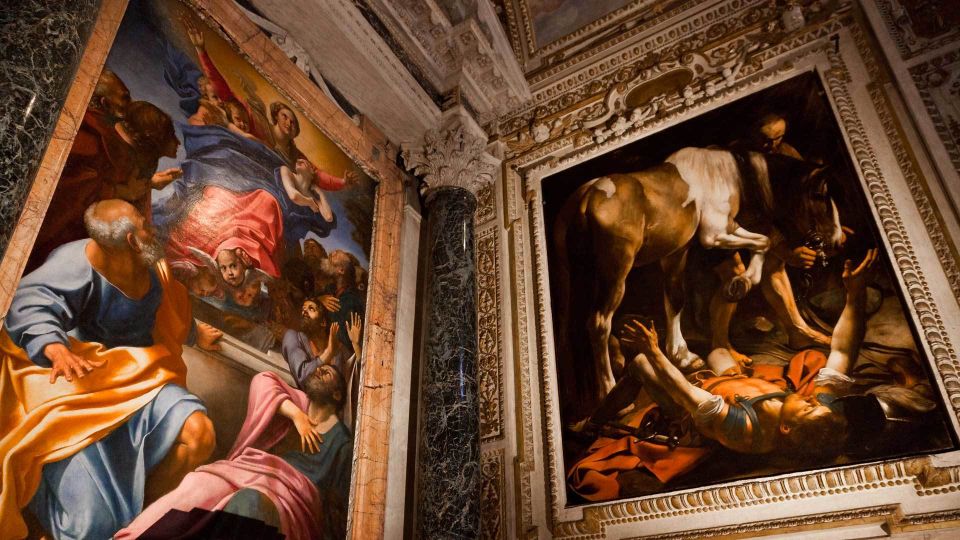
Your first major art encounter is Santa Maria del Popolo, with a guided visit lasting about 45 minutes. This is where the tour starts strong, because you’ll focus on two named Caravaggio works: Saint Paul’s Conversion and the Crucifixion of Saint Peter.
Why this stop is so good:
- You’re seeing Caravaggio paintings tied to a church setting right from the beginning.
- The guide’s job here is to help you interpret what you’re looking at, not just admire it.
I like that the tour doesn’t treat the paintings as isolated masterpieces. Instead, you’re encouraged to connect what’s depicted with how the scene would land in its original audience environment. Caravaggio’s dramatic realism and controlled staging work differently when you stand in the same church atmosphere where people first experienced it.
If you’re the type who wants to understand what makes a painting “click,” this is the kind of stop that rewards attention. You’ll leave with a clearer idea of the images’ emotional impact and the reasoning behind Caravaggio’s choices.
Potential drawback: Santa Maria del Popolo is a church you may see others entering and exiting around you. If you’re hoping for total quiet to process details, arrive with patience and expect some natural movement around sacred spaces.
Stop 2: San Luigi dei Francesi and Caravaggio’s Saint Matthew Stories
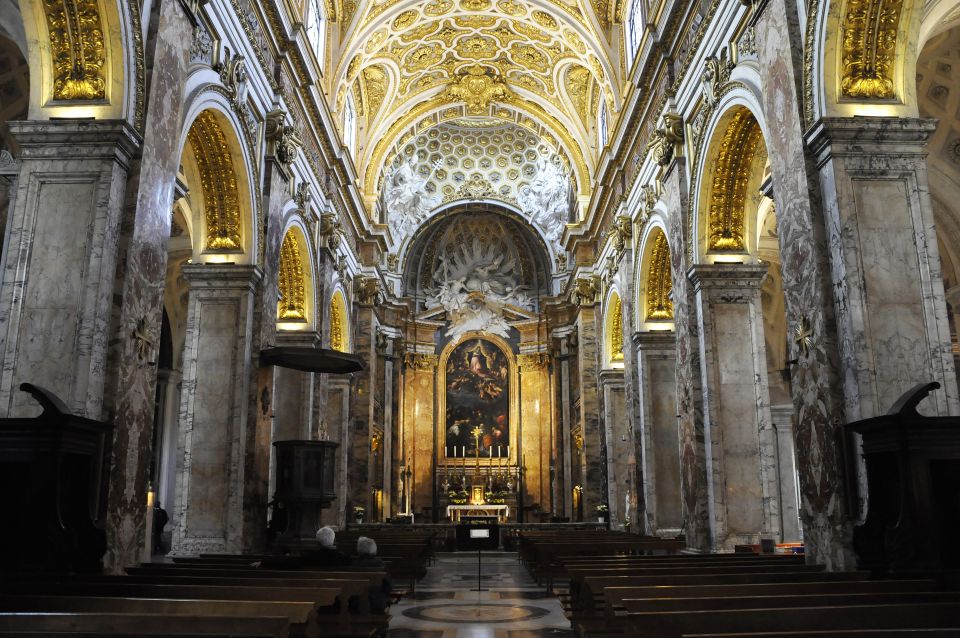
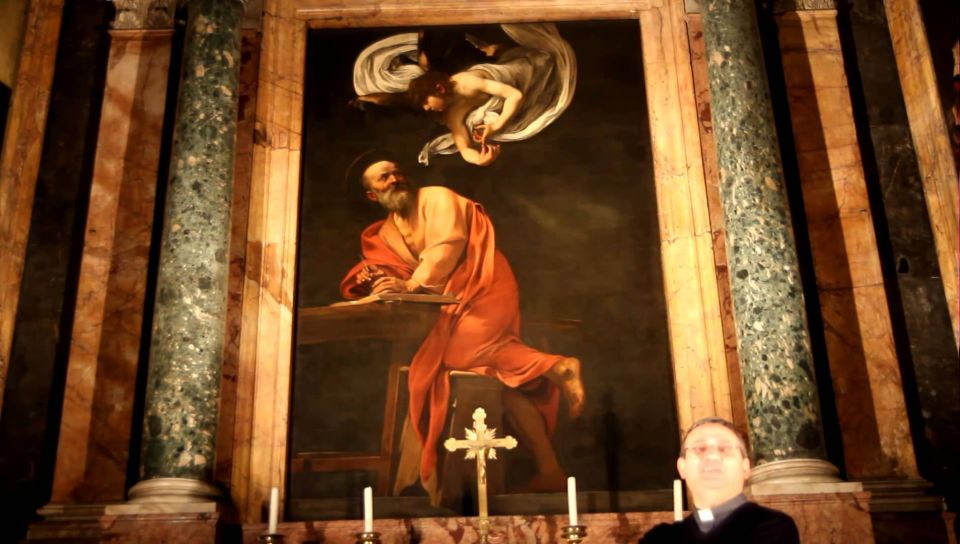
Next you’ll go to San Luigi dei Francesi, also with about 45 minutes of guided time. This is one of the most important stops on the route because you’ll see the three paintings that represent the stories of Saint Matthew.
The tour adds a key piece of context: these were the first altarpieces ever painted by Caravaggio. That detail changes how you look at the work. You’re not only admiring what he could do—you’re seeing early, defining ambition and how his approach to religious storytelling was already locking in.
This stop is especially worth your attention if:
- You want to understand Caravaggio at a turning point.
- You like knowing that a famous “style” has origins, not just end results.
The three scenes are connected, so the guide’s explanation matters. You’ll get a sense of how the individual episodes relate to each other as a complete program, rather than treating each painting like a separate poster on a wall.
What to watch for: don’t rush your eyes. Let the guide prompt you to look at the ways the figures and storytelling energy are shaped for a specific viewing experience. Those small choices are exactly where Caravaggio’s technical strength shows up.

Stop 3: Rione IV Campo Marzio and the Streets Between the Paintings
Between churches, you’ll take a shorter 30-minute guided segment in Rione IV Campo Marzio. This part can feel less flashy than the churches, but it’s there for an important reason.
Caravaggio didn’t create in a vacuum. The tour walks you through the district of Rome where Michelangelo Merisi da Caravaggio lived and worked. You’ll also hear stories and anecdotes that connect his life in Rome to the commissions you’re seeing.
Why this street segment matters:
- It helps you stop thinking of Caravaggio as a remote genius in a textbook.
- It makes the churches feel like chapters in a real timeline, not random waypoints.
If you’ve visited Rome long enough, you know that “place” is half the story. Even a short walking stretch can reframe what you see next. You’ll likely feel that shift as you move into the final church stop.
Potential drawback: because it’s shorter, you won’t get a long “city walk.” If you’re hoping for lots of street-level sightseeing outside the art focus, you may want to pair this tour with extra free time nearby.
Stop 4: Sant’Agostino (Basilica of St. Augustine) and The Madonna of Pilgrims
Your last guided church visit is the Basilica of St. Augustine, with about 45 minutes of time at Sant’Agostino. Here the tour focuses on The Madonna of Pilgrims.
This stop is a great contrast to what you saw earlier. Instead of the heavyweight narratives of conversion and martyrdom, you’re looking at a Marian subject centered on a theme of pilgrimage and devotion. The guide will help you notice the human scale of religious imagery, and how Caravaggio’s realism serves spiritual storytelling.
I like this final placement because it gives your mind a different kind of entry point after the Saint Matthew and Saint Peter/Paul scenes. By the time you reach The Madonna of Pilgrims, you’ve built context for how Caravaggio handles sacred subjects in multiple modes.
What makes it valuable for you: if you’ve ever felt overwhelmed by big names and dates, this structure helps. You end by seeing Caravaggio in another emotional register, which can make the whole experience stick.
What You’ll Learn About Caravaggio’s Technique (Without Getting Lost)
The tour’s description emphasizes stories, anecdotes, and technical skills that have kept Caravaggio famous for over 400 years. In practice, that means you’re not left with vague praise like great painting. Instead, you’re guided toward concrete observations.
Here’s what that typically looks like in a good Caravaggio-focused church route:
- You learn how dramatic lighting and human presence work together.
- You get help identifying what’s striking about the composition before you even start reading the religious meaning.
- You understand why these churches were important to his early rise.
Also, you get the life timeline anchored in Rome. He was in Rome by the end of the 1580s, and the tour uses that to frame why these commissioning sites are so central. You’re basically watching a creative career take shape in front of you.
I also appreciated the way guides can turn the experience from a checklist into a conversation. Guides like Chiara and Maria were praised for being engaging and extremely knowledgeable, and that kind of delivery matters when you’re standing in darkened church interiors where it’s easy to miss the point.
Private Guide Details That Actually Make the Day Better
This is a private group tour, which means you’re not competing for attention. Your guide can slow down if you’re asking questions, and they can redirect you if you’re missing what matters in a painting.
Language support is strong too. The live guide can be Spanish, English, French, German, Italian, Arabic, Portuguese, Russian. If you’re traveling with mixed language needs, this flexibility can be a real win.
Wheelchair accessibility is listed, and hotel drop-off by taxi is available on request at your expense. That matters if you want the day to feel smoother rather than forcing logistics on top of art.
One charming detail from the experience: a guide (Chiara) was also known for recommending a good gelato spot. That’s not just a cute bonus. It’s a reminder that a great guide helps you enjoy the whole day, not only the church stops.
Should You Book The Genius of Caravaggio Tour?
If your Rome time is limited and you want to focus on the part of Caravaggio’s story that’s tied to the city’s actual commissioning churches, I think this tour is a smart booking. You’ll see specific paintings in Santa Maria del Popolo, Sant’Agostino, and San Luigi dei Francesi, and you’ll get the kind of context that helps you look better once you’re in front of the art.
Book it if:
- You want a private, expert-guided route focused on Caravaggio.
- You like understanding technique and context, not just collecting highlights.
- You’re traveling with up to 4 people and can share the group cost.
Skip or reconsider if:
- You want lots of unstructured free time to wander far from scheduled stops.
- You prefer to absorb art slowly on your own without fixed guided pacing.
For the right traveler, this feels like one of those Rome experiences where the guide turns “famous paintings” into meaningful scenes. And once you’ve seen Caravaggio in the churches built around those images, it’s hard to see him any other way.
FAQ
How long is The Genius of Caravaggio: Rome Private Tour?
The tour is listed as 3 hours.
What is the group size and price?
It’s priced at $456.21 per group up to 4 people.
Where does the tour start?
The start point is at the exit of the Book Store Altroquando, Via del Governo Vecchio, 82.
Where does the tour end?
The meeting info says it ends back at the meeting point, while the itinerary says it finishes at Piazza di Spagna. Confirm the exact end location when you book.
Which churches will you visit?
You’ll visit Santa Maria del Popolo, San Luigi dei Francesi, Rione IV Campo Marzio (street segment), and the Basilica of St. Augustine (Sant’Agostino).
Do you need tickets?
Tickets aren’t required, and the tour includes skip-the-ticket-line wording even though ticket requirements aren’t part of what you handle.
What languages are available for the guide?
The guide is available in Spanish, English, French, German, Italian, Arabic, Portuguese, Russian.