REVIEW · ROME
Vespa Sidecar Tour: Highlights of Rome
Book on GetYourGuide →Operated by Luxurbe · Bookable on GetYourGuide
Rome feels different on two wheels. This 3-hour Vespa sidecar loop turns the big sights into a smooth ride through Rome’s streets, with photo stops, earphones, and a guide who gives you the story behind what you’re seeing.
I especially like the small-group limit (up to 10). It keeps the pace friendly on busy streets, and it makes it easier to ask questions as you roll past the Colosseum area, the Vatican, and the viewpoints like Gianicolo.
One thing to consider: the route can shift with traffic, weather, and special events, and if you choose hotel pickup there can be a wait of up to 20 minutes due to Rome’s road chaos.
In This Review
- Key things to know before you ride
- Why a Vespa sidecar tour is such a smart way to see Rome
- Meeting at Largo Goldoni and getting set up fast
- The ride plan: Popolo to Trevi to the Pantheon zone
- Piazza Navona and Piazza Venezia: where stories connect the dots
- St. Peter’s Square and Vatican City: grand scale, short stop
- Gianicolo Hill (Janiculum Hill): the view stop you’ll talk about
- Jewish Ghetto and Trastevere: atmosphere beyond the headlines
- The Colosseum finish: how to end the ride well
- Price and what you really get for $113.27 per person
- Safety, comfort, and the small-group advantage
- Who should book this Vespa sidecar tour
- A quick note on flexibility and route changes
- Should you book this Vespa sidecar tour of Rome?
- FAQ
- How long is the Vespa sidecar tour of Rome?
- Where do we meet for the tour?
- What landmarks are included?
- Is the group size small?
- What’s included for safety and hearing?
- Is passenger insurance included?
- Are food and drinks included?
- Is hotel pickup available?
- What languages are the live guides?
- Is the tour suitable for children or seniors?
- Can I cancel or pay later?
Key things to know before you ride
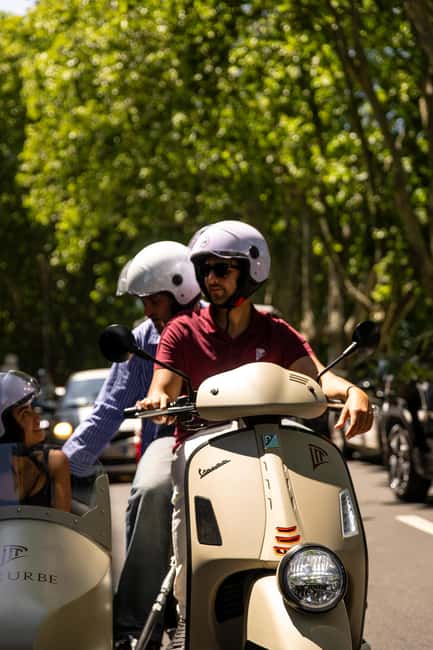
- Largo Carlo Goldoni is your anchor point, with a Vespa-sidecar meet-up that makes it easy to find once you’re there
- Earphones included help you catch the guide’s stories even while you’re moving through intersections and piazzas
- Icon stops in a tight 3 hours: Trevi Fountain, Piazza Navona, St. Peter’s Square, and the Colosseum area
- A real panoramic payoff from Janiculum Hill (Gianicolo), when timing lines up
- Helmets and passenger insurance are part of the package, not an extra add-on
- A guide can adapt the ride to your needs and interests, depending on the group
Why a Vespa sidecar tour is such a smart way to see Rome
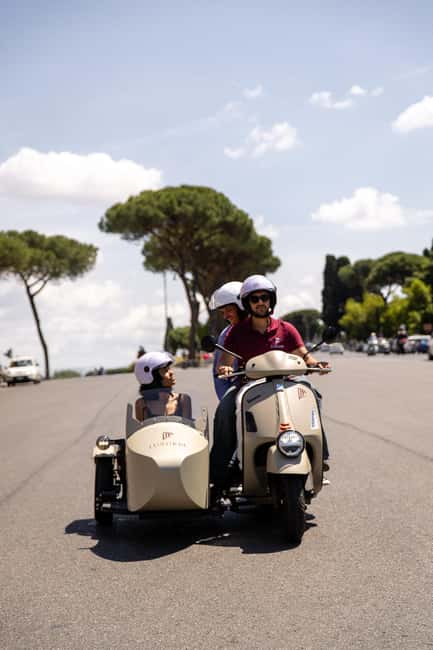
Rome can be a lot at street level. You’ll hit crowds, long walking distances, and that moment where you realize the map is not the same as real life. A Vespa sidecar fixes that in a practical way: you move from zone to zone without losing the day to transit.
What I like is how the ride blends two modes at once. You get classic landmarks like the Trevi Fountain and the Pantheon-adjacent area, but you also get street-level Rome: quick glides through historic alleys, then sudden drops into wide piazzas where the views open up. It feels intimate because you’re not herded into a massive tour bus rhythm.
And because the guide is right there with you (plus earphones to hear clearly), the time feels “used.” Instead of staring at a monument for a minute and moving on, you get context that makes the next turn make sense.
You can also read our reviews of more tours and experiences in Rome

Meeting at Largo Goldoni and getting set up fast
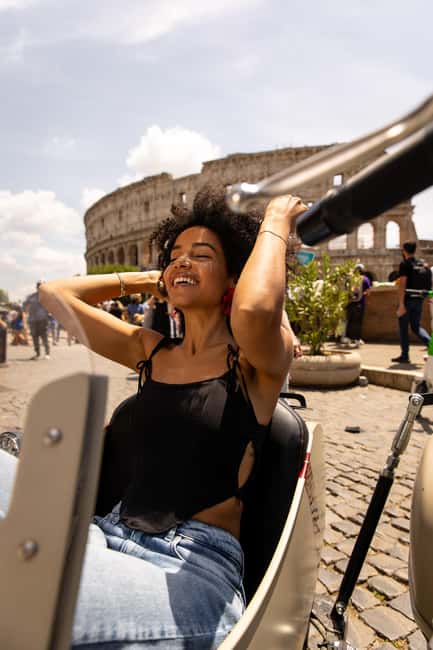
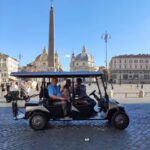
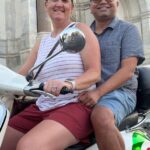
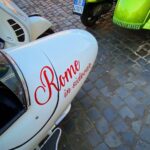
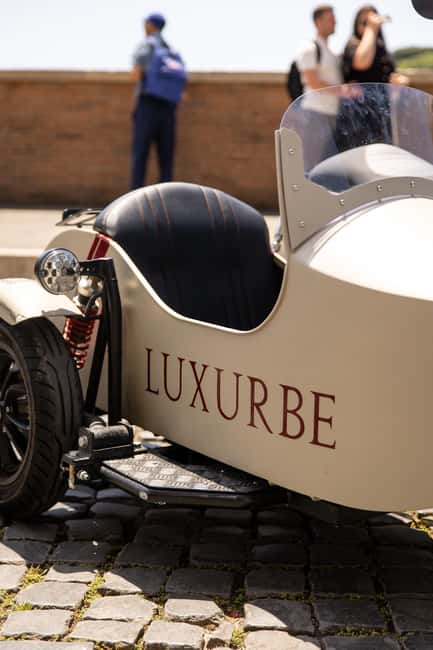
Your ride starts at Largo Carlo Goldoni. That’s where you meet the driver and the signature LUXURBE Vespa-sidecar.
The tour includes certified helmets for passenger safety, plus earphones so you can hear the driver/guide without craning your neck. That matters more than it sounds. On a ride like this, one missed sentence can make a stop feel random instead of meaningful.
If you pick the option with hotel pickup, the driver waits outside your hotel. Since traffic is part of Rome’s personality, there may be a waiting time of up to 20 minutes. Plan a little buffer on your schedule, and you’ll feel calmer about it.
Quick practical move: show up a few minutes early and look specifically for the Vespa-sidecar setup at Largo Carlo Goldoni. In the real world, meeting points can get confusing, especially when you’re juggling street corners and timing. Early arrival cuts that stress.
The ride plan: Popolo to Trevi to the Pantheon zone

After you meet up, the tour heads to Piazza del Popolo. You’ll pass through (about 10 minutes), which is perfect for a quick “get your bearings fast” moment. This is one of Rome’s big visual entrances, with a dramatic obelisk and twin churches. Even if you’ve seen photos, it hits differently in person when you’re actually there, framed by the width of the piazza.
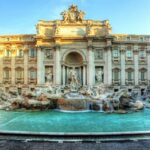
From there, you reach Trevi Fountain for a short guided visit (about 10 minutes). This is where you’ll get the classic ritual: you’ll have time to toss a coin and make a wish. It’s the kind of detail people remember later because it’s small, personal, and tied directly to the place.
Next comes the Pantheon area. You’ll pass by it (around 15 minutes), so you’re not doing a long deep walk. What you should do during a pass-by stop is look up and take the immediate in-the-moment payoff: the scale and the geometry. A ride-by stop can feel too quick if you expect a museum-length experience, but it works if your goal is to cover multiple icons without burning your whole day.
Piazza Navona and Piazza Venezia: where stories connect the dots
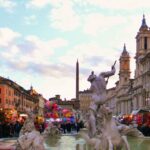
Piazza Navona is one of those stops that feels like Rome’s living room. You’ll spend about 15 minutes there with guided time. The big draw is Bernini’s Fountain of the Four Rivers, plus the lively atmosphere of the square itself.
This is the kind of place where a guide adds value fast. The fountain is visually striking, but the story behind it helps you understand why it sits where it does and why it became such a symbol. Even a short visit can feel satisfying when you’re not just looking, you’re learning what to look for.
Then the tour moves to Piazza Venezia for about 10 minutes of guided time. Here you’ll see the imposing Altar of the Fatherland (Altare della Patria). From a moving vehicle, it can be easy to miss the finer details. Guided explanation makes it easier to “read” the monument instead of treating it as a big government-sized backdrop photo.
St. Peter’s Square and Vatican City: grand scale, short stop
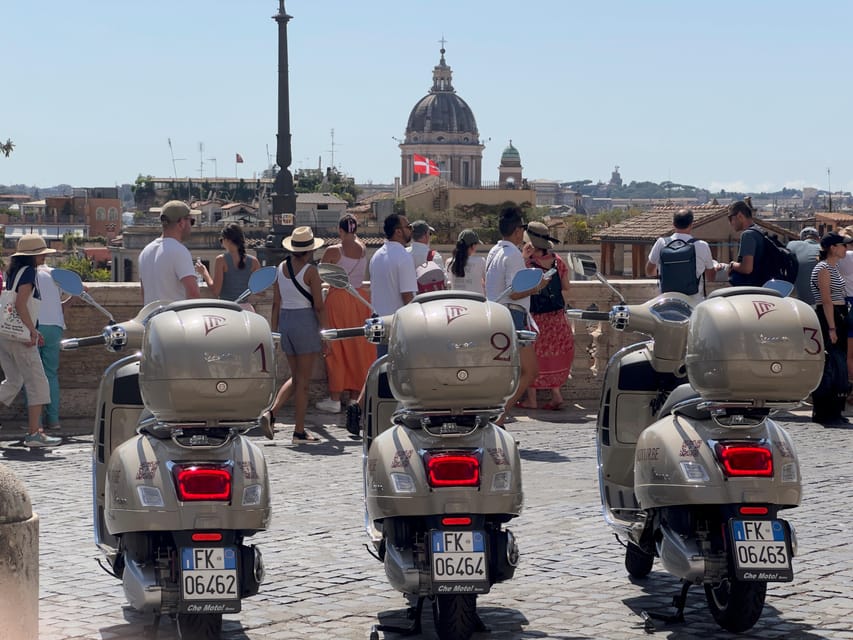
You’ll reach Vatican City via St. Peter’s Square, with about 15 minutes for a guided look. This stop is all about scale. The piazza is huge, and the basilica looks even more monumental when you’re standing in the space rather than viewing it from afar.
One benefit of doing this by sidecar is that it doesn’t feel like a separate full-day mission. It’s still a serious stop, but it fits into your same 3-hour circle. If you only have one day and you want your major must-sees checked, this tour’s structure helps.
You can also read our reviews of more tours and experiences in Rome
Gianicolo Hill (Janiculum Hill): the view stop you’ll talk about
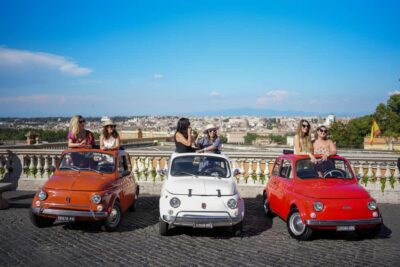
Then comes Gianicolo Hill, one of Rome’s best panoramic terraces. Your time here is about 10 minutes with guided narration.
This is one of the stops where timing can add an extra layer. In a standout bit of feedback, I learned that the cannon at 12:00 is a memorable moment when your visit lines up with it. Even if you’re not counting on that exact moment, the viewpoint itself is the kind of thing that makes the whole ride feel worth it.
If you’re the type who likes a “breather” in the middle of sightseeing, this is it: you get a quick pause, a strong view, and a story that makes the area feel real rather than just postcard material.
Jewish Ghetto and Trastevere: atmosphere beyond the headlines
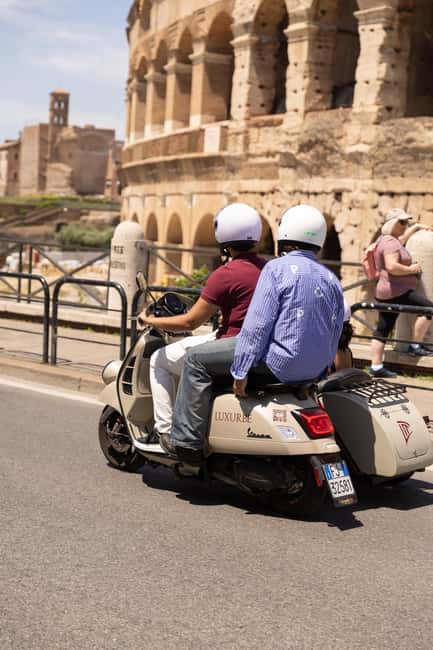
After the central classics, the tour moves through areas that feel more like lived-in Rome. You’ll have guided time in the Jewish Ghetto (about 15 minutes) and then guided time in Trastevere (about 10 minutes).
These are not just names on a list. In a short slot, the guide can point out details that help you understand why the streets feel different. The Jewish Ghetto stop is a chance to recognize the historic presence and cultural weight in the neighborhood. Trastevere tends to give you that “I can see myself eating here later” feeling, because it’s all narrow streets and neighborhood energy.
A practical way to get value here: as you pass or pause, pick one thing the guide points out and stick to it mentally. When the tour is moving fast, your brain needs a focal point to keep the experience from becoming a blur.
The Colosseum finish: how to end the ride well
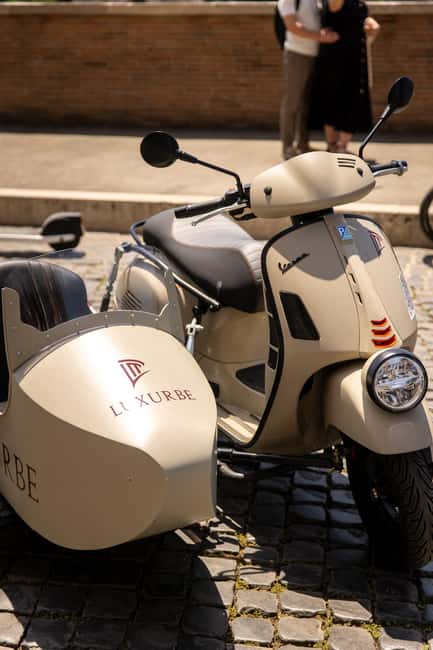
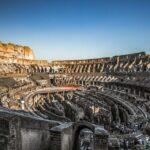
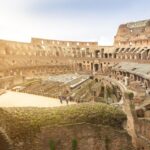
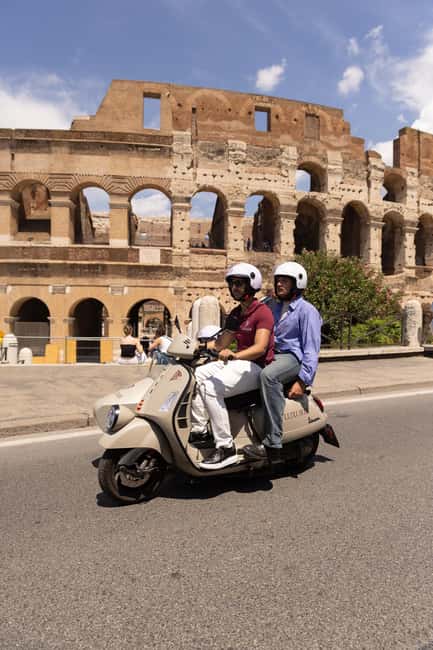
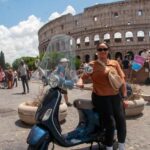
Your tour ends back at the meeting point in Largo Goldoni, but the ride’s big dramatic finale is the Colosseum area. You’ll have guided time there for about 15 minutes.
The Colosseum is the obvious draw, of course. It’s also one of the best places to understand how Rome’s old world still shapes what you see today. A short guide-led stop works because it hits the main story beats without asking you to commit to a long ticket line or an all-day plan.
If you want the best follow-up, don’t plan to sprint away immediately. Even 10 extra minutes wandering the edges of the area can help the stop “stick.” A sidecar tour can set you up, and then you decide what to explore next under your own steam.
Price and what you really get for $113.27 per person
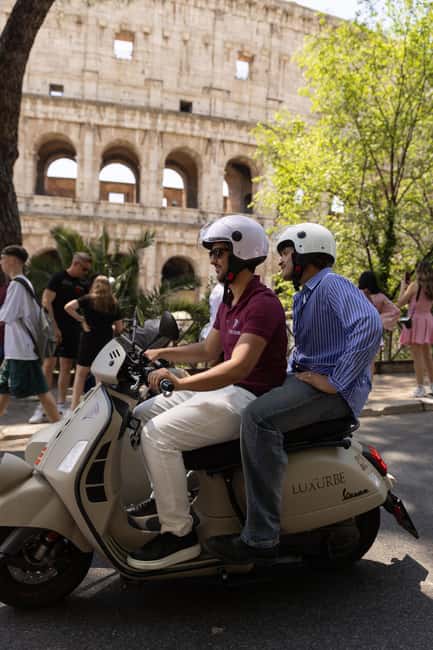
At $113.27 per person for 3 hours, this isn’t a low-cost bus tour. It’s a value play for a specific reason: you’re paying for a Vespa sidecar ride plus a guide-led route that hits a cluster of top sights with included gear and safety.
Here’s what’s included that you’d otherwise pay for or plan around:
- Vespa sidecar tour with an expert driver
- Local guide sharing stories and curiosities
- Earphones so you can hear clearly while moving
- Certified helmets
- Passenger insurance included
- Photo stops at major landmarks
What you should budget for on your own: food and beverages are not included, and you’ll handle any extra time you want at attractions separately.
If you’re visiting on limited time, this can be a smart use of money. You’re effectively buying a time-saving structure plus interpretation. If your style is “I like wandering with no plan,” you might feel constrained. If your style is “I want highlights with context,” this pricing makes more sense.
Safety, comfort, and the small-group advantage
The tour limits you to a small group, up to 10 participants. That usually means better flow through tight streets and less waiting than bigger operations.
Comfort comes from two main places: helmets and the sidecar setup itself, plus the fact that you’re not doing constant long walking stretches. You still need to be ready for city riding conditions, like noise, road movement, and the short stops at crossings and piazzas.
Also, because you get earphones, you’re not relying on shouting over traffic. That can turn a chaotic day into something you can actually enjoy.
Who should book this Vespa sidecar tour
This works especially well if:
- You want to see major Rome icons without spending your day only on transit
- You like guided context but don’t want a museum-only pace
- You value a small group and a more personal feel
- You’re starting your trip and want a fast way to get oriented
It may not be the best fit if:
- You strongly prefer full, self-directed time at each monument
- You need a slower pace with lots of long indoor stops
- You’re traveling with very young children (not suitable for children under 2)
- You’re in the over-95 age range (not suitable for people over 95)
A quick note on flexibility and route changes
Your exact timing can shift due to traffic, weather, or special events. This is normal in Rome, and it’s also why this kind of tour is helpful: the guide and driver can reroute so you still get the “you must see this” moments.
If you’re trying to match the tour with other plans later, leave some breathing room in your schedule so you don’t feel rushed.
Should you book this Vespa sidecar tour of Rome?
If your goal is a smart highlights loop with stories, this is an excellent first-day or time-crunch option. The combination of major landmarks (Trevi, Pantheon area, Piazza Navona, St. Peter’s Square, Colosseum) plus neighborhood stops (Jewish Ghetto and Trastevere) gives you a more balanced Rome picture than a straight checklist.
I’d book it if you like the idea of moving through the city with less friction, hearing what matters at each stop, and getting photos at the right moments. I would hesitate only if you want long stays at fewer places rather than a brisk, guided circuit.
If you’re the type who appreciates a guide who can adapt, you’ll probably feel the difference. One guide named Matteo has been noted for making the ride feel above expectations, with clear explanations plus extra, unscripted moments.
FAQ
How long is the Vespa sidecar tour of Rome?
It lasts about 3 hours.
Where do we meet for the tour?
Meet the driver in Largo Goldoni. The tour ends back at the meeting point.
What landmarks are included?
You’ll pass or stop at major sights including Piazza del Popolo, Trevi Fountain, the Pantheon area, Piazza Navona, Piazza Venezia, Jewish Ghetto, Janiculum Hill, Vatican City (St. Peter’s Square and the Basilica area), Trastevere, and the Colosseum.
Is the group size small?
Yes. The tour is limited to 10 participants.
What’s included for safety and hearing?
Certified helmets are included, and earphones are provided so you can hear the driver/guide during the tour.
Is passenger insurance included?
Yes, passenger insurance is included.
Are food and drinks included?
No. Food and beverages are not included.
Is hotel pickup available?
Hotel pickup is optional for an additional charge. If you choose it, the driver will wait outside your hotel, and you may have to wait up to 20 minutes due to Rome traffic.
What languages are the live guides?
The live guide is available in Italian, English, and Spanish.
Is the tour suitable for children or seniors?
It’s not suitable for children under 2 years old, and it’s not suitable for people over 95 years old.
Can I cancel or pay later?
Free cancellation is available up to 24 hours in advance for a full refund, and you can reserve and pay later.