REVIEW · ROME
Dark Heart of Rome: Facts, Legends, and Mystery Tour
Book on GetYourGuide →Operated by City Wonders Ltd. · Bookable on GetYourGuide
Rome looks different after dark. In a single 90-minute walk, you’ll trade postcard Rome for ghost stories with real street history and see the city glowing at night. I especially love how the tour blends Campo de’ Fiori’s grim past with eerie supernatural tales, then links it to places you’d normally skip on daytime sightseeing.
Two things you’ll likely enjoy: the route is built around evening illuminations (so the streets feel dramatic without being miserable), and the guide-led storytelling keeps you moving through quieter corners like Via Giulia. One consideration: because it’s a short night walk, the pace may feel quick if you want to linger for long photos or extended discussion.
In This Review
- What makes this Dark Heart of Rome tour worth your time
- Night-Walk Rome: what the stories feel like when the lights come on
- Where you meet and how to spot your guide without stress
- Campo de’ Fiori after dark: the square that still carries a warning
- Corso Vittorio Emanuele II and Piazza Farnese: turning off the daytime filter
- Via Giulia: Renaissance city planning you can walk through
- Via del Governo Vecchio: a photo stop that earns its place
- Castel Sant’Angelo at night: Hadrian’s Mausoleum turned into a symbol
- What 1.5 hours and $14 really buy you
- The guide factor: why the storytelling style matters here
- Who this tour suits best (and who should skip it)
- Small practical tips so you enjoy it from start to finish
- Should you book Dark Heart of Rome tonight?
What makes this Dark Heart of Rome tour worth your time
- Campo de’ Fiori at night: you’ll hear what happened here when public executions were part of Roman life
- Piazza Farnese’s granite fountain basins: a distinctive square you’ll actually understand better after the story
- Via Giulia’s Renaissance planning: see one of the earliest big urban planning projects of Renaissance Rome
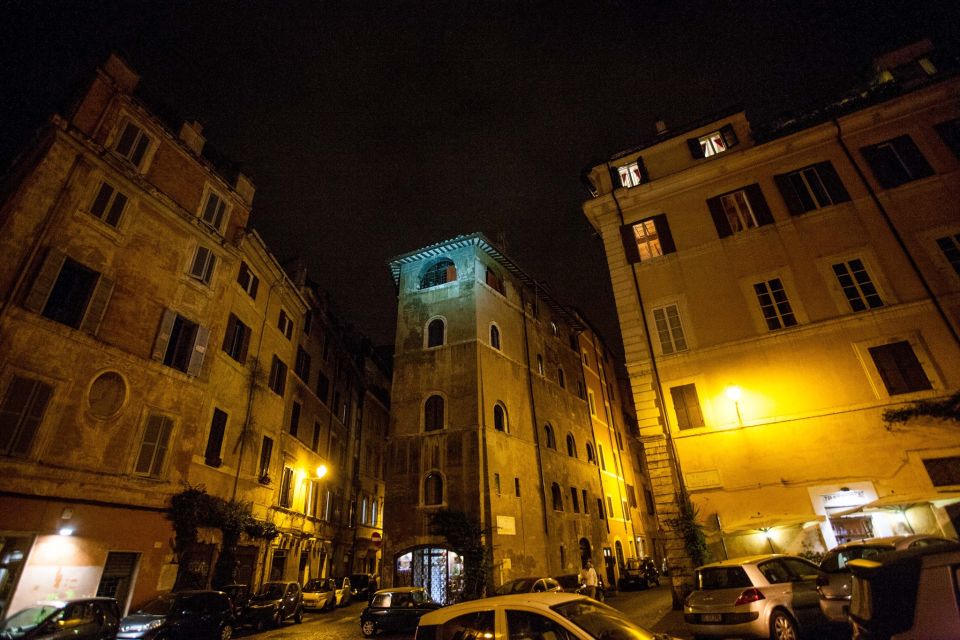
- Via del Governo Vecchio photo stop: a twisty lane moment that adds texture to the walk
- Castel Sant’Angelo (Hadrian’s Mausoleum): a major landmark tied to death, power, and transformation
- A true night-story vibe: the tour leans into legends and facts together, not just dates on a slide
Night-Walk Rome: what the stories feel like when the lights come on
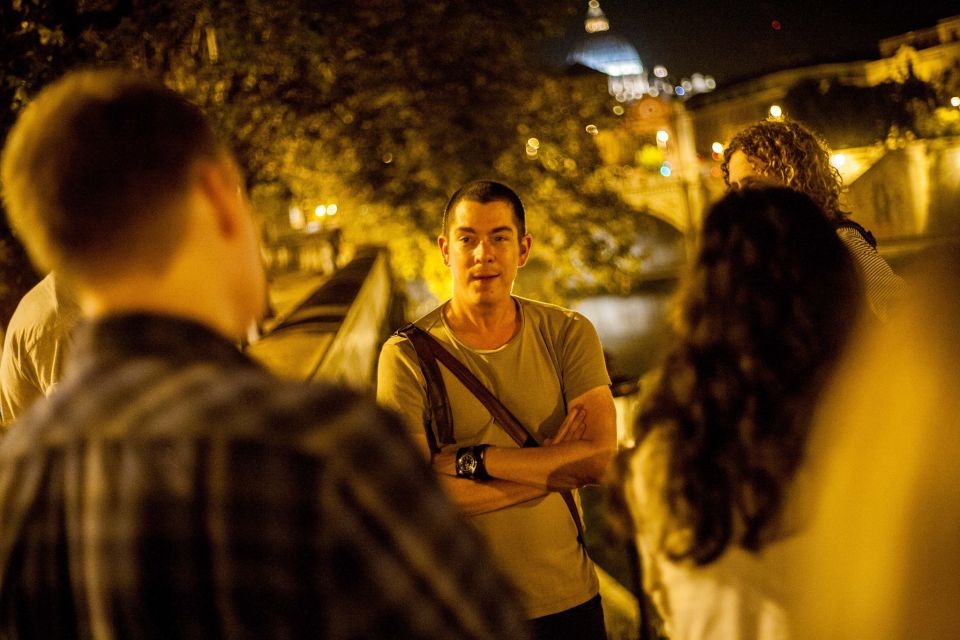
Rome at night doesn’t just look pretty. It changes how you read the city. Street corners that feel ordinary at noon take on a different tone after dark, especially when your guide is talking about mystery, fear, and consequences.
This tour’s magic is that it doesn’t rely on big-ticket, indoor museum time. You walk through the historic center while Rome is lit up, and you hear the darker side of what happened there: power, punishment, and the kind of rumors people kept alive because truth wasn’t enough.
You can also read our reviews of more tours and experiences in Rome.

Where you meet and how to spot your guide without stress
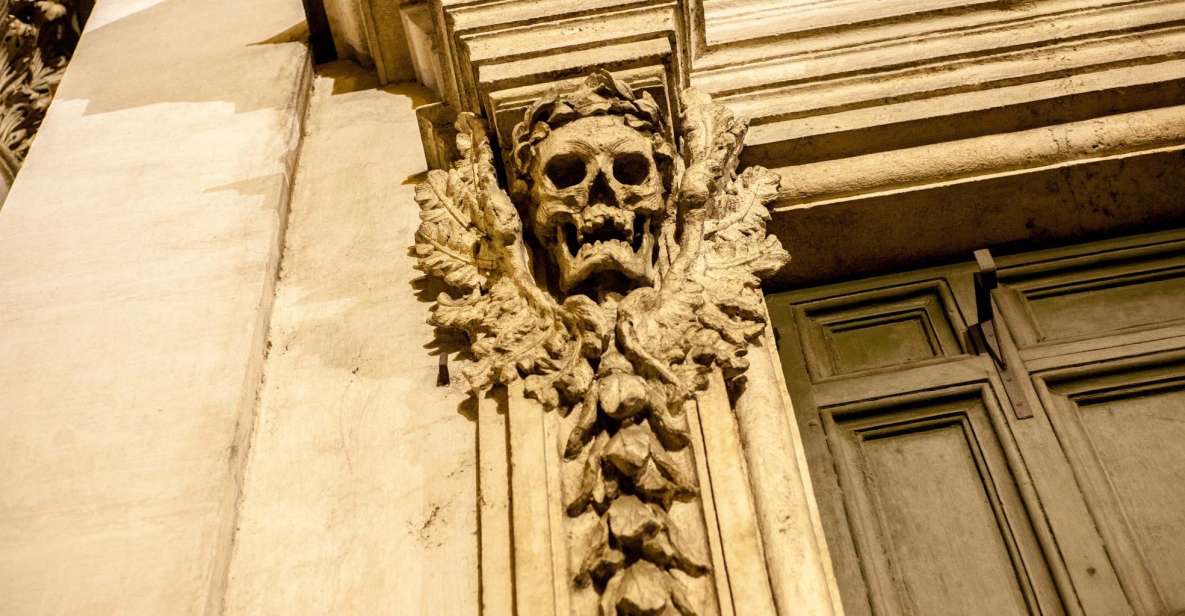
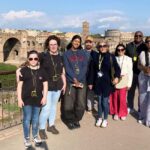
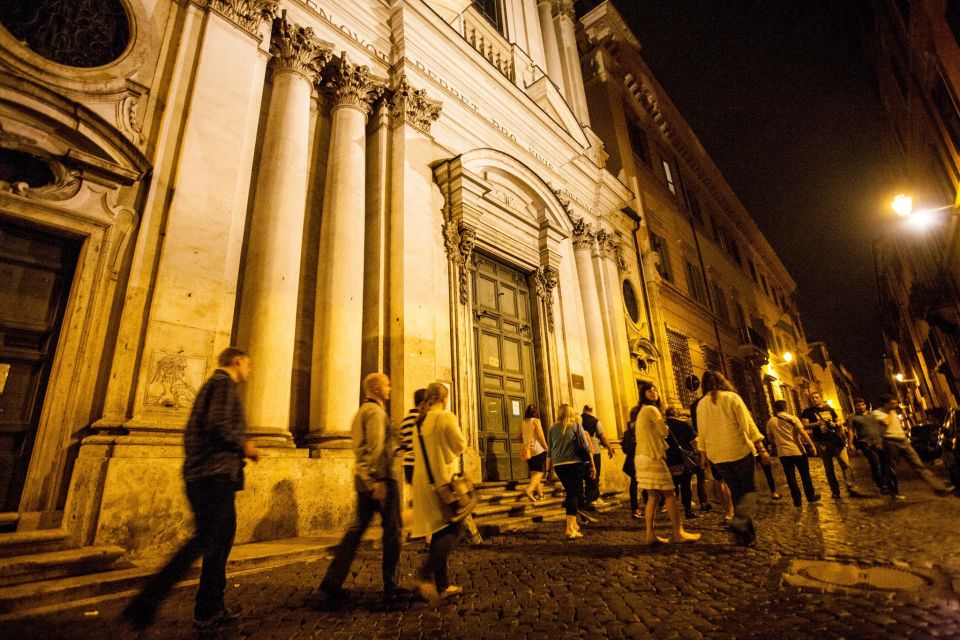
Meet on the steps of San Andrea della Valle Church, on Corso Vittorio Emanuele II. It’s about 150 meters from Largo di Torre Argentina, on the left-hand side if you’re heading toward the Tiber River. The guide wears blue attire, so it’s usually easier to find them than you’d expect.
If you arrive a few minutes early, you’ll have time to settle in, get oriented, and put on comfortable walking shoes. This walk is very “historical center” in practice: narrow lanes, stone paving, and plenty of time on your feet.
Campo de’ Fiori after dark: the square that still carries a warning
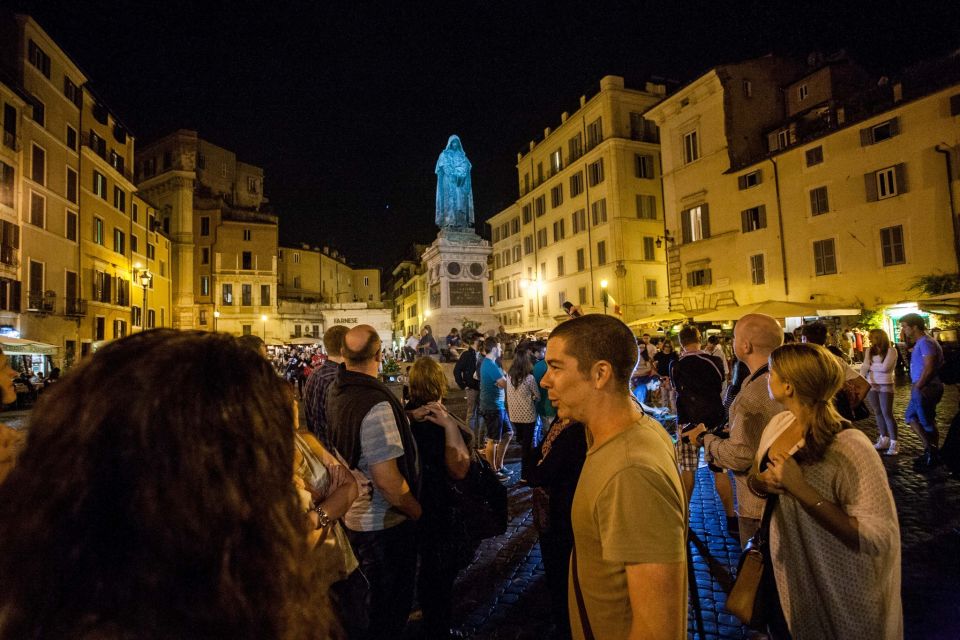
Campo de’ Fiori is one of Rome’s most famous squares in daylight. At night, it becomes something else. This is where you start connecting the legend side of Rome to something harsher—because public executions used to take place here.
That matters for your experience. When a guide ties the stories to a real location like this, it stops being spooky for spookiness’ sake. You start thinking in terms of how cities enforce order, how crowds watch, and how fear turns into folklore later.
Corso Vittorio Emanuele II and Piazza Farnese: turning off the daytime filter
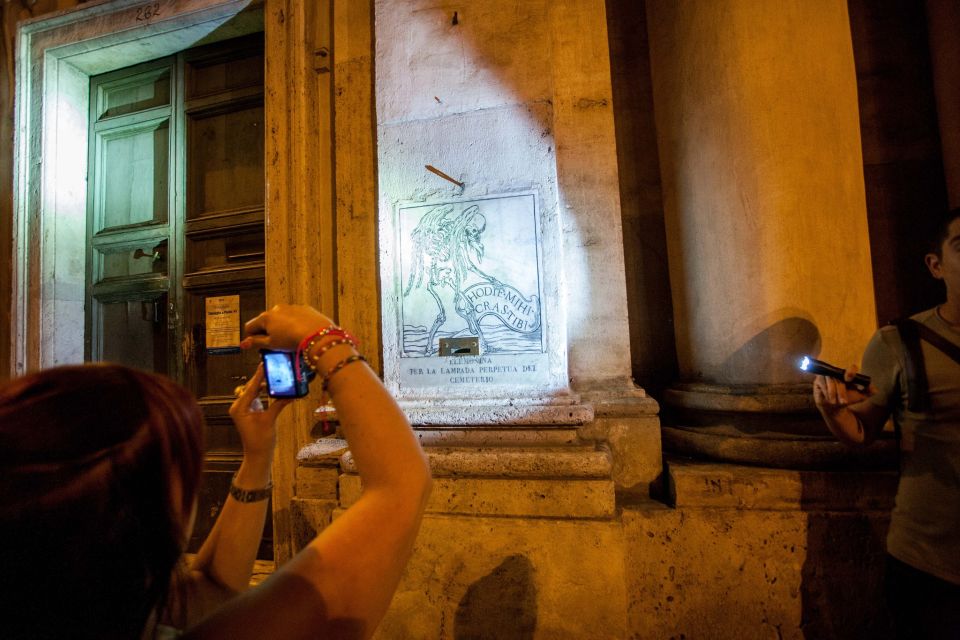
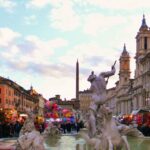
From there, the walk moves along Corso Vittorio Emanuele II and into Piazza Farnese. Piazza Farnese is dominated by fountains made from granite stone basins, and it’s the kind of place where the architecture looks calm—until someone explains the tensions, ambitions, and rivalries that shaped the area.
I like these pauses because they reset your focus. You’re not just chasing the next scary story. You’re learning how Rome’s grand squares and formal spaces still contain complicated human behavior—just dressed up in stone and ceremony.
Via Giulia: Renaissance city planning you can walk through
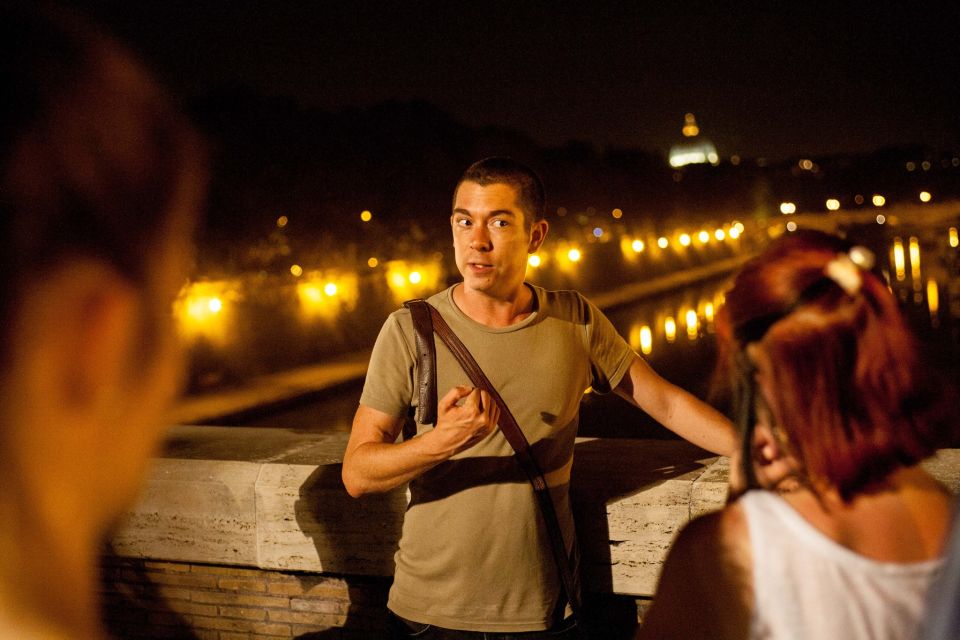
One of the best parts of the tour is the stop-and-walk section on Via Giulia, one of the first planning projects of Renaissance Rome. This isn’t the usual “here’s a street” moment. The point is that the street itself shows you how leaders tried to impose order, elegance, and control into the urban fabric.
If you like when a tour helps you see patterns, Via Giulia is your payoff. You’ll start noticing the logic in how the space feels—straightforward sightlines mixed with the texture of older lanes branching away. It’s Rome changing from medieval chaos toward deliberate design, right there under your feet.

Via del Governo Vecchio: a photo stop that earns its place
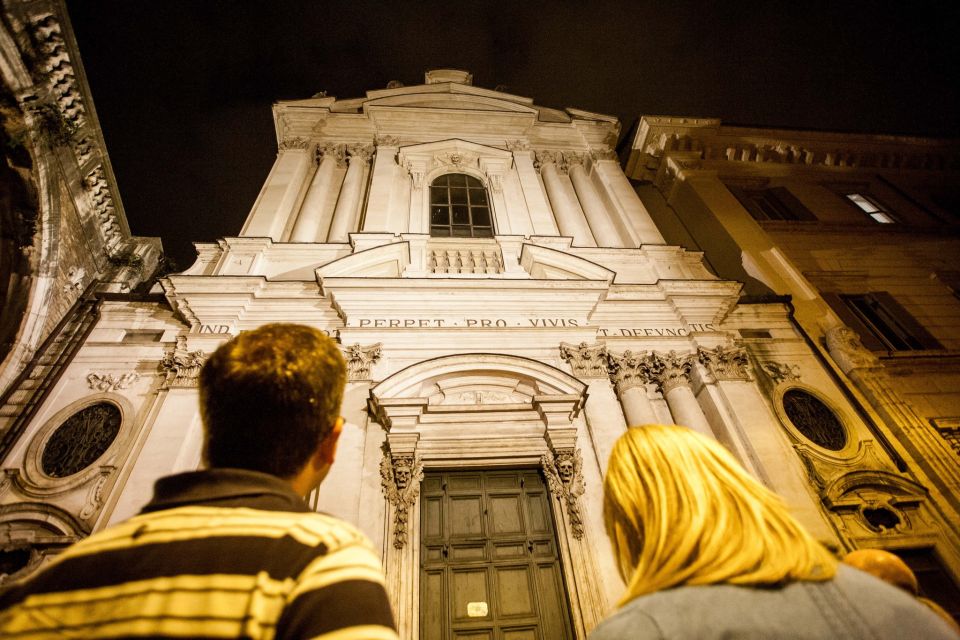
The walk includes a stop on Via del Governo Vecchio, and there’s a photo moment built in. This is one of those corridors where Rome’s past feels close because the street scale is intimate—walls feel nearer, and the shadows do more than decorate.
I find it helps to treat this as a breather. Let the stories settle. Capture your frame. Then keep moving, so the atmosphere stays part of the experience instead of becoming a distraction.
Castel Sant’Angelo at night: Hadrian’s Mausoleum turned into a symbol
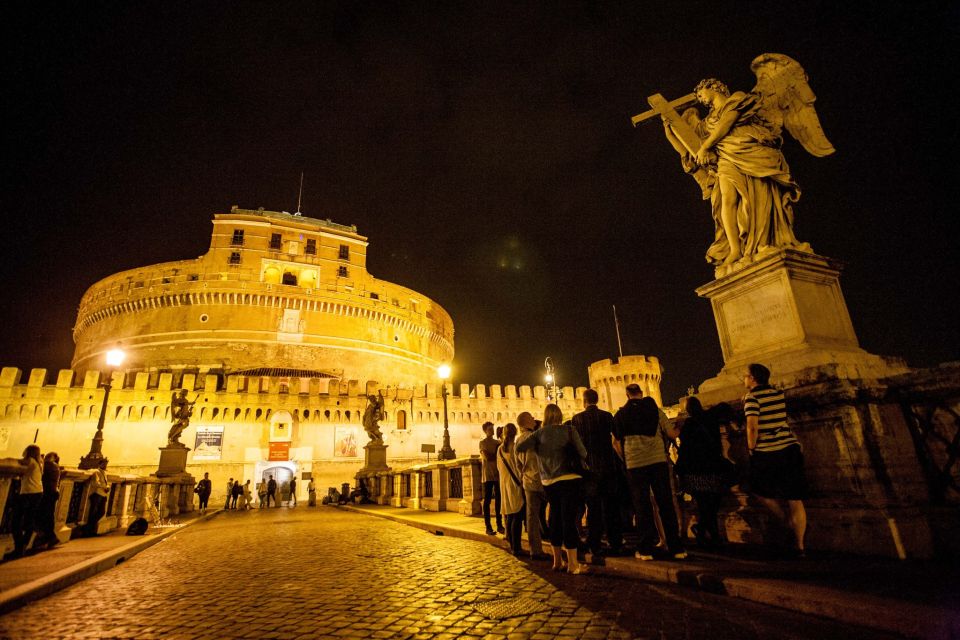
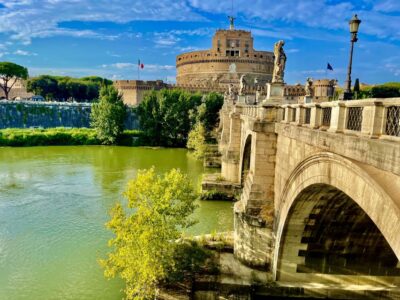
The final big landmark is Castel Sant’Angelo, the site of Hadrian’s Mausoleum. Even if you’ve seen photos in daylight, at night it lands differently—less like a monument and more like a fortress with a story that refuses to stay in the past.
This stop connects the tour’s themes perfectly: death, power, and the way Rome keeps reusing old meanings. Your guide uses Castel Sant’Angelo not as a checklist item, but as a narrative anchor—so the walk feels like a line, not a set of disconnected highlights.
What 1.5 hours and $14 really buy you
This is a short evening tour: about 90 minutes with an English-speaking guide, priced at $14 per person. For Rome, that price feels geared toward access—getting you into the story without demanding you commit a whole day (or a pile of museum tickets).
You’re paying for:
- a guided walk through the historic center,
- a story-driven route that includes places tied to darker legends,
- and a chance to see well-known sights from a different angle—at night.
Notably, hotel pickup/drop-off isn’t included, so you’ll need to get yourself to the meeting point. Also, since the tour is outside and walking-based, it’s all about comfort. Bring comfortable shoes, and you’ll enjoy the experience more than if you’re fighting blisters mid-story.
The guide factor: why the storytelling style matters here
A walking “legends and facts” tour lives and dies by the guide’s voice and timing. The best versions of this experience are theatrical in a smart way: clear enough to follow, expressive enough to make you picture what the guide is describing, and patient enough for different group paces.
From the history of guides who have led this tour—names like Elisabetta, Elizabeta, Amanda, Serena, Alithia, Max, Rob, and Pete—you can see the pattern: people get excited when the guide speaks clearly and tells the stories like they matter.
If you’re a fan of darker storytelling (even in the true-crime sense), this is a strong fit because it leans into “what people believed and why,” not just dates and emperors.
Who this tour suits best (and who should skip it)
This is a great evening option if you:
- want Rome at night without committing to a long, formal tour,
- enjoy legends with historical grounding,
- like walking through the city’s older neighborhoods rather than staying inside major landmarks.
It’s also worked well for adults and teens, based on the kinds of groups that attend these tours.
But it’s not for everyone. The tour isn’t suitable for wheelchair users or guests with mobility impairments, and strollers/baby pushchairs aren’t allowed. If you’re bringing a stroller, plan to leave it behind and choose another option.
Small practical tips so you enjoy it from start to finish
This is a night walk, so you’ll do better with the basics handled:
- Wear comfortable, grippy shoes for cobblestones and uneven pavement.
- Bring a layer if you run cold at night (even in warmer months).
- If you care about photos, don’t plan to stop constantly—save your attention for the marked photo moments like Via del Governo Vecchio and the Castel Sant’Angelo area.
One more thing: this tour is designed for storytelling, so keep your questions focused and quick. Your guide will have a lot to cover in 90 minutes.
Should you book Dark Heart of Rome tonight?
I’d book it if you want something different from the standard Rome script. For $14 and 90 minutes, you get a guided night walk that connects grim historical moments—like what used to happen at Campo de’ Fiori—with Renaissance planning on Via Giulia and the dramatic end-note at Castel Sant’Angelo.
Skip it if you need step-free access, want a slow, linger-around sightseeing style, or prefer your Rome strictly factual with minimal legend. In that case, you’ll probably feel impatient.
If your idea of a great evening in Rome includes walking through glowing streets while someone makes the city’s darker chapters feel close and human, this one is an easy yes.