REVIEW · ROME
Rome: Bone Crypts Express – Tour in ENGLISH with tickets
Book on GetYourGuide →Operated by Rome With Mike · Bookable on GetYourGuide
The first time you hear about the Capuchin Crypts, you feel uneasy. Then the guide turns that shock into clarity with history, symbolism, and storytelling. I especially like how this small-group, skip-the-line format keeps you moving without rushing, and how the site’s meaning lands with you in a calm, respectful way.
My other favorite part is the balance: you get the macabre bone chapels, but also the spiritual and Franciscan context behind them. The main drawback to think about is that this is a holy site with strict dress rules—no bare shoulders or bare knees—so plan your outfit first or you may have to miss parts of the experience.
In This Review
- Key highlights that make this Bone Crypts Express worth it
- Piazza Barberini start: your quick link to the underground
- Capuchin Museum stop: understanding the “why,” before the bones
- Six bone chapels in a short window: what you’ll actually see
- The spiritual side: symbols, altars, and meaning made from human remains
- Caravaggio and Baroque storytelling: art lessons inside a cemetery
- Timing and pace: how the 1-hour express format feels in practice
- What it costs and why $35 can still feel fair
- Dress code and site rules: the practical stuff that can make or break it
- Who this tour suits (and who should pick something else)
- The best way to enjoy it: a few mindset tips before you go
- Should you book this Bone Crypts Express?
- FAQ
- What time and how long is the Rome Bone Crypts Express tour?
- Where do we meet the guide?
- Is the tour in English?
- Does this tour include skip-the-line tickets?
- Is the audio guide included?
- What should I wear?
- Is this tour suitable for children or people with mobility needs?
- Can I cancel for a refund?
Key highlights that make this Bone Crypts Express worth it
- Skip-the-line entry to save time at one of Rome’s most in-demand underground sights
- Small group up to 10 so your English-speaking guide can answer questions
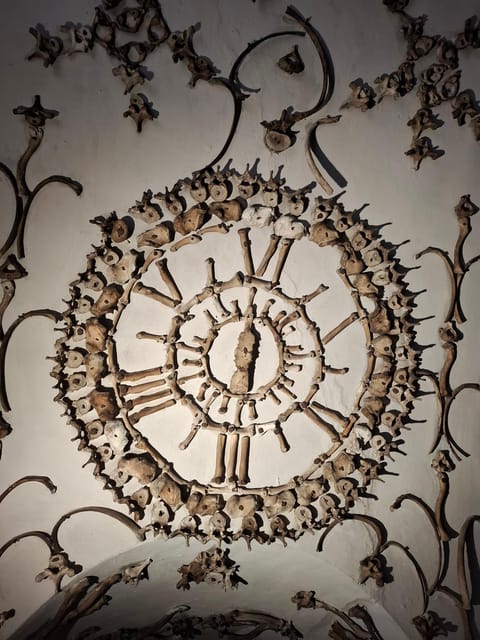
- Six chapels made from the remains of nearly 4,000 monks, including the skulls and the hourglass room
- Caravaggio connections and Baroque context tied to what you’re seeing
- A 70-minute guided walk with on-site audio support in parts of the visit
Piazza Barberini start: your quick link to the underground
You start right in central Rome at Piazza Barberini, meeting your English mother-tongue guide in front of the Triton Fountain (face side). This matters because it avoids the usual stress of hunting down transport options or meeting somewhere far from where you’re already walking.
From there, you’ll move on foot toward the Capuchin area with a guide leading the pace. The whole idea is an express visit, so you’ll get a structured run-through rather than drifting room to room on your own.
Because the group is capped at 10 participants, you won’t feel like a ticket barcode in a mass queue. You’ll still be part of the flow, but the guide can keep the story tight and coherent.
You can also read our reviews of more tours and experiences in Rome

Capuchin Museum stop: understanding the “why,” before the bones
Before you see the crypts, you’ll visit the Capuchin Museum, and that’s the part that prevents this from becoming a one-note shock-fest. You’ll learn how the Franciscan and Capuchin orders shaped the beliefs and practices that led to this unique burial site.
This Museum-to-crypt sequence is smart. If you only show up for the skeleton displays, it can feel like pure spectacle. But when you understand the underlying religious framework—what it meant to them, and how burial practices worked—you start reading the site differently.
The tour is in English, and strong English is recommended. That’s not a vague warning. When the guide starts tying symbols, Christian iconography, and historical details to specific rooms, the experience gets better fast if you can follow comfortably.
Six bone chapels in a short window: what you’ll actually see
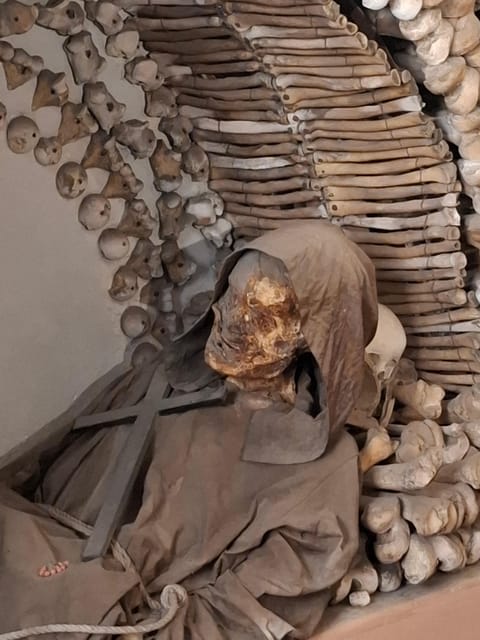
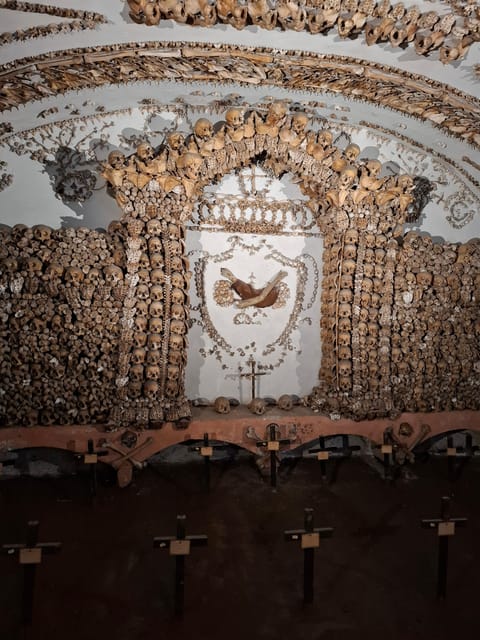
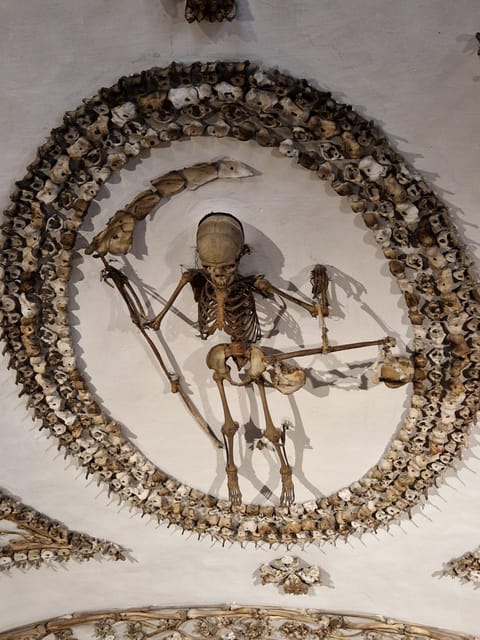
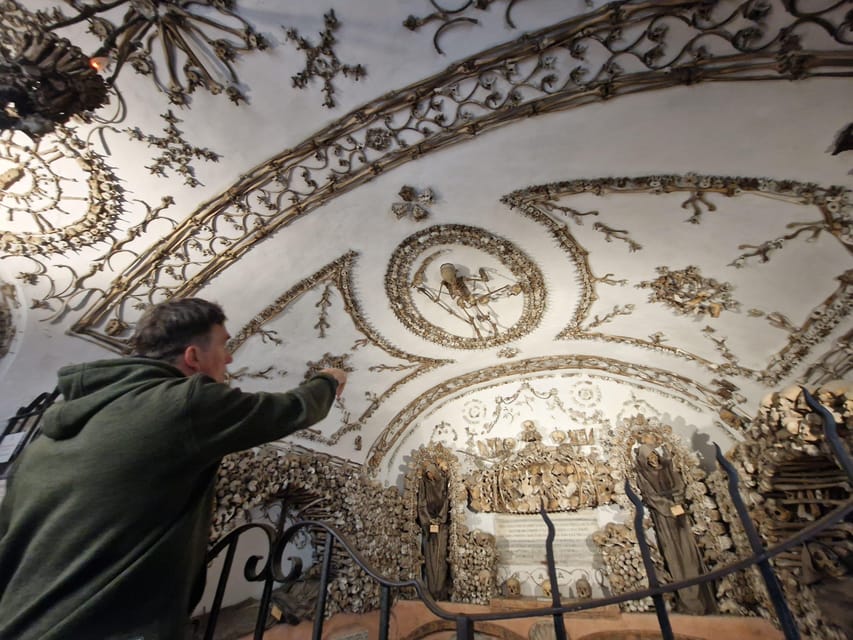
The heart of the tour is the descent into the Capuchin Crypts and its six chapels decorated with bones. Think of it less like a museum gallery and more like rooms designed to communicate specific messages about life, death, and faith.
The visit includes several distinct rooms, each with a recognizable “hook”:
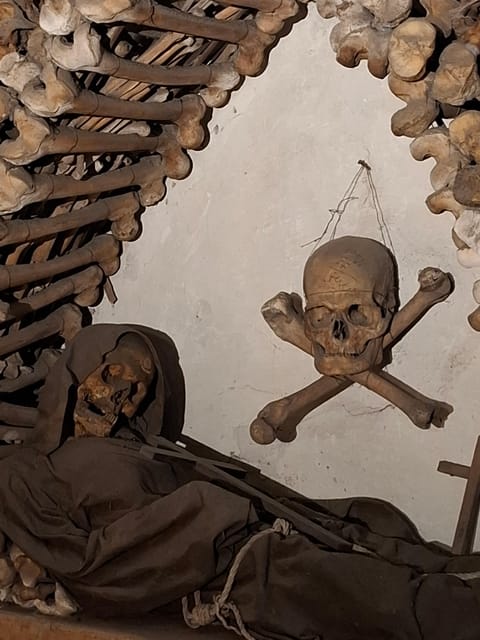
- Crypt of the Three Skeletons: you’ll notice how the arrangement is staged to feel symbolic, not random.
- Crypt of the Leg Bones and Thigh Bones: the focus on body parts makes it feel clinical at first—until the guide reframes it as intention and meaning.
- Crypt of Pelvises: friars arranged in peaceful arches help you see the site as devotional architecture, not a horror set.
- Crypt of the Skulls: the skulls feel the most iconic, and the hourglass symbolism is the kind of visual reminder that sticks.
As you move between rooms, the guide’s job is to keep the emotional temperature steady. The site is naturally eerie. The story helps you avoid the mental spiral of thinking this is just “bones for bones’ sake.”
Also worth knowing: one surprise can happen here. Some people expect everything to look like a fully underground maze. In reality, sections can feel more like different rooms at a ground-level layout within the complex. So if you’re imagining an endless deep-cave experience, adjust your expectations when you arrive.
The spiritual side: symbols, altars, and meaning made from human remains
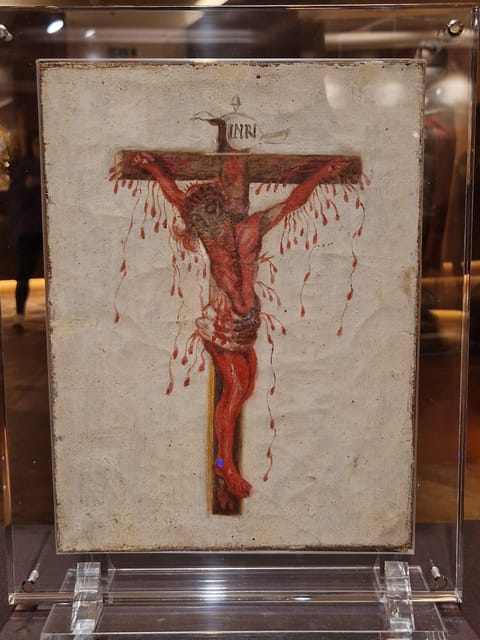
One of the tour’s best values is that it connects what you see to Christian symbolism. You’re not only watching “macabre decor.” You’re looking at altars and signs made from human remains, presented as part of a sacred vocabulary.
The guide also points out crosses embedded in the floor marking the final resting places of seven monks. That detail matters because it brings the focus back to individuals, not just design.
The “message” you’ll take home isn’t one tidy quote. It’s a mood shaped by contrast: the solemnity of the setting paired with the certainty that this was created under burial laws and religious practice.
It’s also why respectful behavior is part of the experience. Some areas are enhanced with an on-site audio guide, adding a quiet layer when the visit turns more reflective. Even if you skip the extra audio, the guide’s narration provides the context you need to keep it meaningful.
Caravaggio and Baroque storytelling: art lessons inside a cemetery
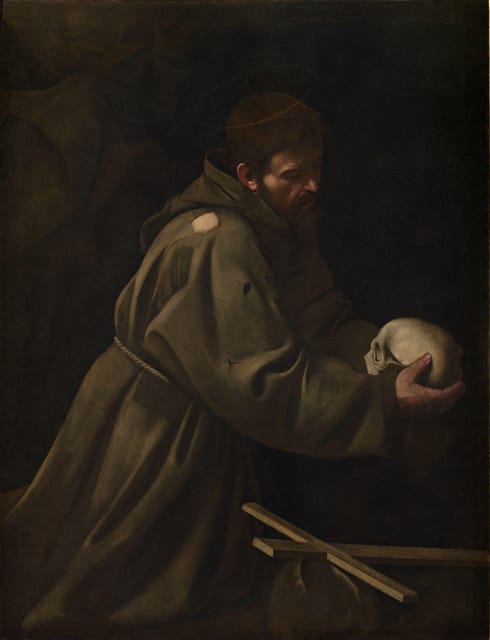
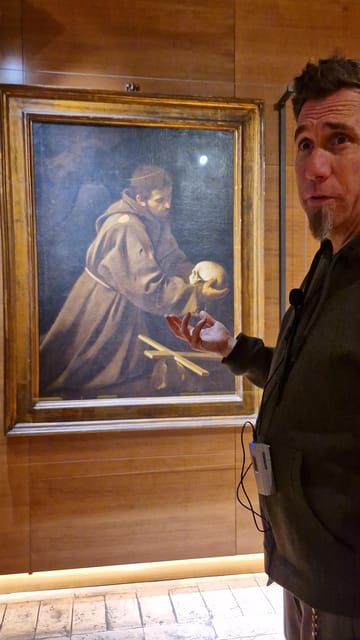
Yes, you’ll hear art talk here—and it’s not random trivia. The highlights mention insights into Caravaggio, the Baroque master often described as a rebellious genius of his era. That connection is useful because it gives you a Roman angle beyond the skeletons.
Baroque art was all about impact: drama, emotion, strong contrasts. When you stand in rooms built to provoke reflection, the Baroque mindset clicks. You start noticing how the site works like a visual sermon—arranged, framed, and meant to affect you.
Your guide may also explain how the Capuchin order’s beliefs shaped what people encountered when they visited. That’s how the tour avoids becoming a single-room attraction. You’re learning how Rome turns faith, art, and daily practice into physical space.
And if you have a soft spot for stories, you’ll likely appreciate how some guides bring humor without disrespecting the topic. Guides named Mike, Alessandra, Heather, and Angela show up in past experiences as engaging narrators who mix factual history with a lighter touch—useful in a setting that can get heavy.


Timing and pace: how the 1-hour express format feels in practice
The tour is listed as 1 hour, with the guided portion running about 70 minutes. That structure is ideal if you want a high-impact experience without losing half a day.
Because it’s structured, you won’t be left wondering what matters most. You’ll hit the main rooms in a logical flow, then return to the meeting spot area in Piazza Barberini.
The trade-off is that express tours move briskly. If you like to linger and study every bone arrangement like a forensic scientist, you may want to add extra self-guided time nearby afterward. But the upside is you get the story stitched together before you can second-guess what you’re looking at.
What it costs and why $35 can still feel fair
At $35 per person, you’re paying for more than access. You’re paying for:
- Skip-the-line ticket access, which can be a real time-saver in Rome
- A professional English guide who explains history, symbols, and religious context
- A small group capped at 10, which improves the quality of the explanations
- A curated route through all six bone chapels
If you went solo, you might save money. But you’d likely spend more time sorting out what you’re seeing—and you’d miss the “why” that makes the chapels land. In other words, the cost buys interpretation, not just entry.
What isn’t included is also important. Food and beverages aren’t included, and the audio guide is not included in the package. That’s normal for this kind of tour, but plan to grab a snack before or after, especially if you’re doing other sights that day.
Dress code and site rules: the practical stuff that can make or break it
This is a sacred site, and the tour has clear entry expectations. You should plan clothing like it’s a church visit:
- No shorts
- No skirts
- Your shoulders and knees must be covered
Cargo shorts are acceptable, so you don’t have to suffer in full trousers if you’re traveling in warm weather. Still, bring something that covers knees. If you show up underdressed, you risk losing the chance to fully participate.
You’ll also want comfortable clothes because you’ll be walking from Piazza Barberini and moving through the crypt spaces at a guided pace.
One more consideration: the tour is not suitable for children under 10, pregnant women, and wheelchair users. That’s not a moral judgment—it’s about the practical and emotional nature of the site and how visitors can safely participate.
Who this tour suits (and who should pick something else)
This Bone Crypts Express is a strong fit if you:
- Want a small-group English guide rather than self-guided chaos
- Like art, history, and religious symbolism more than pure scare-factor tourism
- Are short on time and want a well-paced, focused 1-hour visit
- Appreciate storytelling that makes uncomfortable subjects easier to understand
It may not be the best choice if you:
- Hate thought-provoking themes around death and mortality
- Need full accessibility options (this one is not for wheelchair users)
- Prefer wandering freely at your own tempo rather than following a timed guide route
- Are traveling with kids who may find the setting too intense
The best way to enjoy it: a few mindset tips before you go
Go in expecting a mix of emotions. The bones are undeniably striking, but the tour works best when you treat them like symbolic objects within a faith tradition.
I’d also advise you to arrive ready to listen. Since strong English is recommended, your experience will sharpen if you can catch the guide’s historical links and explanations without constantly translating in your head.
Finally, don’t reduce it to skeletons. The rooms are built around meaning—crosses on the floor, staged arrangements, and the hourglass symbolism. When you catch that, the tour becomes less about shock and more about understanding how humans use art and ritual to face mortality.
Should you book this Bone Crypts Express?
I think you should book if you want the best version of this experience: skip-the-line access, a tight route through six chapels, and an English guide who keeps the story grounded. For $35, the value is strongest when you think of it as a guided explanation of a site that otherwise can feel confusing or purely sensational.
Pass on it if you’re not up for the subject matter, can’t meet the dress requirements, or need accessibility accommodations this tour doesn’t support. And if you want a slow, photography-heavy visit, you may prefer a longer guided or self-paced option.
If you’re doing a Rome highlights loop and want one truly unusual stop, this is the kind of experience you’ll remember long after you’re back above ground.
FAQ
What time and how long is the Rome Bone Crypts Express tour?
The tour runs about 1 hour total, with a guided portion around 70 minutes. Start times depend on availability.
Where do we meet the guide?
Meet your English mother-tongue guide at Piazza Barberini, in front of the Triton Fountain (face side).
Is the tour in English?
Yes. The tour is in English with an English mother-tongue speaking guide.
Does this tour include skip-the-line tickets?
Yes. It includes exclusive skip-the-line ticket access to the Capuchin Crypts.
Is the audio guide included?
No. An audio guide is not included, though audio is available for certain parts of the site to support the visit.
What should I wear?
You should wear clothes that cover shoulders and knees. Shorts and skirts are not allowed.
Is this tour suitable for children or people with mobility needs?
It is not suitable for children under 10, pregnant women, or wheelchair users.
Can I cancel for a refund?
Yes. Free cancellation is available up to 24 hours in advance for a full refund.