REVIEW · ROME
Rome: Trajan Markets Experience with Multimedia Video
Book on GetYourGuide →Operated by TOURISTATION · Bookable on GetYourGuide
Rome’s ancient shopping mall comes with a smart warm-up. You start with a 25-minute multimedia video that reconstructs key monuments, then you keep going with an interactive app audio guide loaded with 170+ points so you can follow the story at your own pace. It’s one of those formats that helps you get oriented fast, even if you only know Rome from postcards.
I particularly liked the way the Trajan Markets sit in a semi-circle shape that still feels like a real commercial complex, not just rubble. And the Fori Imperiali Museum delivers a hands-on sense of daily life and trade, with artifacts (including amphorae) that make the Roman world feel tangible. One thing to consider: the ticket pickup/check-in process can be smooth or slow depending on timing, so arriving a little early at the Touristation office is a good idea.
In This Review
- Key Things You’ll Notice Right Away
- Starting With a 25-Minute Rome Film and the 170-Point App Map
- Meeting Point at Touristation Aracoeli: Piazza d’Aracoeli Details That Matter
- Trajan Markets: The Imperial-Era Shopping Mall Still Shapes the Space
- Forums and Trading Landmarks: Caesar, Augustus, Nerva, and Templum Pacis
- 17th-Century Cistern Ruins: Proof Rome Gets Reused
- Fori Imperiali Museum: Amphorae and Artifacts That Explain Trade
- Price and Value: Why $37 Can Make Sense Here
- Timing Tips: How to Avoid the One Annoying Bottleneck
- What’s Included vs What You Need to Bring
- Who This Works Best For (and Who Should Skip It)
- Should You Book the Trajan Markets + Fori Imperiali Museum Experience?
- FAQ
- How long is the Trajan Markets experience with the multimedia video?
- What is the price?
- What time does the experience start?
- What’s included with admission?
- Is a guided tour included?
- Do I need to bring headphones?
- Is food provided?
- Where is the meeting point?
- Is it wheelchair accessible?
- Are pets or large bags allowed?
Key Things You’ll Notice Right Away
- A short multimedia film that sets the stage before you step into ruins
- An audio app with 170+ points so you can interpret what you see as you go
- Trajan Markets’ semi-circular architecture that reads like a designed space, not random leftovers
- Forum connections you can spot and connect to commerce and public life
- A layered site where a 17th-century cistern reminds you Rome keeps getting reused
- Museum artifacts with trade in mind, including amphorae and objects tied to multiple cultures
Starting With a 25-Minute Rome Film and the 170-Point App Map
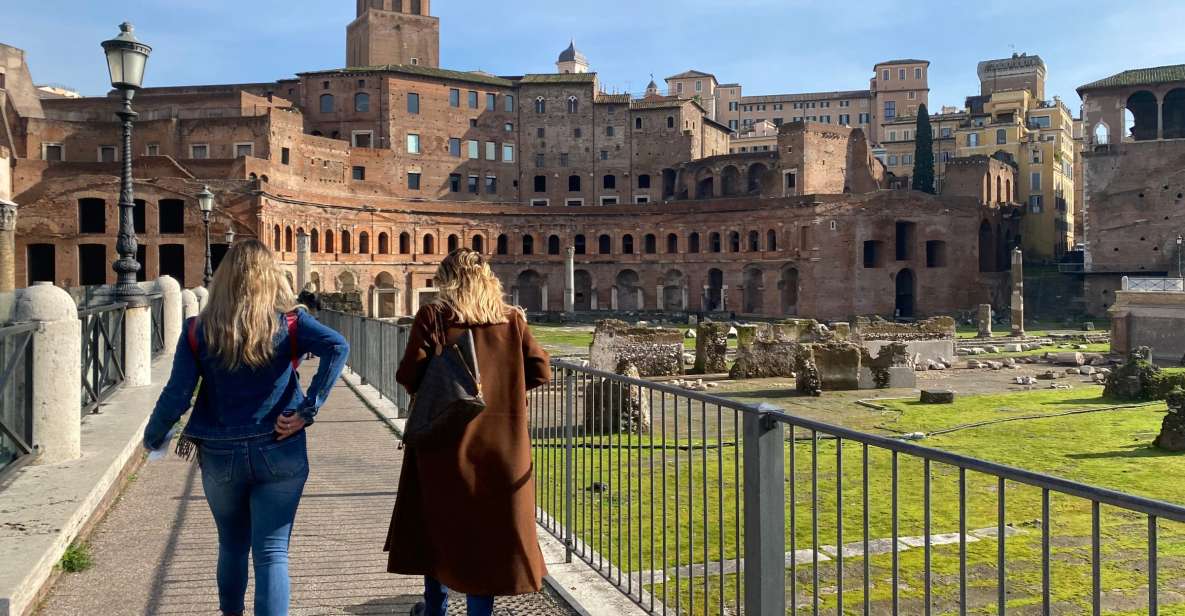
The experience begins with a 25-minute multimedia video presentation. It’s not just background noise. The point is to give your brain a framework: what Roman monuments looked like, how the city was laid out in the Imperial Age, and why this area mattered.
Once you’re done, you’ll rely on a smartphone app for the next part. The app includes more than 170 points of interest, and you can use it as an audio guide while you explore. This is useful because Trajan Markets isn’t one single “wow” view—it’s a complex archaeological space. The audio points help you connect small details to the bigger map in your head.
If your phone battery is the weak link in your day, plan accordingly. I’d keep your phone charged and your headphones ready from the start. Without headphones, the app won’t do what it’s supposed to do.
You can also read our reviews of more tours and experiences in Rome.

Meeting Point at Touristation Aracoeli: Piazza d’Aracoeli Details That Matter
You’ll meet at the Touristation Aracoeli Office, Piazza d’Aracoeli 16, near Piazza Venezia. Look for the orange Touristation flags, and you’ll spot a fountain right in front of the entrance.
This matters because the area around Piazza Venezia can feel busy and confusing if you’re trying to find one specific office. Give yourself an extra few minutes so you’re not rushing while you set up your phone and headphones.
Practical tip: if you have a voucher or confirmation, have it ready on your phone and/or printed. In some cases, staff can help you switch the visit timing when you arrive earlier than planned, as long as that option is available.
Trajan Markets: The Imperial-Era Shopping Mall Still Shapes the Space
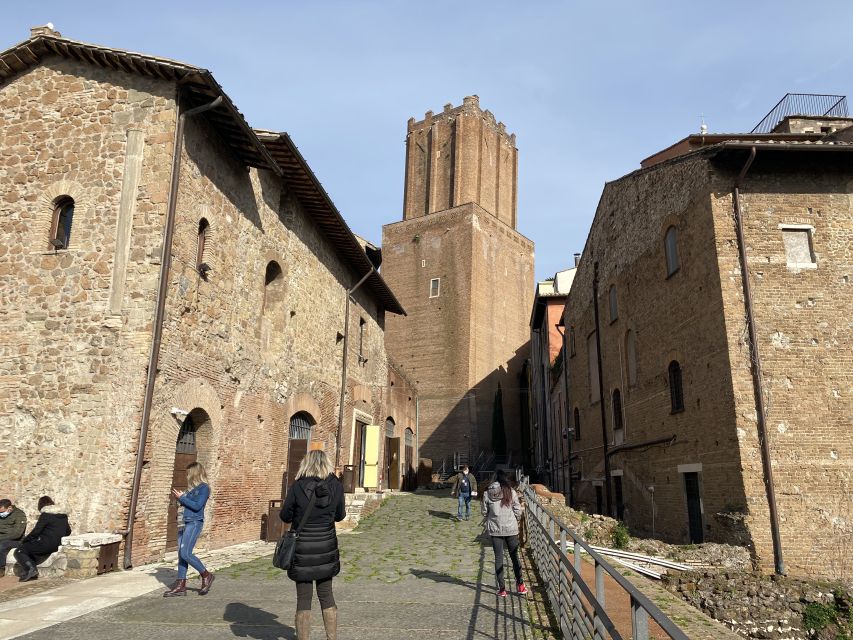
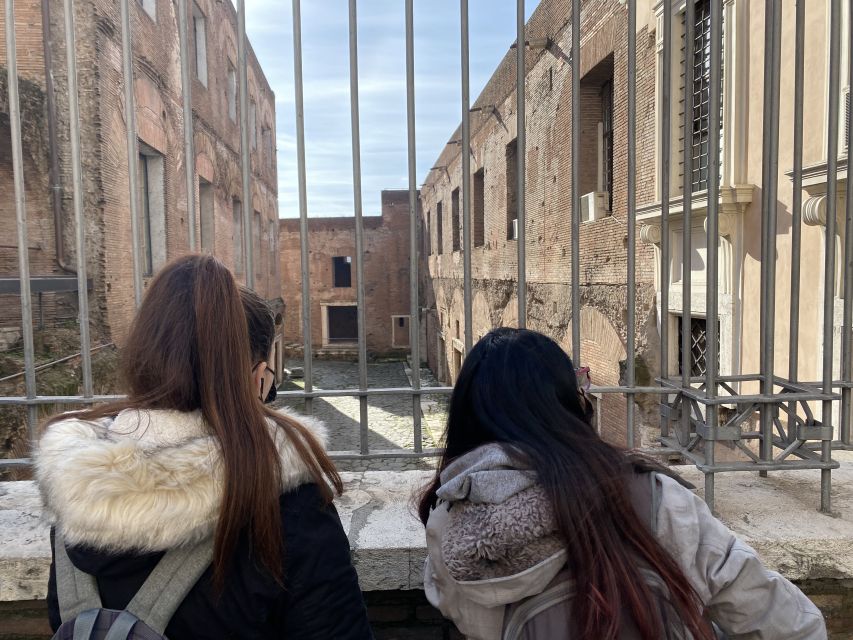
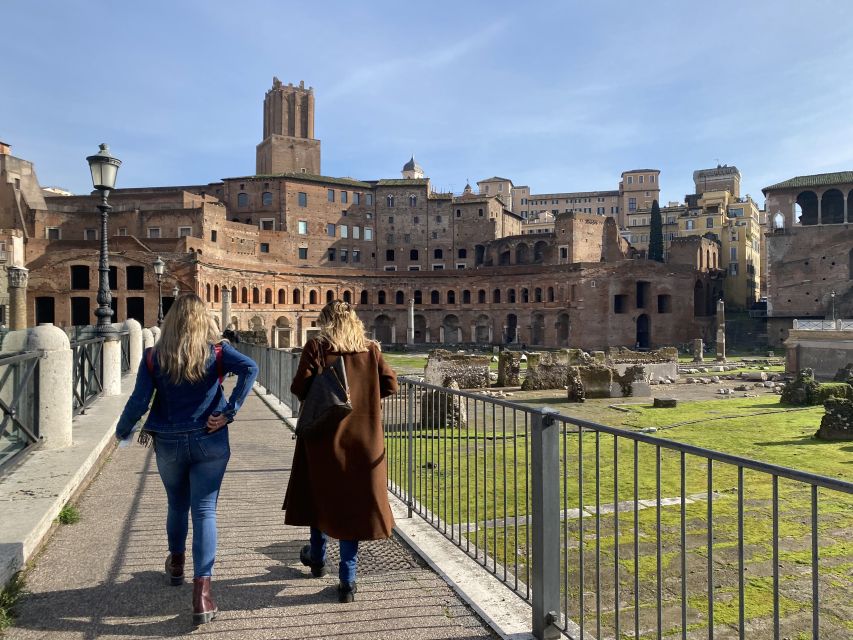
Then comes the main event: the Trajan Markets archaeological complex. These weren’t a casual market street. They were a major commercial shopping mall of the Roman Empire, built for trade, movement, and the kind of foot traffic that makes commerce thrive.
What I love here is that you’re not only seeing stone. You’re reading an urban design. The semi-circle layout still gives the area structure, even in ruins. You can stand and look around, and the architecture helps you understand how the space guided people—shops below, movement through the complex, and a sense of engineered flow.
You’ll also notice that this isn’t just a single “timeline moment.” It’s a site with memory layers. That becomes more obvious as you move through the complex and see how later history left traces on top of the Roman footprint.
Forums and Trading Landmarks: Caesar, Augustus, Nerva, and Templum Pacis
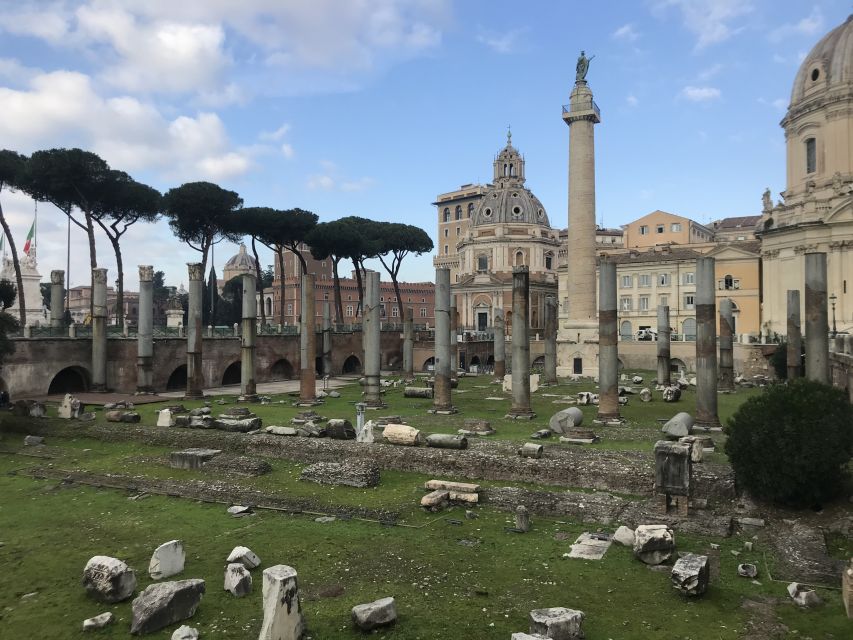
One of the best parts of this experience is how it helps you connect the markets to the forums—those public zones that also functioned as meeting places and trading hubs.
As you explore, you’ll focus on the different forums you can associate with commerce and civic life, including Caesar’s Forum, Augustus’ Forum, Nerva’s Forum, and the Templum Pacis. Even if you don’t know the names at first, the app points and the way the area is laid out help you understand why these names matter: they mark shifts in power, culture, and urban planning during the Imperial Age.
This is the kind of stop that rewards slower looking. Instead of trying to memorize everything, you’re better off letting the names guide your attention: where would people gather, where would goods move, and how would the design of Rome keep commerce connected to the public stage?
17th-Century Cistern Ruins: Proof Rome Gets Reused
Rome has layers, and this site quietly demonstrates that. While you’re in the Trajan Markets area, you’ll also see ruins of a 17th-century cistern.
This detail is more than a curiosity. It changes how you interpret the space. You’re not only dealing with Roman engineering; you’re seeing how later generations adapted the area’s structures and locations. The markets became something else over time—still useful, still occupying strategic space in the city.
If you like historical continuity—how a city evolves without erasing everything—this is one of those moments that makes the visit feel real instead of museum-like.





Fori Imperiali Museum: Amphorae and Artifacts That Explain Trade
After the ruins, you move into the Fori Imperiali Museum. This is where the experience starts to feel more personal. Outdoors, you’re dealing with scale, layout, and traces. Indoors, you’re dealing with objects that show what people actually used, carried, and valued.
You’ll see a collection of artifacts from ancient cultures, including amphorae. Amphorae are especially helpful because they connect directly to trade. You can almost imagine the flow: food, oil, and goods moving through the empire and being stored, transported, and sold.
One detail worth calling out from the way the museum space is experienced: the focus on craftsmanship and workmanship comes through. You’ll get a sense of practical production—how items were made and used—rather than only reading names and dates.
The museum section is also a good mental reset. If you walked in the sun or climbed a few steps getting to the area, this portion gives you a chance to slow down without losing the Roman theme.
Price and Value: Why $37 Can Make Sense Here
At $37 per person for a 1-day experience, you’re paying for more than two attractions. You’re also paying for structure: the 25-minute multimedia intro, entry to both Trajan Markets and the Fori Imperiali Museum, plus the downloadable smartphone audio guide with 170+ points.
That combination is where the value lies. If you went on your own, you’d likely spend extra time trying to figure out what you’re looking at. Here, you’re handed a guided framework that doesn’t require a live guide (the tour explicitly does not include a guided tour). For people who like autonomy but still want context, this format can be a sweet spot.
That said, value depends on how smoothly your check-in goes. If ticket printing and processing run slow on your arrival time, you may feel the price less justified. Plan for it by starting early, staying patient, and keeping your phone charged so you can move quickly once you’re in.
Timing Tips: How to Avoid the One Annoying Bottleneck
The experience is simple on paper: video, markets, museum. The main friction point tends to be check-in/ticket handling at the meeting office.
On better days, staff help quickly and you can even swap your visit time if you’re flexible. On tougher days, the ticket printing process can be inefficient and take longer than you’d expect. Sometimes the procedure can feel more complicated than it should.
My practical advice: arrive early enough to handle delays without stress. Bring whatever you need for quick verification (ID is listed as required), and don’t treat your first few minutes as guaranteed fast.
What’s Included vs What You Need to Bring
This experience includes:
- Trajan Markets entrance
- Fori Imperiali Museum entrance
- The 25-minute Ancient Rome multimedia video
- The city app audio guide for your smartphone
- Assistance at the meeting point
What’s not included:
- Food and drinks
- Hotel transfer
- A guided tour
You’ll want to bring:
- Passport or ID card
- Comfortable shoes (you’ll be moving through archaeological and museum spaces)
- Headphones
- A charged smartphone
Not allowed items include pets, weapons or sharp objects, luggage or large bags, drones, alcohol and drugs, sprays or aerosols, and glass objects.
If you’re a person who travels light, you’re already set up. If you’re carrying a big bag, plan to leave it somewhere safe—large bags aren’t allowed.
Who This Works Best For (and Who Should Skip It)
This is a strong choice if you want:
- A self-paced experience with built-in context
- Roman commerce and urban design, not only famous monuments
- A mix of outdoor archaeology plus an object-focused museum
You’ll likely enjoy it even more if you like using a phone guide to interpret the site as you go.
It’s not suitable for wheelchair users, since the experience lists it as not suitable for that accessibility need. If that’s you, it’s worth choosing a different format or venue that clearly supports mobility.
Should You Book the Trajan Markets + Fori Imperiali Museum Experience?
I think you should book if you’re excited by the idea of Rome as a working city—trade, buildings designed for commerce, and layers of reuse over time. The mix of a short multimedia intro, a detailed app map with 170+ points, and a museum with real artifacts (including amphorae) makes this feel like more than a quick stop.
I’d hold off if you hate using your phone for audio, because headphones and battery matter. Also, if you can’t arrive early and you’re sensitive to check-in delays, consider that this experience can have a ticket-printing bottleneck.
If you’re flexible and want to understand the Roman city beyond the big-name ruins, this one is a solid use of a day in Lazio.
FAQ
How long is the Trajan Markets experience with the multimedia video?
It lasts 1 day.
What is the price?
The price is $37 per person.
What time does the experience start?
You should check availability to see starting times.
What’s included with admission?
You get the 25-minute Ancient Rome video presentation, Trajan Markets entrance, Fori Imperiali Museum entrance, the downloadable city app audioguide, and assistance at the meeting point.
Is a guided tour included?
No, a guided tour is not included.
Do I need to bring headphones?
Yes. Headphones are listed as what to bring.
Is food provided?
No. Food and drinks are not included.
Where is the meeting point?
Meet at the Touristation Aracoeli Office, Piazza d’Aracoeli 16, near Piazza Venezia. Look for the orange Touristation flags and a fountain in front of the office.
Is it wheelchair accessible?
No. It is not suitable for wheelchair users.
Are pets or large bags allowed?
Pets are not allowed, and luggage or large bags are not allowed.