REVIEW · ROME
Ancient Rome: Archeological area Largo Argentina
Book on GetYourGuide →Operated by TOURISTATION · Bookable on GetYourGuide
Rome has a way of hiding tragedy in daylight. In the Largo di Torre Argentina archaeological area, you get to stand inside a sacred pocket of the city that survived wars, rebuilds, and time itself, while still pointing to one of ancient Rome’s darkest turning points: the death of Julius Caesar. I love how this visit mixes big-picture context with very physical, walkable remnants you can actually study in place.
Two things especially worked for me. First, you can see four temples dating roughly from the 4th to the 1st centuries BC, which is not something most Roman sites can promise in a single stop. Second, the preserved remains around the Curia of Pompey area help you understand where the Ides of March event happened, instead of treating it like a name from a textbook. The main drawback to consider is that a lot of what makes Largo Argentina famous can be seen from the outside, so the ticket experience is most satisfying if you care about excavation access and the deeper layers below.
In This Review
- Key highlights worth your time
- Largo Argentina: Rome’s small island built on big drama
- The 1-hour experience flow: video, audio guide, and reserved entry
- Temples from the 4th–1st centuries BC: what you’re really looking at
- Curia of Pompey and the Ides of March: connecting the story to stone
- The site’s 2,000-year layers: imperial phases and medieval structures
- Outdoor views vs reserved access: does the ticket really matter?
- Practical value: price, time, and what you actually get
- Where to meet: Piazza d’Aracoeli and the orange flags
- What to bring and what to leave behind
- Who this suits best (and who might skip it)
- Should you book this Largo Argentina experience?
- FAQ
- Where is the meeting point for Largo Argentina?
- What time does my booking actually start?
- How long is the experience?
- Is a guided tour included?
- What language is available?
- What’s included with the ticket?
- What should I bring?
- What’s not allowed on site?
- Is there any refund flexibility?
Key highlights worth your time
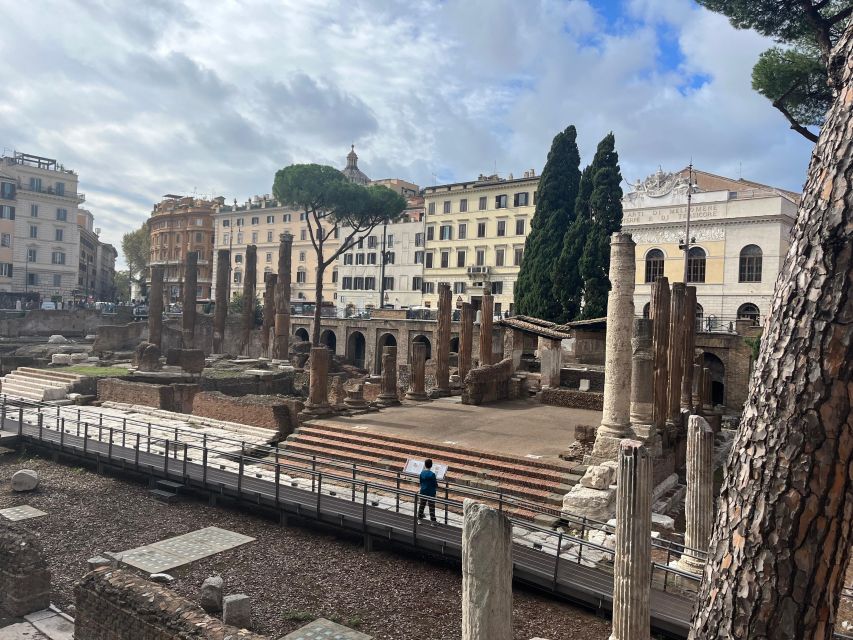
- Four temples (4th–1st centuries BC) in one archaeological space
- Caesar’s assassination context linked to the tuff base connected with the Curia of Pompey
- An ancient island in modern Rome, enclosed and surprisingly atmospheric
- Uninterrupted 2,000+ years of use, from late-Republic phases through later medieval structures
- 30-minute multimedia viewing that helps you picture the site’s original scale
- English audio guide + paper map, plus WiFi for your visit
Largo Argentina: Rome’s small island built on big drama
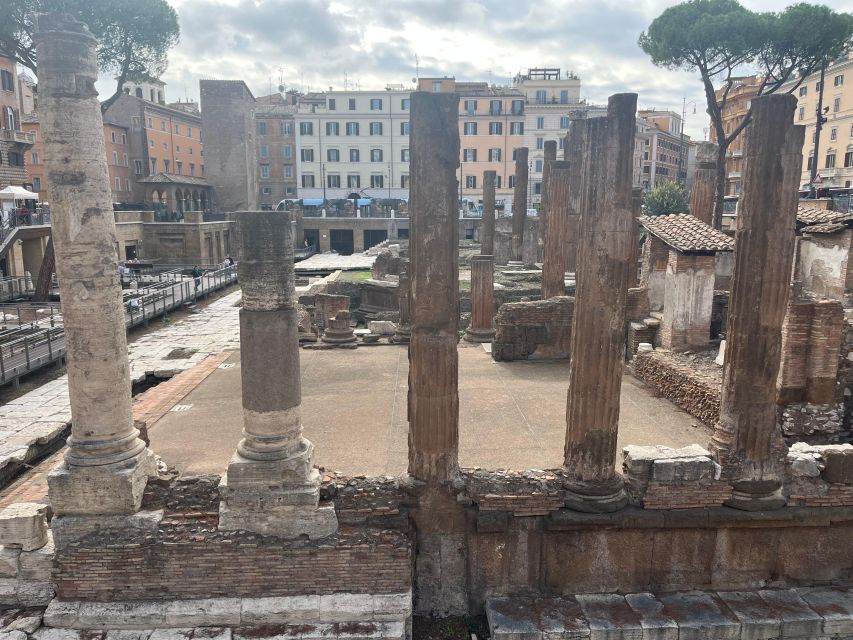
Largo di Torre Argentina is one of those Roman places that feels almost protected by its own layout. You’re in central Rome, yet the archaeological area reads like an interior courtyard, with remains and open space giving you a clear sense of where ancient structures once stood. It is also a site where the story is hard to separate from what happened there—this is not just architecture, it is political violence turned into stone and shadow.
What makes it memorable is the way the site mixes sacred use with historical shock. For roughly 2,000 years, the area kept being occupied and reworked, even as Rome changed around it. That long continuity gives you a different kind of connection: you are not only looking at ruins, you’re watching history accumulate.
And yes, the Julius Caesar angle is the headline. The area preserves the tuff base associated with the Curia of Pompey precinct, the location connected with the assassination on the Ides of March in 44 BC, as reported by ancient sources. Even if you know the story already, seeing the physical setting helps it click.
You can also read our reviews of more tours and experiences in Rome.

The 1-hour experience flow: video, audio guide, and reserved entry
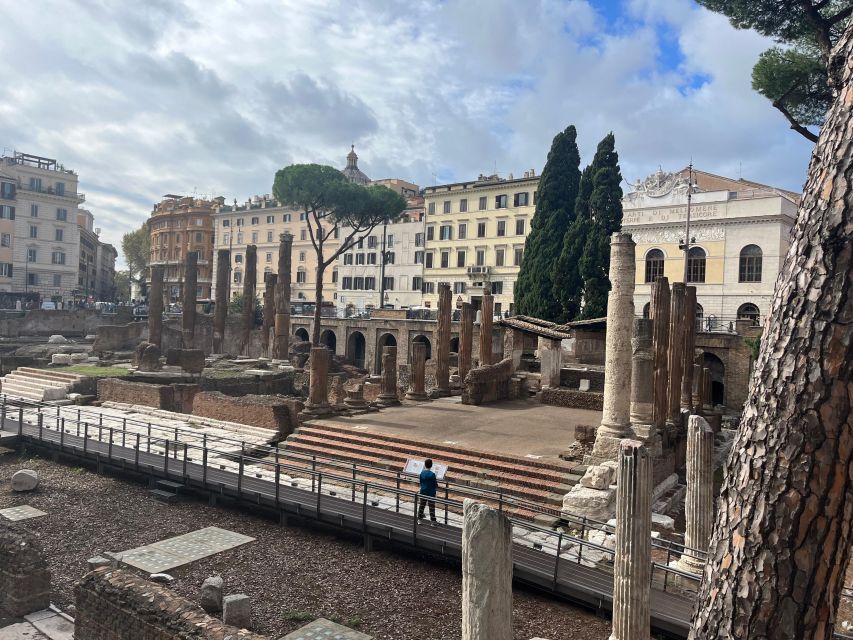
This is a short visit by design: your total time is about 1 hour. The selected time slot refers to when you arrive and redeem your voucher at the TOURISTATION ARACOELI office in Piazza d’Aracoeli 16, not when you step onto the site. Plan a little buffer so you do not feel rushed once you walk over.
Included in the experience are a 30-minute multimedia video, reserved entrance for the Largo Argentina excavations, and an English audio guide (the Audioguide of Rome app). You also get a paper city map and WiFi, which can make the whole thing smoother if you like following directions and context digitally while you walk. There is assistance at the meeting point, which helps if you are arriving on your own.
One practical note from the way this works: a portion of the value is front-loaded. The multimedia viewing is meant to give you a mental model before you enter the excavations, so the ruins stop looking like random fragments. If you are the type who likes structure and explanations before walking, this format fits your style.
Temples from the 4th–1st centuries BC: what you’re really looking at
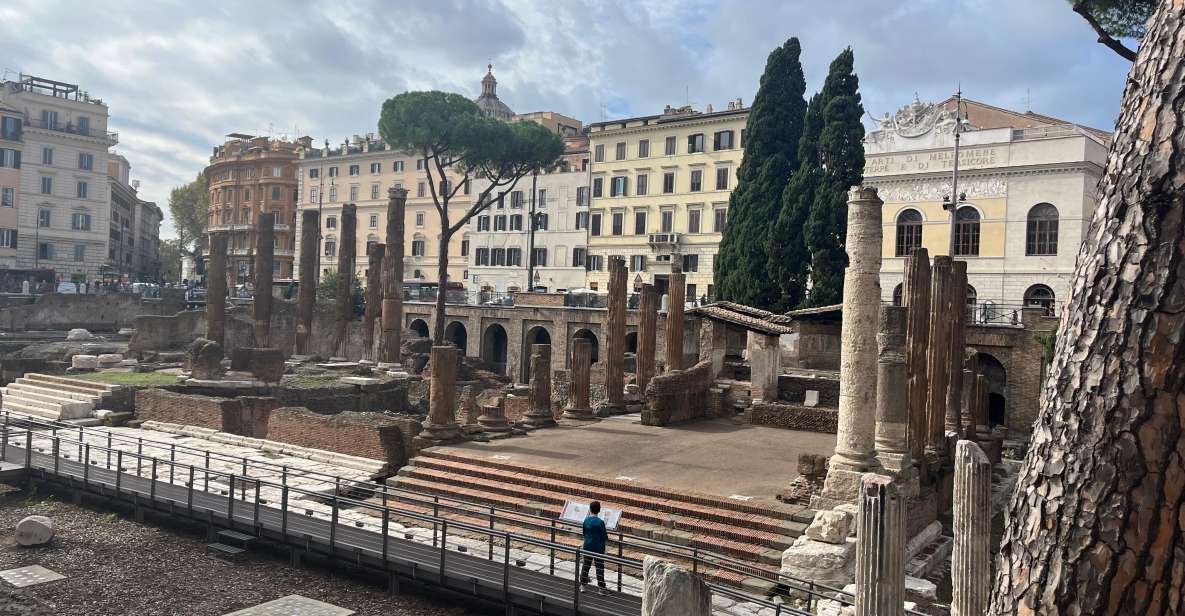
A big reason Largo Argentina earns its reputation is that you get to see four temples dating from about the 4th century BC down to the 1st century BC. That range matters. Temples aren’t only religious spaces in Rome—they are also political statements, wealth markers, and reminders of which factions had influence when.
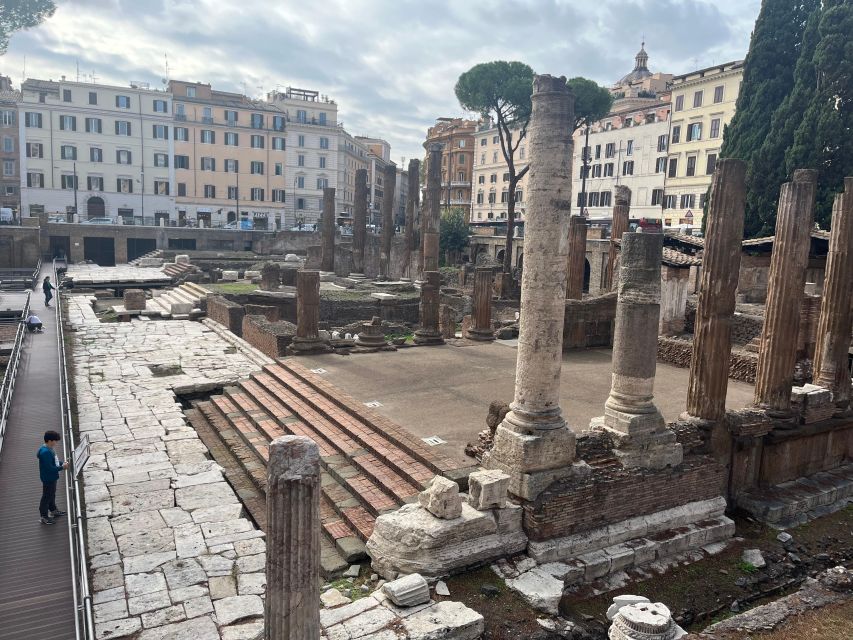
When you’re standing in the archaeological area, take a slower look at the temple remains’ layout and how the ground reads as an ancient foundation. The site preserves more than just outlines; it includes remains that let you understand the tuff base and the way different building phases relate to each other. In other words, you’re seeing a site built, rebuilt, and reinterpreted, not just a single snapshot frozen in time.
Also keep your expectations realistic. This is not a giant open-air museum in the way the Forum can feel. It is compact, which is actually helpful. You can focus on how these religious buildings were arranged around an enclosed sacred zone and how later history layered on top.
Curia of Pompey and the Ides of March: connecting the story to stone
The most dramatic part of Largo Argentina is what it preserves around the Curia of Pompey area. You can see the remains that guard the tuff base connected with the assassination of Emperor Julius Caesar on the Ides of March in 44 BC, as reported by ancient sources.
If you usually experience Caesar’s death as a literary event, this is where the setting becomes useful. The tuff base is not just a detail; it’s the physical anchor that turns the moment from a date into a place. Standing near it, you can follow along with what the audio guide explains and build a mental map of the precinct.
One more reason this matters: Largo Argentina is not only about one event. The site’s narrative continues after the assassination, because the area’s religious and civic role did not simply end. The assassination becomes the most famous chapter, but the rest of the layers show that Rome kept using the space—over and over.
The site’s 2,000-year layers: imperial phases and medieval structures
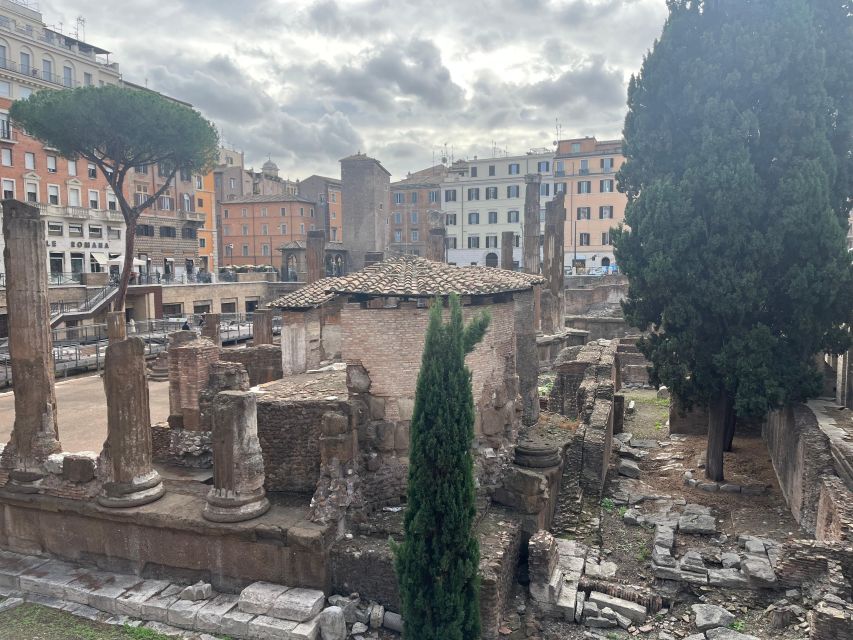
What I appreciate most about Largo Argentina is that it does not behave like a single-era ruin. It preserves evidence of uninterrupted life for over 2,000 years, including imperial phases connected to the temples and later medieval age structures. That long timeline changes how you look at everything.
Instead of asking only what the temples looked like when first built, you start noticing how people adapted the area across centuries. Roman architecture was often reused, repaired, and reinterpreted, and you can feel that logic here. The remains reflect a process: destruction, demolition, excavation, and re-discovery are all part of the modern story too.
There’s also a modern historical rhythm to keep in mind. Excavations and demolitions affected the area between 1926 and 1930, and that work is part of why the site is visible today in the way you experience it. That means your visit is also a visit to a later act of recovery—archaeology as a second life for the stones.




Outdoor views vs reserved access: does the ticket really matter?
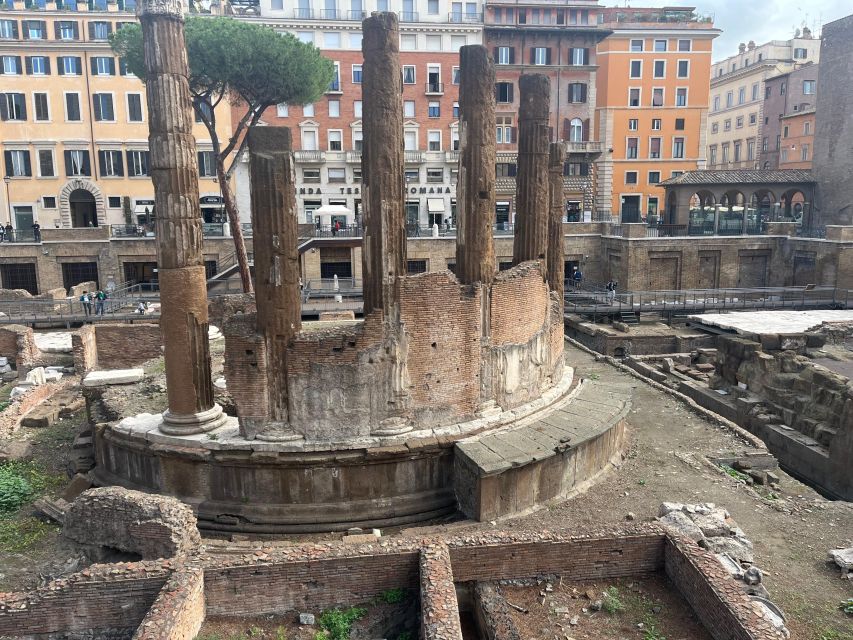
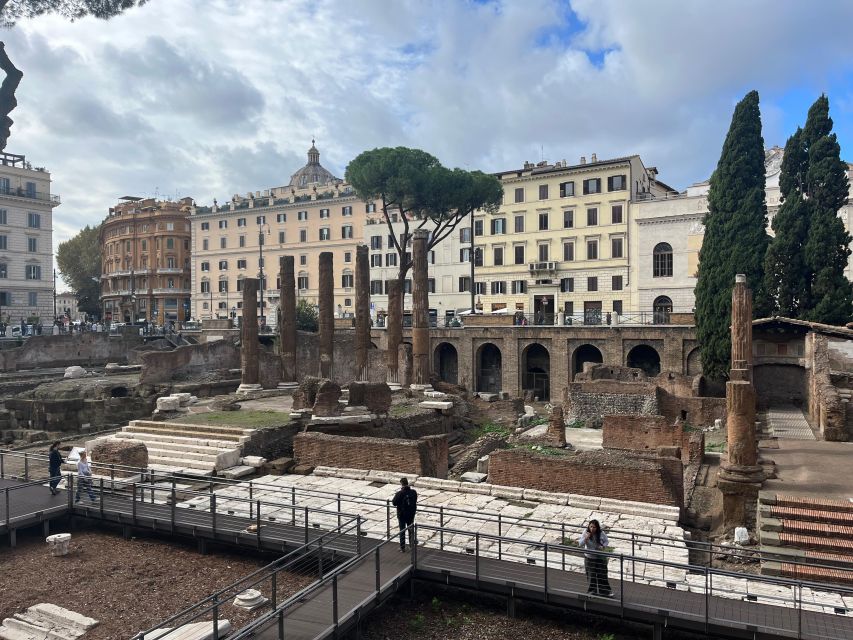
Here’s the honest balance: if you only want broad views, you might feel like Largo Argentina is visible without deep entry. Some visitors find that much of the atmosphere and major layout can be appreciated from outside the excavations.
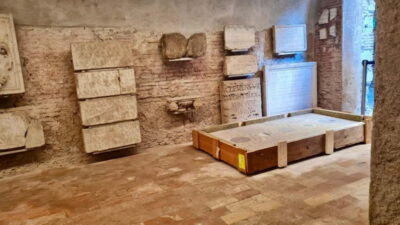
So, when does the ticket become worth it? For me, the answer is reserved entrance plus the guided-on-your-own materials. The multimedia video helps you picture what the buildings looked like in scale, and the audio guide gives you context as you move through the space. Also, the site preserves additional material, including a small museum space below ground, which is harder to appreciate if you never go inside.
Think of it like this: exterior viewing gives you mood and shapes. Entrance access turns it into an explanation you can follow, with the Caesar reference and the temple phases placed where they belong.
Practical value: price, time, and what you actually get
At about $23 per person for roughly 1 hour, this is priced in the mid-range of Rome’s “active-entry” experiences. The value comes from the combination: reserved access to the excavations, a structured multimedia introduction, and an English audio guide you can use on-site.
If you like self-guided discovery, you will appreciate the setup. There is no full spoken guided tour included, so you control the pace, and the materials are there to keep you oriented. If you prefer a live guide who answers questions, you might wish you had that extra layer of human commentary.
I also like that the experience includes supportive extras such as a paper city map, WiFi, and meeting-point help. For a short, ticketed stop, those small supports matter more than they do on full-day tours.
Where to meet: Piazza d’Aracoeli and the orange flags
Your time slot is tied to redemption at the TOURISTATION ARACOELI office, located in Piazza d’Aracoeli 16. Look for a fountain and orange flags in front of the entrance—this is an easy visual cue so you can avoid wandering in circles.
After redeeming, you’ll walk to the archaeological area. It’s not an all-day trek, but you still want a calm transition so the experience starts smoothly. If you arrive late, you may lose the timing you selected, so I suggest arriving a bit early rather than stretching your schedule.
For visitors who like planning, this is a straightforward stop because the meeting point is fixed and clearly described. Once you have your voucher in hand, the visit stays simple.
What to bring and what to leave behind
Bring your passport. It’s the one explicitly listed item for what to carry.
You should also plan to travel light: pets are not allowed, glass objects are not allowed, and there are restrictions on luggage or large bags. Alcohol and drugs are also not allowed. If you’re doing other things in central Rome the same day, keep this stop in mind so you’re not juggling oversized items.
If you’re sensitive to confined spaces or underground areas, remember there is a small museum element below ground. The visit is still short, so it’s manageable for most people, but it’s smart to know you might descend.
Who this suits best (and who might skip it)
This works best for you if you want a compact, history-forward stop with clear structure. It’s ideal as a way to connect the Caesar story to a real physical site, while also seeing religious architecture ranging across multiple centuries.
You’ll also like it if you enjoy self-guided tours but still want good support. The English audio guide and the multimedia video do the heavy lifting of explanation, so you can keep walking without feeling lost.
On the other hand, if you are mainly chasing photos and broad views, you might feel the ticket is less necessary than you expected, since much is visible from outside. And if you crave a full live guided experience, the lack of a guided tour may not satisfy you.
Should you book this Largo Argentina experience?
Book it if you want reserved entry, a short multimedia primer, and an English audio guide that helps you make sense of four temples, the Curia of Pompey area, and the assassination context—all in about an hour. At $23, it’s a reasonable spend for a tightly focused stop, especially if you like understanding what you’re seeing rather than just looking.
Skip or downgrade your expectations if you only care about exterior views, because the site’s most famous elements can feel partially accessible without deep entry. In that case, you may prefer using your time elsewhere or adding a longer Rome architecture plan.
FAQ
Where is the meeting point for Largo Argentina?
You redeem your voucher at TOURISTATION ARACOELI in Piazza d’Aracoeli 16. There is a fountain and orange flags in front of the office entrance.
What time does my booking actually start?
The time you select refers to the timing at the Touristation office in Piazza d’Aracoeli.
How long is the experience?
The duration is 1 hour.
Is a guided tour included?
No guided tour is included. You have access to the included audio guide materials instead.
What language is available?
The activity includes an English audio guide.
What’s included with the ticket?
Included items are a 30-minute multimedia video, reserved entrance for the Largo Argentina excavations, the Audioguide of Rome app, assistance at the meeting point, a paper city map, and WiFi.
What should I bring?
You should bring your passport.
What’s not allowed on site?
Pets, glass objects, and luggage or large bags are not allowed. Alcohol and drugs are also not allowed.
Is there any refund flexibility?
Free cancellation is available up to 24 hours in advance for a full refund.