REVIEW · ROME
Rome: Vatican Early Morning Private Tour
Book on GetYourGuide →Operated by LivTours - We craft tours, you live them · Bookable on GetYourGuide
Morning light helps the Vatican feel human. This private early entrance tour is built for speed and clarity, so you’re in the Vatican Museums with fewer people and a guide who helps you make sense of what you’re seeing. I especially liked how the schedule gets you to the Sistine Chapel before the main crowds, and how a real live guide keeps the pace focused instead of wandering.
The main consideration is that parts of the route can shift. Access to the Raphael Rooms can depend on crowd levels, timing, and guard routes, and St. Peter’s Basilica may close without notice for private events, with the tour continuing elsewhere to preserve the full duration.
In This Review
- Key points to know before you go
- Why the 3-Hour Early Start Pays Off in the Vatican
- Meeting at Café Vaticano and Getting Through the Separate Entrance
- Courtyards and Galleries: Pigna, Octagonal Court, Candelabra, and Maps
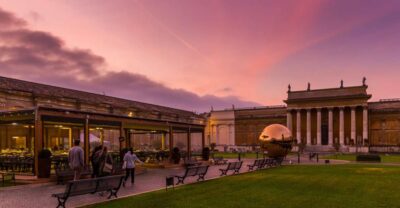
- Courtyard of the Pigna
- Cortile Ottagono (Octagonal Courtyard)
- Gallery of the Candelabra
- Gallery of Tapestries
- Gallery of Maps, Vatican Museums
- Borgia Apartment and the Museum Stops That Lead to Raphael
- Borgia Apartment
- Sala delle Muse (Museums hall stop)
- Why these stops matter
- Raphael Rooms: When Access Works Best, and What Happens If It Doesn’t
- Sistine Chapel Before the Crowds: What Your Guide Will Help You See
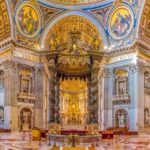
- St. Peter’s Basilica on a Private Schedule (Plus Closure Realities)
- Price and Value: Is $339.29 Per Person Worth It?
- Who This Vatican Early Morning Private Tour Suits Best
- Should You Book This Vatican Early Morning Private Tour?
- FAQ
- How long is the Vatican early morning private tour?
- Where do I meet the guide?
- Does the tour include skip-the-line entry?
- What stops and areas are included?
- Are the Raphael Rooms guaranteed?
- What if St. Peter’s Basilica closes during the tour?
- Which languages are available for the guide?
- Is the tour wheelchair accessible?
- Can I cancel or reserve without immediate payment?
Key points to know before you go
- Skip-the-line access via a separate entrance helps you start seeing real highlights faster
- Sistine Chapel early viewing puts you in the room before it becomes a moving traffic jam
- Stop-by-stop coverage across signature Vatican areas, from Pigna to the Raphael Rooms
- Guide flexibility if Raphael Rooms access is restricted, your visit is adjusted
- Basilica closures can happen, but the tour continues with extended visits elsewhere
Why the 3-Hour Early Start Pays Off in the Vatican
The Vatican Museums can feel like a sprint through rooms that all look equally important. This tour flips that. The early start is the whole idea: you get in while the building is still waking up, which means your guide can spend time on what matters instead of constantly herding you around crowds.
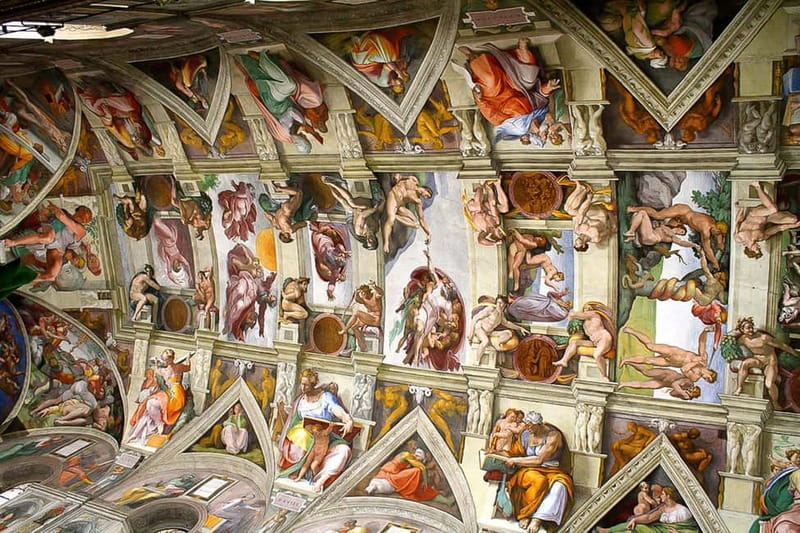
You also get a smoother flow to the most famous parts. The Sistine Chapel is the big one. Seeing it long before the peak rush changes the experience from frantic to reflective. You’ll still be among art lovers, of course, but the atmosphere is calmer, and your guide can point out details that are easy to miss when everyone is rushing for the ceiling.
And since it’s private, the guide can pace you. If you want more time in the visual highlights (courtyards, tapestries, maps), you can lean that way. If you care more about the chapel and papal-era art, you’ll get a clearer path to those rooms without losing time.
You can also read our reviews of more private tours in Rome
Meeting at Café Vaticano and Getting Through the Separate Entrance
You meet at Café Vaticano, Viale Vaticano 100, directly across the street from the Vatican Museum entrance. Plan to arrive 15 minutes early. That buffer matters because the early entrance rhythm depends on everyone showing up on time.
From there, the tour uses a skip-the-line entrance through a separate route. Practically, this means less time standing around and more time walking. You’re still inside a high-demand site with security and crowd rules, but you’re not spending your morning caught in the main queue.
It’s also built for a real “tour start,” not a casual meet-and-greet. The guide takes you from courtyard to gallery with purpose, so you’re not trying to guess which door leads where, or which hallway is the one that actually gets you to the major rooms.
One more perk: the tour is wheelchair accessible, and it’s a private group, which typically makes movement and pacing easier than a large bus-style group.
Courtyards and Galleries: Pigna, Octagonal Court, Candelabra, and Maps
The best value of an early museum tour is not just time saved. It’s that you can actually look at things. Here’s how the first stretch sets you up.
Courtyard of the Pigna
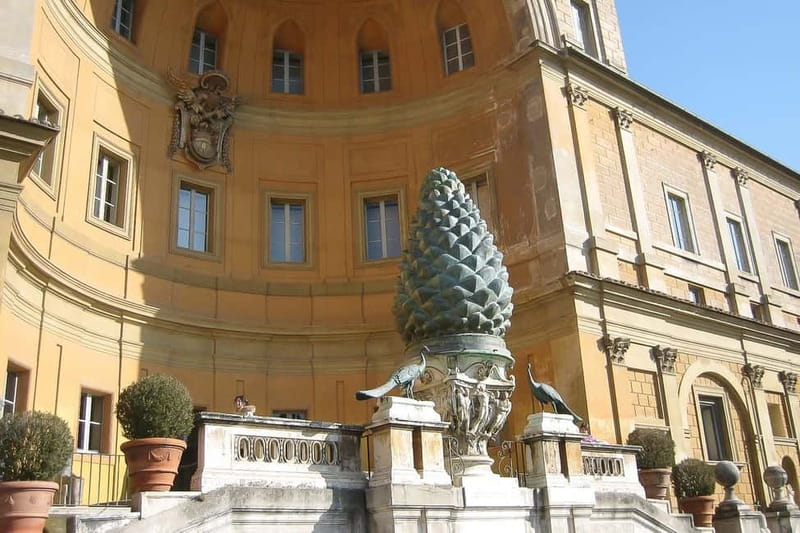
You start with the Courtyard of the Pigna. This is one of those visual warm-ups that helps you get your bearings fast. It’s a courtyard moment—open space, stone, big sculpture energy—so you’re not mentally exhausted before you enter the galleries.
Cortile Ottagono (Octagonal Courtyard)
Next is the Octagonal Courtyard. The geometry here helps the whole visit feel organized. Your guide can connect the site’s layout to what you’re about to see next, so you understand why the Vatican Museums are not just a random collection, but a structured art experience.
You can also read our reviews of more tours and experiences in Rome
Gallery of the Candelabra
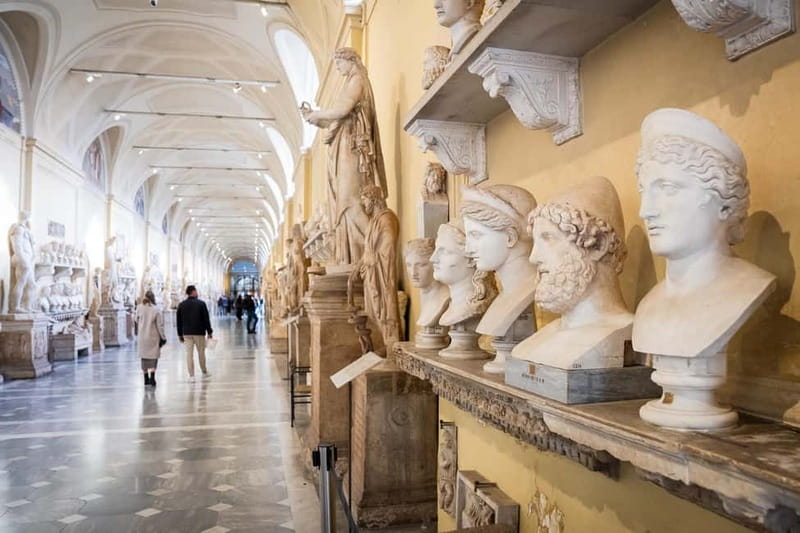
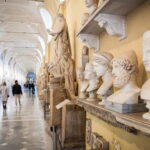
Then you move into the Gallery of the Candelabra. This is a classic “wow” gallery. The point is that it’s not only about famous works; it’s about the atmosphere—how the decorative program frames art so you notice both the objects and the setting.
A practical tip: when you enter rooms like this, look first for the “big pattern,” then let your guide zoom in. It makes the time feel more satisfying because you’re not just waiting for the next room to start.
Gallery of Tapestries
After that comes the Gallery of Tapestries, where the experience shifts from sculpture-like drama to textile artistry. Tapestries can be hard to appreciate quickly because they reward close looking. A guide helps you understand why these pieces were valuable, not just pretty.
If you like details, this stop often delivers. Your guide can help you read the room like a story rather than a checklist.
Gallery of Maps, Vatican Museums
The Gallery of Maps is a great turning point. By now, you’ve absorbed the rhythm of moving through major zones, and your brain is ready for something different. Maps are a different kind of art—part geography, part imagination—and they help you see the Vatican collection as a place where knowledge and art overlap.
Borgia Apartment and the Museum Stops That Lead to Raphael
This tour doesn’t stop at the headline rooms. It builds momentum toward them.
Borgia Apartment
You’ll visit the Borgia Apartment. This is an area that often feels more character-driven than the grandest “public-facing” galleries. It’s where the Vatican Museums start to feel like a lived-in papal palace, not just a museum floor.
Sala delle Muse (Museums hall stop)
Next up is Sala delle Muse. The name alone tells you the tone: this is about myth, inspiration, and artistic identity. Even if you’re not an art-history expert, a good guide can make this section easier to place in context so it doesn’t become one more room you pass through.
Why these stops matter
If you’ve ever visited museums and felt like you were seeing 50 rooms without understanding any of them, this is where the tour’s structure helps. The early galleries set visual expectations, and then these palace-linked stops help connect the collection to the people who commissioned and curated it.
Raphael Rooms: When Access Works Best, and What Happens If It Doesn’t
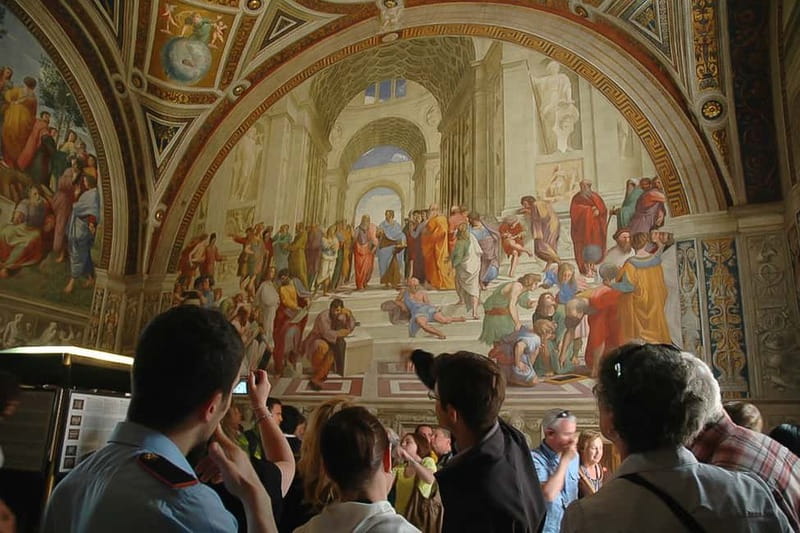
The Raphael Rooms are among the most anticipated parts of this route. They’re not just famous; they’re also the kind of masterpiece that changes how you experience everything around it. The wall-to-wall quality makes them feel like you’re inside a curated world.
This tour gives you a guided visit here, and the guide can point out elements you might never notice on your own. You’ll want to slow down in these rooms, because the value is in noticing how the art works as a whole, not just scanning for famous figures.
One key detail: access depends on crowd levels, timing, and guard routes. If they aren’t available, your guide adjusts the plan. In other words, you’re not left with a reduced experience. You’ll still be guided through alternative highlights, keeping the full 3-hour duration intact.
From a planning standpoint, that flexibility is reassuring. You’re visiting a working, rule-driven site, and the tour is designed to deal with that reality rather than pretending it won’t happen.
Sistine Chapel Before the Crowds: What Your Guide Will Help You See
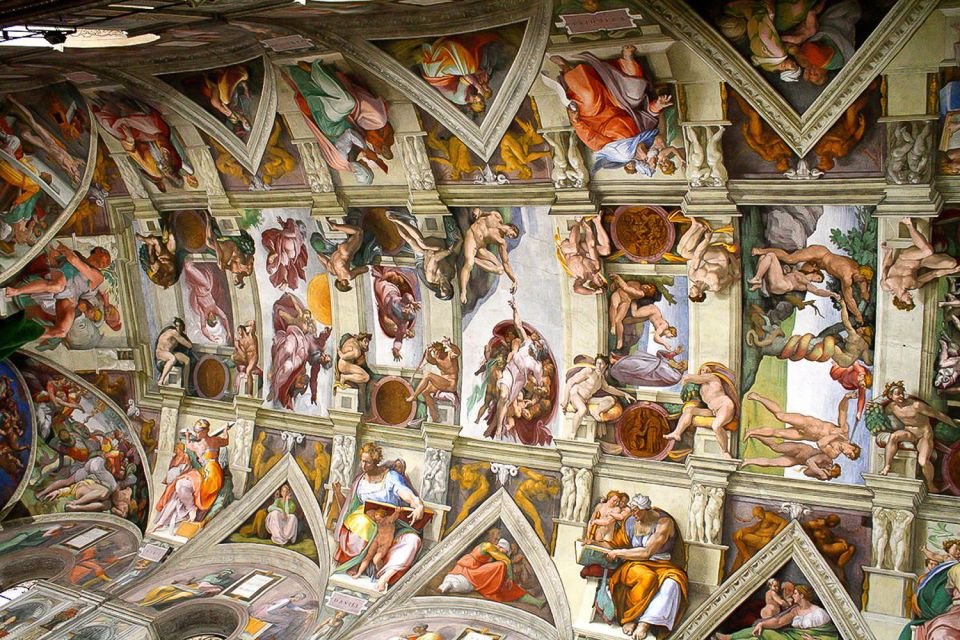
This is the reason to do an early start. The tour is designed to get you to the Sistine Chapel long before the peak wave.
In the chapel, your guide’s job is to help you focus. The ceiling is famous, but the room has layers: symbols, figures, storytelling sequence, and the way the art is meant to be read. Without guidance, it’s easy to stare and feel like you’re not sure where to look next. With guidance, you get a path through the visual material.
Also, being early matters for your body. You’re less likely to feel cramped or stuck at the back. That makes it easier to actually watch, compare, and understand rather than just snap photos and move on.
If you care about your time, this stop is where the tour earns its money. The “unhindered” experience isn’t just marketing language. It’s the difference between being overwhelmed and being able to pay attention.
St. Peter’s Basilica on a Private Schedule (Plus Closure Realities)
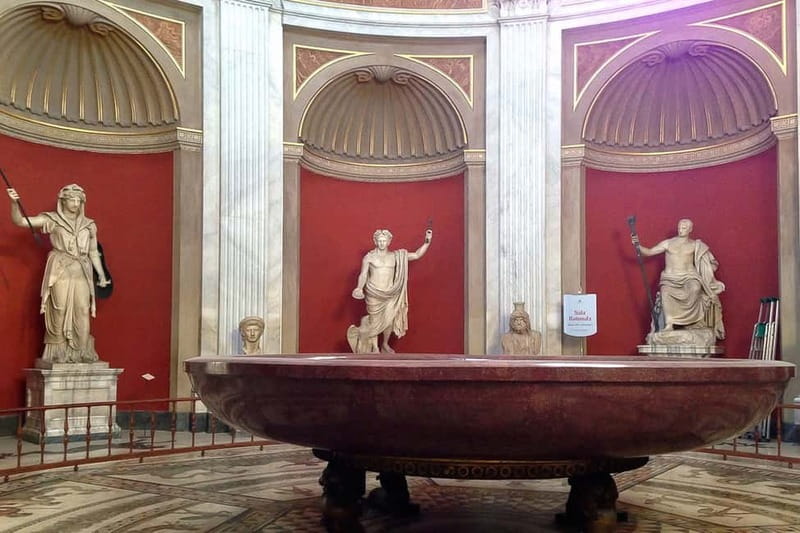
After the chapel, the tour continues to St. Peter’s Basilica. You’ll have a guided visit there as part of the 3-hour plan, so the day doesn’t end at the museums gate.
There’s one real-world caution, though. The Basilica may close without notice for private events. If that happens, the tour does not vanish. It continues with extended visits elsewhere to maintain the tour’s full value and duration.
There’s also a note for 2025: during the Jubilee period, Basilica closures may occur, and the tour adapts with alternative highlights while maintaining duration. No refunds are offered for Basilica closures based on the tour’s terms, so it’s worth keeping your expectations flexible for that season.
Practical takeaway: if St. Peter’s Basilica is your top priority, you’ll still likely see it, but it’s smart to expect that the plan can shift. A private guide is usually better equipped to manage that kind of change quickly.
Price and Value: Is $339.29 Per Person Worth It?
At $339.29 per person for a 3-hour private tour, this is not a budget option. But it can be good value if you’re the type of traveler who hates wasting time and wants a structured route through the biggest hits.
Here’s where the price makes sense:
- Skip-the-line entry: time saved can be the difference between enjoying the Vatican and feeling squeezed.
- Private, live guide: you’re buying interpretation, not just access.
- Targeted route: courtyards, signature galleries, Sistine Chapel, and a plan that includes St. Peter’s Basilica when possible.
- Flexibility: Raphael Rooms access can change, and the guide adjusts; Basilica closures can happen, and the tour adapts.
It also fits families. One review highlighted a guide named Sarah, who was described as an archaeologist and able to keep children engaged (kids aged 8 and 10). Another review praised Claudia for being kind and for sharing interesting information. That tells me a good guide here can shape the experience beyond history trivia—more like a guided conversation with clear navigation.
If you’re traveling with people who get tired of museums, or you want maximum art time with minimum confusion, this format is a strong match.
Who This Vatican Early Morning Private Tour Suits Best
This tour is ideal if you:
- Want to see the Vatican Museums and Sistine Chapel with less stress
- Prefer a planned route over self-guided wandering
- Like the idea of a guide tailoring focus (museums, Sistine Chapel, and possibly St. Peter’s Basilica)
- Care about pacing, especially if you’re visiting with children or mixed-interest companions
- Appreciate having someone who can explain not just what you’re looking at, but why it matters
It’s less ideal if you:
- Don’t want a structured itinerary and prefer to roam at your own tempo
- Only care about one single room and nothing else (because you’ll pay for the full guided flow)
Should You Book This Vatican Early Morning Private Tour?
If your goal is a calm, guided Vatican experience with early access and a clear path to the Sistine Chapel, I think it’s a smart booking. The price is steep, but you’re paying for three things that matter on-site: time, navigation, and context.
Choose it confidently if you value interpretation and want to start early to avoid the worst crowd pressure. Keep a little flexibility in your plans for Raphael Rooms access and for potential Basilica closures, especially if you’re traveling during Jubilee season. If that sounds manageable, this is one of the most practical ways to experience the Vatican without feeling like you’re just trying to survive it.
FAQ
How long is the Vatican early morning private tour?
The duration is 3 hours.
Where do I meet the guide?
Meet at Café Vaticano, Viale Vaticano 100, across the street from the Vatican Museum entrance. Arrive 15 minutes prior to start.
Does the tour include skip-the-line entry?
Yes. You get skip-the-line entrance to the Vatican Museums through a separate entrance.
What stops and areas are included?
The tour includes guided visits through the Vatican Museums highlights such as the Courtyard of the Pigna, Octagonal Courtyard, Gallery of the Candelabra, Gallery of Tapestries, Gallery of Maps, Borgia Apartment, Sala delle Muse, Raphael Rooms, and the Sistine Chapel, with a visit to St. Peter’s Basilica as well.
Are the Raphael Rooms guaranteed?
Access to the Raphael Rooms depends on crowd levels, timing, and guard routes. If they aren’t available, your guide adjusts the visit.
What if St. Peter’s Basilica closes during the tour?
The Basilica may close without notice for private events. If that happens, the tour continues with extended visits elsewhere to maintain the tour duration.
Which languages are available for the guide?
The tour offers live guides in English, French, German, and Spanish.
Is the tour wheelchair accessible?
Yes, it is described as wheelchair accessible.
Can I cancel or reserve without immediate payment?
The tour offers free cancellation up to 24 hours in advance for a full refund. It also offers reserve now & pay later, so you can book and pay nothing today.