REVIEW · ROME
Jewish Rome District, Old Ghetto and Trastevere Private Tour
Book on GetYourGuide →Operated by Crazy4rome srls · Bookable on GetYourGuide
Rome’s Jewish landmarks are close enough to feel real.
This private Jewish Rome District, Old Ghetto and Trastevere tour makes history walkable, starting near Teatro di Marcello and moving through key sites like Portico d’Ottavia and the Great Synagogue. I especially like the way the route connects the story of the old community with what you can still see today, and how the guide keeps you oriented with concrete street-level details. The main thing to consider: it’s a walking tour on cobblestones, so comfortable shoes matter.
In 3 hours, you get a focused hit of ancient-to-medieval Rome—complete with a crossing over the Fabricio Bridge area and a stroll through the maze of Trastevere lanes. I like that it’s a private group with an official expert guide, so you can go at a pace that fits you instead of squeezing into a crowded group. One possible drawback is simply the scope: at 3 hours, it’s not meant to be a full deep research tour of every site you’ll pass.
In This Review
- Key highlights you’ll feel immediately
- Why this 3-hour Jewish Rome route makes sense
- Meeting near Teatro di Marcello and getting oriented fast
- The Old Ghetto experience: what you should watch for on the walk
- Piazza Mattei and Portico d’Ottavia: small stops with big meaning
- Via della Reginella: where the route feels local
- Great Synagogue of Rome: the main temple visit
- Crossing toward Tiber Island and heading into Trastevere
- Trastevere on foot: cobbles, old houses, and a slower pace
- Skip-the-line and private guiding: how you’ll actually experience the timing
- Price and value: what $456.21 is buying you
- Who should book this Jewish Rome District tour
- Should you book this tour?
- FAQ
- FAQ
- What’s the duration of the Jewish Rome District, Old Ghetto and Trastevere tour?
- How much does the tour cost?
- Where do I meet the guide?
- Where does the tour end?
- Are tickets required?
- Does the tour have a separate entrance to help avoid lines?
- What languages are available for the live guide?
- Is this tour wheelchair accessible?
- What should I bring, and what can’t I bring?
Key highlights you’ll feel immediately
- Old Ghetto street context: understand how the community formed around the foot of Capitoline Hill and what life was shaped by there
- Fabricio Bridge connection: a quick Roman anchor point linking you to Tiber Island and onward to Trastevere
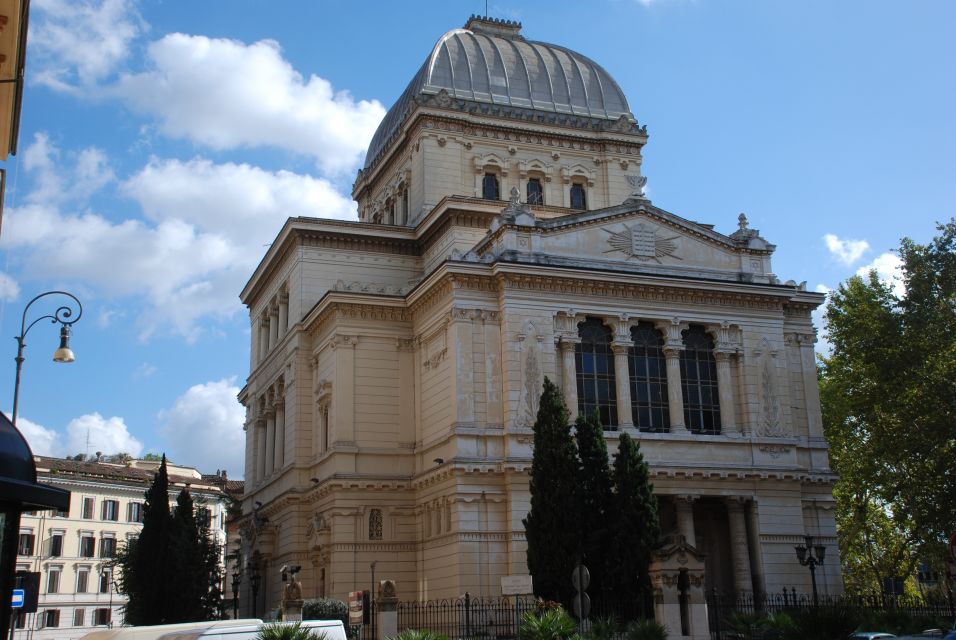
- Great Synagogue visit: time set aside for the main Jewish temple in Rome
- Big sights, short walks: Piazza Mattei, Portico d’Ottavia, Via della Reginella, plus Trastevere streets in one run
- Private official expert guide: strong match of storytelling to what you’re actually seeing
- Skip-the-line entrance: separate entrance helps keep momentum
Why this 3-hour Jewish Rome route makes sense
Jewish Rome isn’t just a list of buildings. It’s a map of how Rome changed—from the early community presence to the later creation of the Ghetto, and then into the modern city fabric you walk through today. What makes this tour work is that it’s built for your feet and your attention span. You get a clear arc: starting in the area near the ancient theater zone, then moving into the Ghetto district, and finally winding into Trastevere’s older-feeling streets.
The total time matters. Three hours is long enough to see major landmarks like the Great Synagogue of Rome, Portico d’Ottavia, and Piazza Mattei, but short enough that you don’t end up rushing at the end. It’s also private, which usually means less time lost to crowd friction and more time spent understanding what you’re looking at.
If you want a route that feels like a guided walk through a lived-in neighborhood—rather than a checklist—this format is a good fit.
You can also read our reviews of more private tours in Rome

Meeting near Teatro di Marcello and getting oriented fast
You meet at the exit of Antico Caffè del Teatro di Marcello (Via del Teatro di Marcello, 42). That’s a smart starting point because it drops you into a part of Rome where ancient stone is always in the background. It also gives the guide an easy first step: orient you in the city’s layout before you head into the more specific Jewish landmarks.
From there, the tour begins moving into the Jewish district area with a guided walkthrough of about 30 minutes. This isn’t just “look here, read this.” The value is in how the guide links geography to the community story—Capitoline Hill nearby, and the way the district developed near the Tiber on the right bank as a place for merchants, sailors, fishermen, and foreigners.
For me, orientation is half the success of a Rome walk. If you understand where you are in relation to the river and the big landmarks, the rest of the route makes more sense immediately.
The Old Ghetto experience: what you should watch for on the walk
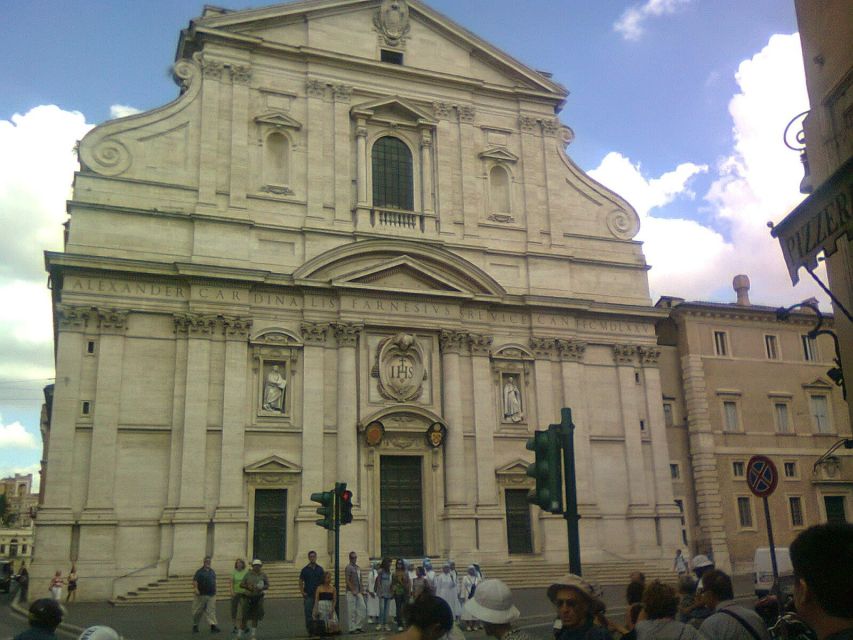
The old Ghetto area is where the story turns sharply. The Ghetto was created between 1555 and 1870, when Jewish people were forced to live there. Later, after Rome became the capital of Italy, the old Ghetto was dismantled and Jewish citizens were granted citizenship. That time sequence matters because it explains why the district’s layout and landmarks feel like they belong to multiple eras at once.
During the focused walk through the Jewish district area (about 30 minutes), keep an eye on how daily-life details mix with symbolic ones. Even if you don’t memorize dates, the guide’s job is to help you connect those dates to the streets. Think of it like learning to read a neighborhood: you start noticing why certain places drew religious life, commerce, and community identity.
A practical note: this portion is part of a walking tour, so don’t plan to wear shoes you’ll regret by stop three. You’ll get the most out of the guide’s explanations when your feet aren’t distracting you.
Piazza Mattei and Portico d’Ottavia: small stops with big meaning
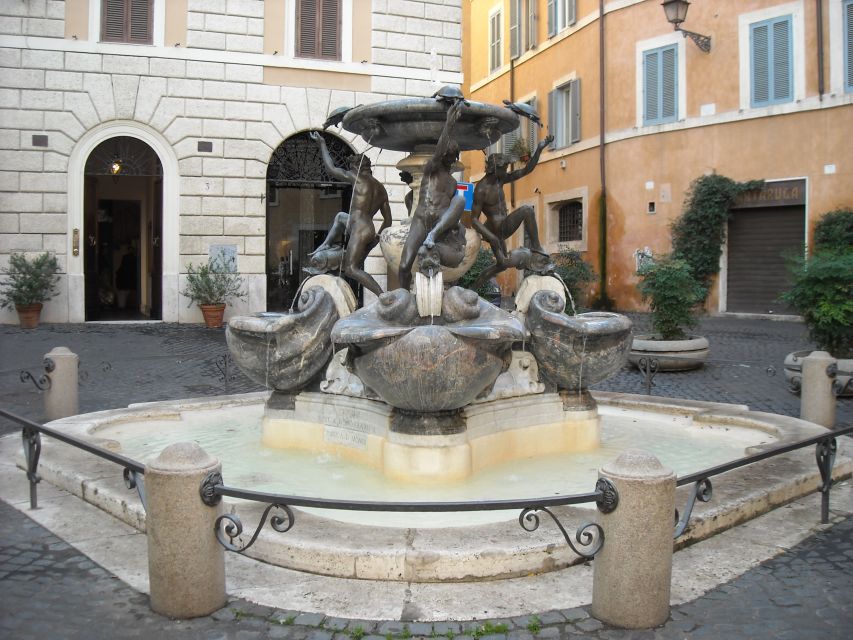
After the Ghetto area, you spend about 20 minutes at Piazza Mattei. This is the kind of stop where you can actually slow down without losing the day. Piazza Mattei works well in a route like this because it gives you a visual pause: you’re not only moving through history; you’re also getting a sense of how the area breathes in modern Rome.
Next comes Portico d’Ottavia, another 20-minute guided moment. Portico d’Ottavia is one of those places that feels “Roman” even when you’re thinking about the Jewish district story. The tour’s benefit is that it doesn’t treat the sites as isolated monuments. Instead, it connects the Roman structures in the area to the lived community around them.
If you’re the type who likes understanding why a square or portico matters, you’ll enjoy these stops. If you prefer only religious sites, you might feel these are more background—but they’re still useful background, because they help you understand the neighborhood’s physical logic.
Via della Reginella: where the route feels local
Via della Reginella is included for about 20 minutes. This kind of street stop can be easy to skip on a self-guided day, but it’s exactly where a good guide earns their pay. Streets like this are where you get the rhythm of the district—turns, sightlines, and that “wait, this is still here?” feeling.
What I like about including Via della Reginella is that it bridges the gap between major landmarks. After you’ve seen the big-name Jewish sites and historical touchpoints, you can start to relax into the neighborhood. That shift makes the rest of the tour more enjoyable.
Also, being on foot in Rome is the best way to understand how close things really are. This tour keeps those street transitions tight, so you stay mentally engaged instead of spending long stretches just getting from A to B.



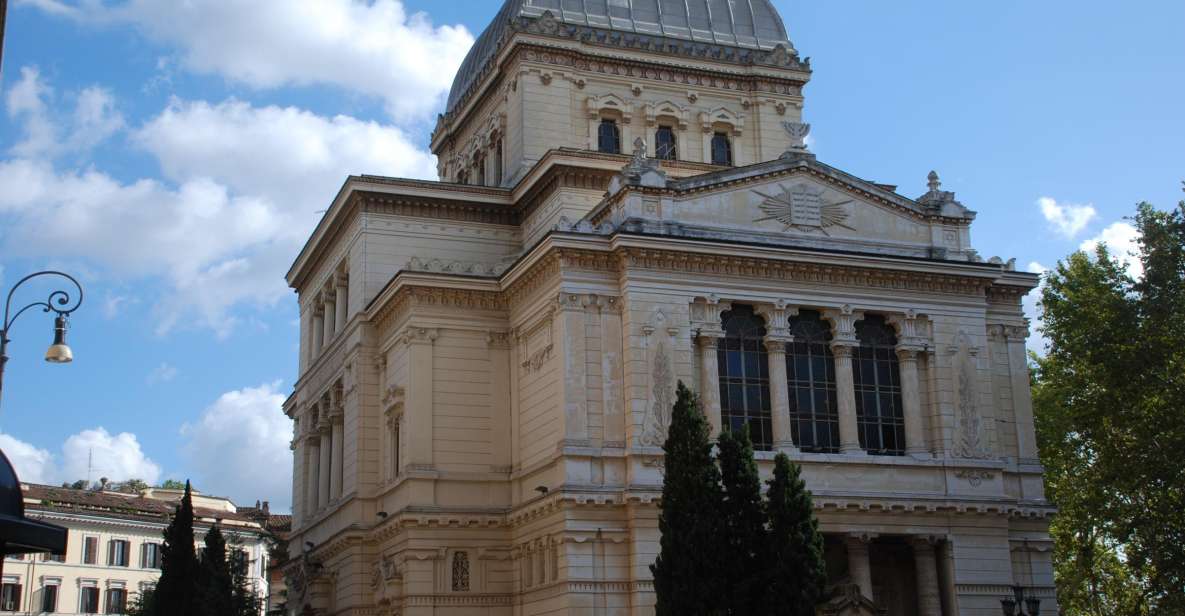
Great Synagogue of Rome: the main temple visit
The Great Synagogue of Rome gets about 20 minutes. This is the moment many people come for, and it’s also where the tour’s timing helps. Instead of a rushed “here it is,” you have a set block for a guided visit to the synagogue.
The context you’ll hear is crucial: between 1901 and 1904, the Great Synagogue was built to celebrate the event of Jewish citizenship in the post-unification era. It’s still the main Jewish temple in Rome. That doesn’t just add trivia. It explains why the building feels like a statement of belonging in a changing Italy.
The tour also mentions skip-the-line through a separate entrance, which is a practical win. Even when tickets aren’t required, you still want to avoid long waits that break your flow. Having that extra route helps keep the whole walk on schedule.
Crossing toward Tiber Island and heading into Trastevere
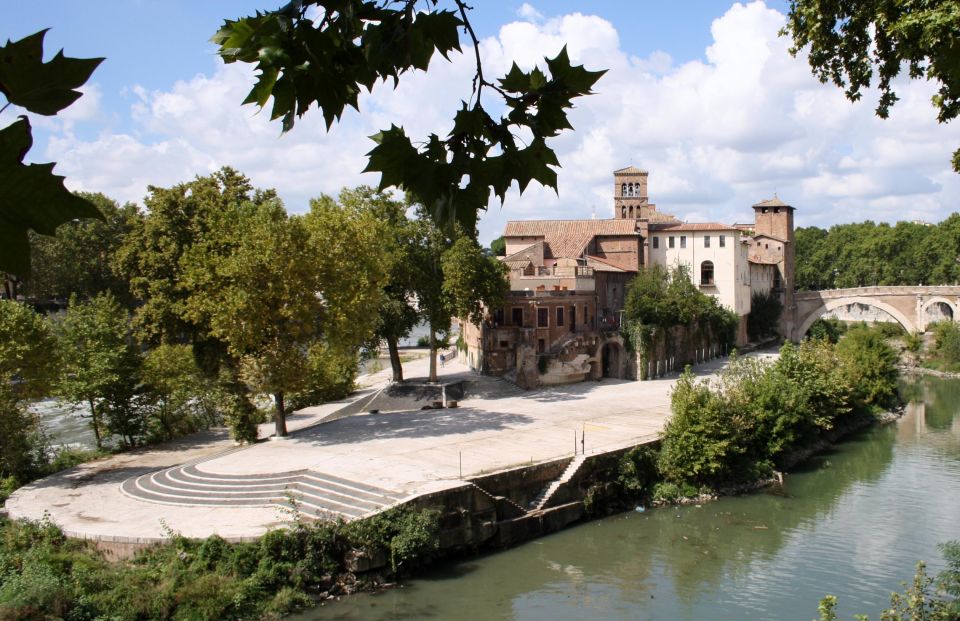
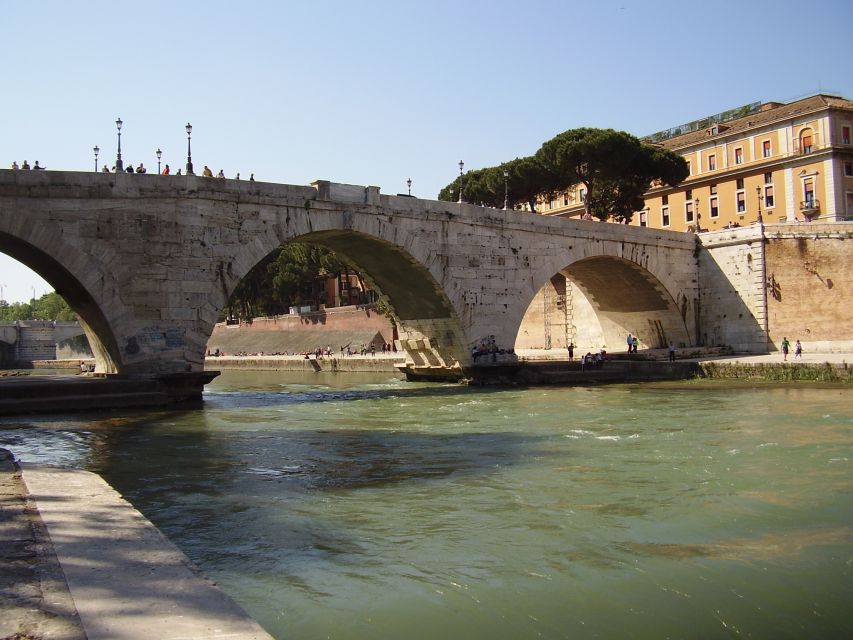
Tiber Island is on the itinerary for about 20 minutes. This is another “thinking landmark” stop. The tour connects the earlier Jewish district route to the broader city geography—especially via the river crossing element. You’ll also hear about Fabricio Bridge (62 B.C.), described as the oldest bridge left in Rome, which gives you a grounded sense of how far back the city’s infrastructure goes.
From here, you move into Trastevere. This transition is one of the best parts of the tour because it shifts your Rome vibe. The Jewish district story is more structured and historically heavy. Trastevere, by contrast, feels like a maze—narrow, winding streets and cobblestone lanes lined with ancient houses.
That combination is why the tour works: you don’t just leave one neighborhood and enter another. You feel how Rome changes as you walk across the river and into a different street culture.
Trastevere on foot: cobbles, old houses, and a slower pace
Trastevere is guided for about 20 minutes, and it’s the perfect capstone. Even if you’ve been to Rome before, Trastevere often feels like the part where you stop thinking like a tourist and start thinking like a walker. The included time is just enough to enjoy that maze of side streets without turning your day into a wandering free-for-all.
The tour description emphasizes that Trastevere maintains its old character with cobblestone streets and ancient houses. With a guide, you also get “why this place feels this way” in addition to “what you see.” That’s the difference between taking pictures and actually understanding the space you’re in.
One small consideration: Trastevere’s lanes can get crowded and narrow. Private tour pacing helps, but you should still expect slow moments if the street flow gets tight.
Skip-the-line and private guiding: how you’ll actually experience the timing
This is a private group tour with a private guide service and a private official expert guide. You also get live guiding in multiple languages: Spanish, English, French, German, Italian, Portuguese, Russian. If your group has mixed language needs, this is a big plus because you’re not stuck doing half-translation.
Skip-the-line matters most when you’re visiting something that can attract lineups. The tour notes a separate entrance for skipping the line, and even though no tickets are required, the synagogue timing still benefits from avoiding bottlenecks.
Practically, you’ll feel this as less idle time. In a history-heavy district like this, stopping to wait can drain energy. A tour that keeps you moving lets the guide’s storytelling land while it’s still fresh.
Also, the experience is wheelchair accessible, which is a meaningful detail if you or your party needs an accessible route. Still, it’s worth thinking about cobblestones and street unevenness; a guide can help you manage movement better than most self-guided days.
Price and value: what $456.21 is buying you
The listed price is $456.21 per group (up to 1) for a 3-hour private tour. That might sound high if you’re comparing it to a standard group walking tour. But private tours in central Rome cost time and expertise: you’re paying for an official expert guide who can pace your stops, adjust explanations, and keep the route coherent.
Here’s what you get for the money based on the tour info:
- 3 hours of private expert guiding (not a quick drop-off)
- Stops that cover multiple major areas in one flow: old Jewish district, Piazza Mattei, Portico d’Ottavia, Via della Reginella, Great Synagogue, Tiber Island, and Trastevere
- Skip-the-line access through a separate entrance
- A guided structure that’s specifically designed around neighborhood context, not random highlights
If you’re traveling solo, couples, or want a custom pace, the value often lands better. If you’re trying to stretch a tight budget, it may be worth comparing to a cheaper group tour—but you’ll likely give up some of the focused pacing and language flexibility that this private setup offers.
Who should book this Jewish Rome District tour
This is ideal if you want:
- A structured walk that connects history to streets you can see
- A strong stop at the Great Synagogue of Rome with guided context
- A finish in Trastevere that feels like a neighborhood, not a rushed sightseeing stop
I also think it’s a good choice if you like authenticity over speed. You’re walking through real districts—old lanes, squares, porticoes—so the tour’s value is in interpretation, not just monuments.
Who might not love it? If you want a full-day museum-and-archaeology schedule, 3 hours may feel short. And because it’s a walking tour with cobblestones, anyone sensitive to uneven ground should plan accordingly (comfortable shoes are a must).
Should you book this tour?
Yes, if your goal is a high-quality, guided Rome experience that’s both historically grounded and genuinely walkable. The strongest reason to book is the combination of private expert guidance and a route that balances major landmarks with street-level context—Ghetto area to synagogue to Trastevere.
If you care about making your time count without spending it stuck in crowds, the skip-the-line separate entrance adds practical value. And because it’s offered in multiple languages, it’s also a smart option for mixed-language groups.
If you’re mainly after a single religious site and you don’t care about the neighborhood around it, you might feel the detours to Piazza Mattei and Portico d’Ottavia are extra. But for most people, those stops help the story click.
FAQ
FAQ
What’s the duration of the Jewish Rome District, Old Ghetto and Trastevere tour?
It lasts 3 hours.
How much does the tour cost?
The price is $456.21 per group (up to 1).
Where do I meet the guide?
Meet at the exit of Antico Caffè del Teatro di Marcello (Via del Teatro di Marcello, 42).
Where does the tour end?
It ends back at the meeting point, at Piazza Trilussa.
Are tickets required?
No tickets are required.
Does the tour have a separate entrance to help avoid lines?
Yes, it includes skip-the-line access through a separate entrance.
What languages are available for the live guide?
The guide is available in Spanish, English, French, German, Italian, Portuguese, and Russian.
Is this tour wheelchair accessible?
Yes, it is wheelchair accessible.
What should I bring, and what can’t I bring?
Bring comfortable shoes. Luggage or large bags are not allowed.