REVIEW · ROME
Palazzo Barberini: 2-Hour Private Tour
Book on GetYourGuide →Operated by Rome Guides · Bookable on GetYourGuide
Art history gets real, fast. In Palazzo Barberini, you’ll connect the dots from the Middle Ages to Baroque Rome while focusing on masterpieces like Raphael’s La Fornarina and the drama of Caravaggio.
I especially like how this tour turns famous names into stories you can actually remember—politics, religion, and changing tastes show up right alongside the paintings. My second big plus is the “wow” factor of seeing Baroque style land with force, including Pietro da Cortona’s ceiling and the walk ending at Piazza Navona.
One thing to consider: it’s a 2-hour private tour that moves at a focused pace, and it’s not suitable for wheelchair users. If you need lots of breaks or extra accessibility support, you may want to pick a different format.
In This Review
- Key highlights to look for
- What This Private Palazzo Barberini Tour Really Covers
- Meeting point: a small step that saves time
- The big story: Middle Ages to Baroque, told through real art
- Raphael’s La Fornarina: more than a beautiful face
- Caravaggio and the so-called Cursed Painter storyline
- Titian, El Greco, and Guido Reni: different answers to the same questions
- Pietro da Cortona’s ceiling: the Baroque performance you can walk into
- Piazza Navona finish: why you’ll care after the last masterpiece
- Price and value: what $135.94 buys you in real terms
- Who this private Palazzo Barberini tour is best for
- Should you book this tour?
- FAQ
- FAQ
- How long is the Palazzo Barberini private tour?
- Where does the tour start and where do I meet the guide?
- What’s included in the price?
- Is hotel pickup or drop-off included?
- Does the tour run in bad weather?
- Are luggage or large bags allowed?
- Is this tour suitable for wheelchair users or mobility impairments?
- What languages is the guide speaking?
Key highlights to look for
- Raphael’s La Fornarina as the starting point for courtly art and symbolism
- Caravaggio, the so-called Cursed Painter, with context for why his style shocked people
- A guided path through Middle Ages to Baroque so you don’t just see art—you understand it
- Pietro da Cortona’s ceiling, a major Baroque moment you’ll remember after you leave
- A finish in Piazza Navona, a practical way to spot Baroque Rome outside the museum walls
What This Private Palazzo Barberini Tour Really Covers
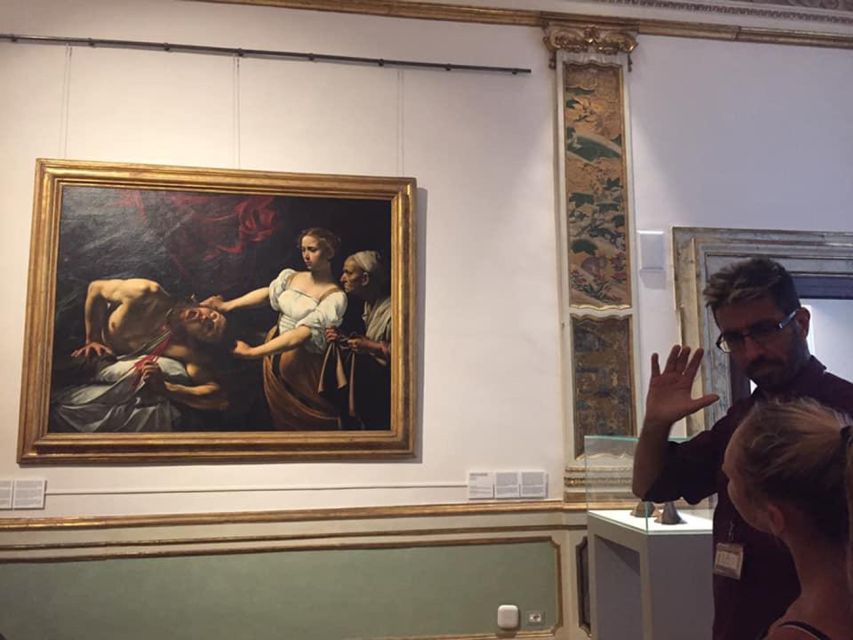
This isn’t a long museum marathon. It’s a tight, 2-hour private tour built to help you understand how Italian art changes over time—and why it changes. You start with the broader shift from medieval thinking into later styles, then you work forward toward the Baroque look: theatrical, emotional, and designed to move you.
You’ll focus on major artists you’ve likely heard of—Raphael, Titian, Caravaggio—but you won’t treat them like random celebrity names. The guide explains the religious and political changes that helped shape the art styles you’re seeing. That context matters because paintings don’t appear out of nowhere. They’re made for a world with rules, sponsors, and big public ideas.
And because it’s private, you can ask follow-up questions in the moment. If you’re trying to figure out what you’re looking at—symbols, composition choices, why a style looks different—you’re not waiting your turn in a big group.
You can also read our reviews of more private tours in Rome
Meeting point: a small step that saves time
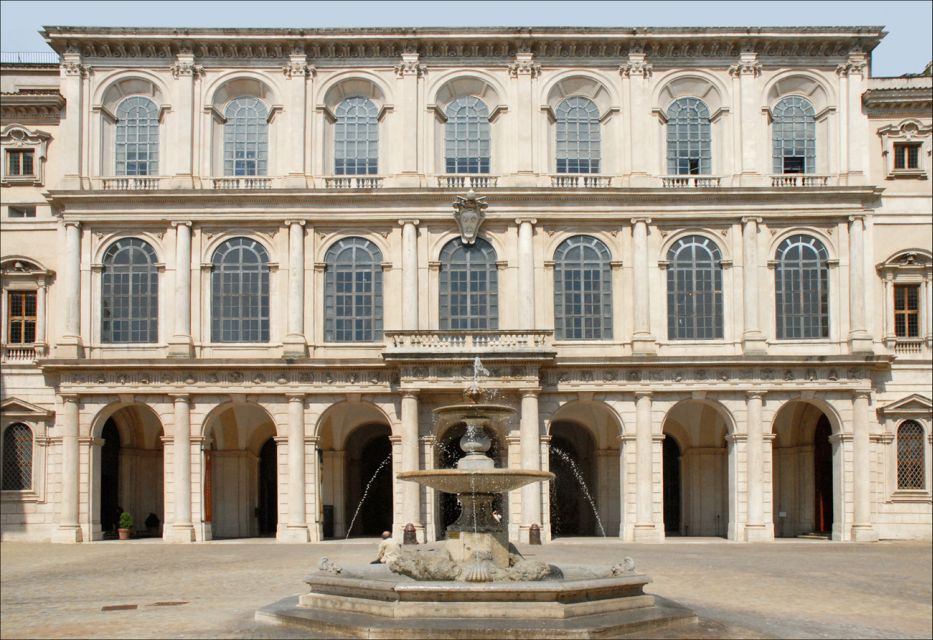
You’ll meet your guide in front of the Museum entrance, in the courtyard area. The guide waits holding a sign with the tour name, and they’ll be easy to spot.
Practical tip: arrive 15 minutes early. That gives you time to get oriented and avoid the half-minute panic that happens when you’re trying to find the exact courtyard corner with a sign in your hand.
At the start, entry tickets are distributed for you. Also note what isn’t included: there’s no hotel pickup or drop-off, so you’ll need to get yourself to the meeting point on your own.
The big story: Middle Ages to Baroque, told through real art
One of the smartest parts of this tour is that it doesn’t treat art history as a textbook timeline. You’ll see the “why” behind style shifts as your guide moves you from earlier periods toward the Baroque.
Here’s what you’re really learning:
- In earlier eras, art tends to feel more controlled and symbolic.
- Later, especially as you move toward Baroque, art leans into drama—lighting, emotion, and a sense that the viewer is being pulled into the scene.
Your guide ties these shifts to religious and political changes, so you’ll start noticing patterns. For example, if you’re looking at works where religious messaging is strong, the guide can point out how that messaging affects what artists choose to emphasize.
If you’ve ever walked through a museum thinking you were supposed to “get it,” this kind of storytelling approach helps you start getting it fast.
Raphael’s La Fornarina: more than a beautiful face
Raphael’s La Fornarina is a major stop, and it’s a great choice for this tour. Raphael gives you a bridge: you can see the refined ideals of his time and also understand how art can function like visual persuasion.
What I like about this stop is that it acts like a grounding point. Before you hit the darker, more controversial energy associated with later Baroque artists, you get a work that’s easier to connect with visually. That makes it easier to notice the contrast when styles shift.
You’ll also hear stories that put the painting into its social and historical context. Even if you’re not the type who reads every museum label, the guide’s explanations help you see why the artwork mattered to the world that made it.
Caravaggio and the so-called Cursed Painter storyline
Then comes Caravaggio—the one who makes people raise their eyebrows. Your tour includes the story of Caravaggio, the so-called Cursed Painter, and that nickname isn’t just drama for drama’s sake.
This is where you’ll see how style can be controversial. Caravaggio’s approach is tied to the emotional pull of Baroque art: bold lighting choices, intense expressions, and a realism that can feel unsettling compared with older expectations.
In a 2-hour private setting, this stop is especially effective because the guide can connect the dots quickly. You’re not just learning that Caravaggio has a certain look—you’re learning why his approach landed the way it did in his own time, and how religious or political pressures shaped what people accepted.
If you like art that feels like it has a pulse, you’ll probably find Caravaggio to be the emotional highlight.
You can also read our reviews of more tours and experiences in Rome

Titian, El Greco, and Guido Reni: different answers to the same questions
This tour doesn’t only focus on one camp. You’ll also admire works by other masters, including Titian, El Greco, and Guido Reni.
Even without getting lost in technical jargon, you’ll notice something important: different artists respond differently to the same big forces—belief, patronage, public taste, and the role art plays in society. The guide helps you compare what each artist is doing and why their choices matter.
- Titian helps you understand the power of color and presence in Italian painting.
- El Greco offers a more distinctive style, which can feel sharper or more unusual compared with the classic balance many people associate with Renaissance art.
- Guido Reni is another key contrast point, showing how Baroque energy could be expressed in different ways, not only through intensity.
If you’re the type who enjoys “spot the differences” sightseeing, this part of the tour is your friend. You’ll walk away with a clearer mental map of how styles evolve and branch, instead of treating Italian art like one straight line.
Pietro da Cortona’s ceiling: the Baroque performance you can walk into
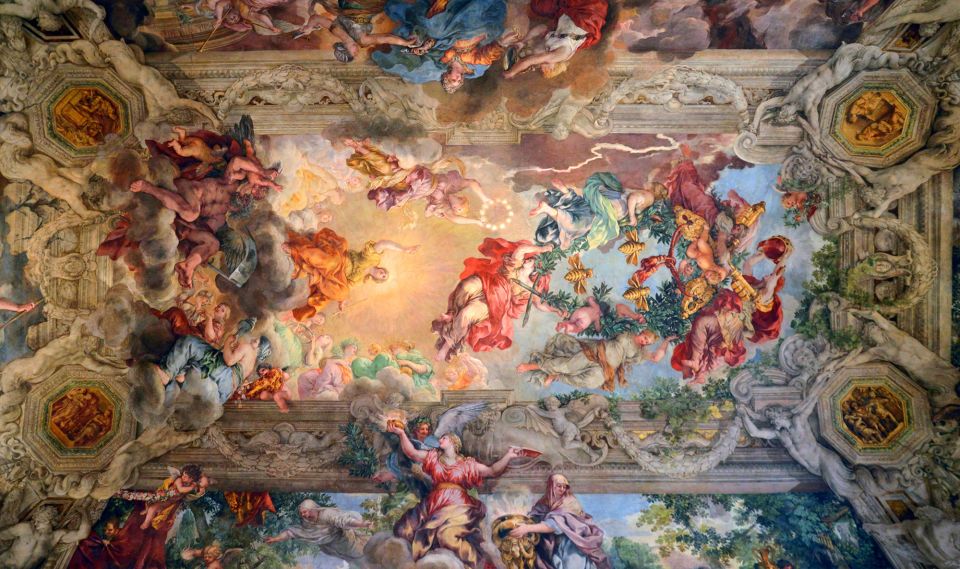
Next comes one of those experiences that’s hard to explain to people who haven’t seen it. You’ll admire the magnificent ceiling by Pietro da Cortona, a famous example of Baroque style.
Baroque ceilings are built like theater sets. The effect is meant to pull your attention upward and make you feel like the space is bigger than it really is. In a guided format, this becomes much easier to appreciate because the guide can explain what you’re seeing and why it was done.
I like that this tour doesn’t stop at “look at the ceiling.” You’ll learn what makes Baroque Baroque: the push toward drama, the sense of motion, and the way artists use composition to guide your gaze.
When you leave, you’ll likely notice Baroque techniques showing up in places outside the museum, especially in public spaces—where the city itself becomes part of the story.
Piazza Navona finish: why you’ll care after the last masterpiece
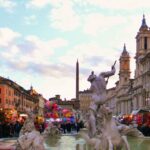
You don’t just end back at the museum in a dead-end way. The tour finishes with a stroll to Piazza Navona, described as the symbol of Baroque style in Rome.
This is a smart move, because it connects art inside to architecture outside. You can look at Baroque painting and still wonder, so what? Piazza Navona gives you an immediate answer. You’ll see how public spaces use the same kind of drama—curves, scale, and visual rhythm—to shape how people move and gather.
Even if you’re tired at the end of the tour, Piazza Navona is worth it as a payoff. It helps the history stick because your eyes get a real-world reference point.
Price and value: what $135.94 buys you in real terms
At $135.94 per person, this tour sits in the “serious but not outrageous” category for a private guided museum experience. The value comes from what’s included and how the time is used.
You get:
- Entry tickets
- A guide
- A private tour
You don’t get:
- Hotel pickup/drop-off
Here’s the practical way I’d think about the price: you’re paying for a guide to do the heavy lifting—connecting time periods, explaining political and religious shifts, and helping you interpret what you see in a short window. If you love art but don’t want to spend hours comparing labels on your own, private guidance can be worth every dollar.
Also, because the group is private, you’re not trapped in a pace that works for someone else. That matters in museums, where attention spans—and stamina—vary wildly.
Who this private Palazzo Barberini tour is best for
This is a strong match if you:
- Want art history that includes context, not just names
- Enjoy Raphael and Caravaggio and want deeper meaning fast
- Prefer a guided route that keeps you focused for 2 hours
- Like ending with a real Rome location, not just museum doors
It may be a less comfortable choice if:
- You need wheelchair-friendly access (this tour is not suitable for wheelchair users)
- You’re traveling with luggage or large bags (those aren’t allowed)
- You want a slow, browse-all-day pace rather than a focused guided walk
One more practical note: it takes place rain or shine, so bring what you need to stay comfortable.
Should you book this tour?
If you want a clean, guided way to understand Italian art’s shift from medieval roots into Baroque drama, I think this is a smart booking. The mix of Raphael (La Fornarina), the intensity of Caravaggio, and the showmanship of Pietro da Cortona’s ceiling gives you a strong “greatest hits with context” experience in just 2 hours.
Book it if you care about meaning and want the city connection at the end in Piazza Navona. Skip it if accessibility is a concern or if you’re hoping for a long, meandering museum day with lots of independent wandering.
FAQ
FAQ
How long is the Palazzo Barberini private tour?
The tour lasts 2 hours.
Where does the tour start and where do I meet the guide?
You’ll meet the guide in front of the Museum entrance, in the courtyard. The guide will wait holding a sign with the tour name. Arrive 15 minutes early.
What’s included in the price?
The tour includes entry tickets, a guide, and the private tour.
Is hotel pickup or drop-off included?
No. Hotel pickup and drop-off are not included.
Does the tour run in bad weather?
Yes. The tour takes place rain or shine.
Are luggage or large bags allowed?
No. Luggage or large bags are not allowed.
Is this tour suitable for wheelchair users or mobility impairments?
No. This tour is not suitable for wheelchair users and people with mobility impairments.
What languages is the guide speaking?
The guide offers the tour in English and Italian.