REVIEW · ROME
Rome: Appia Antica & Ancient Underground Labyrinth by Ebike
Book on GetYourGuide →Operated by Bicycle Roma · Bookable on GetYourGuide
Ancient Rome, right on your handlebars. What makes this ride special is the mix of a classic surface route—Via Appia Antica on original cobblestones—with a hands-on visit to an underground Roman quarry labyrinth at Caffarella Park. I love how the e-bike keeps the pace friendly while you still feel the grit and age of the road, and I love that the tour doesn’t stop at monuments above ground. One big consideration: it’s not for claustrophobic people, since part of the experience goes underground.
The whole thing runs about 3.5 hours with a live guide (English, Italian, French, Spanish) and usually up to 10 people, so it feels like an active day, not a museum shuffle. You’ll ride a lot—about 90% on the Roman paving of the Appia Antica with no car traffic (only resident access)—and the route is planned to be safe and calm. I’ll give you the stop-by-stop breakdown so you can decide if this matches your kind of Rome.
In This Review
- Key highlights worth showing up for
- Starting at Basilica di San Sebastiano Fuori le Mura: how it all begins
- The Appia Antica e-bike ride: why the road is the star
- A possible drawback to factor in
- Parco degli Acquedotti photo stop: aqueduct vibes that make sense on foot and bike
- Torre Fiscale Park: a short, electric-feeling break
- Caffarella Park biking: where ruins and green space share the frame
- Sotterranei di Roma underground quarry: what to expect below ground
- Small comfort tips that matter
- What the day feels like: pace, safety, and group size
- Price and value: why $82.34 can make sense
- Who should book this tour (and who should skip it)
- Guide quality: when the stories actually land
- Getting there and where you end up
- Should you book the Rome: Appia Antica & Ancient Underground Labyrinth by Ebike?
- FAQ
- How long is the e-bike tour?
- What’s included in the price?
- Where do we meet and where do we end?
- What should I bring?
- Is it okay for children?
- Is the tour suitable for claustrophobic people?
- Are pets allowed?
Key highlights worth showing up for
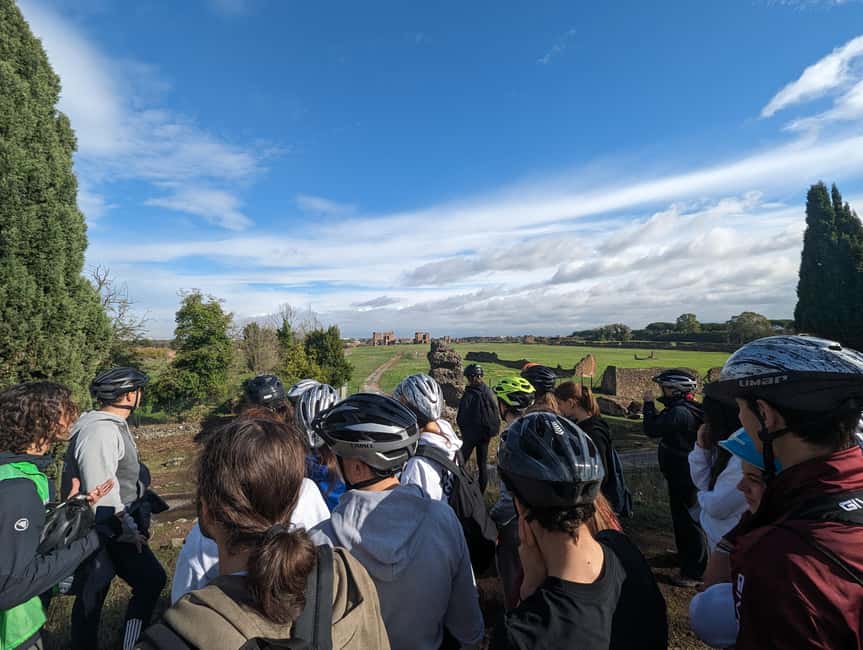
- 2,300-year-old cobblestones on the Appia Antica, with e-bike help when you need it
- Underground Roman quarry visit as a real switch-up from surface monuments
- Caffarella Park nature-and-ruins biking, including aqueduct and tomb-area views
- Electric-bike moment at Torre Fiscale Park for a short, fun boost
- Small-group feel (up to 10) plus a local guide who explains what you’re seeing
Starting at Basilica di San Sebastiano Fuori le Mura: how it all begins
Most Rome tours start in the center. This one starts a bit farther out, at the Basilica di San Sebastiano Fuori le Mura. You’ll meet near the Sebastiano Catacombs entrance, in front of it and next to the drinking fountain, and then your guide leads you on foot to the bike rental point.
There’s a real benefit to starting here. It sets the tone: you’re not hopping from one famous photo spot to the next. You’re leaving the city center energy and moving into a quieter Roman countryside rhythm, with the Appia Antica road gradually taking over the day.
Practical note: public transport is straightforward. If you’re coming by transit, you can take bus 118 toward Villa dei Quintili and get off at the Basilica di San Sebastiano stop. Use that to plan for a smooth arrival buffer—these days go best when you’re not sprinting to meet the group.
You can also read our reviews of more cycling tours in Rome
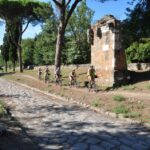
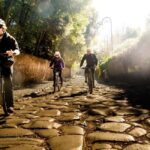
The Appia Antica e-bike ride: why the road is the star
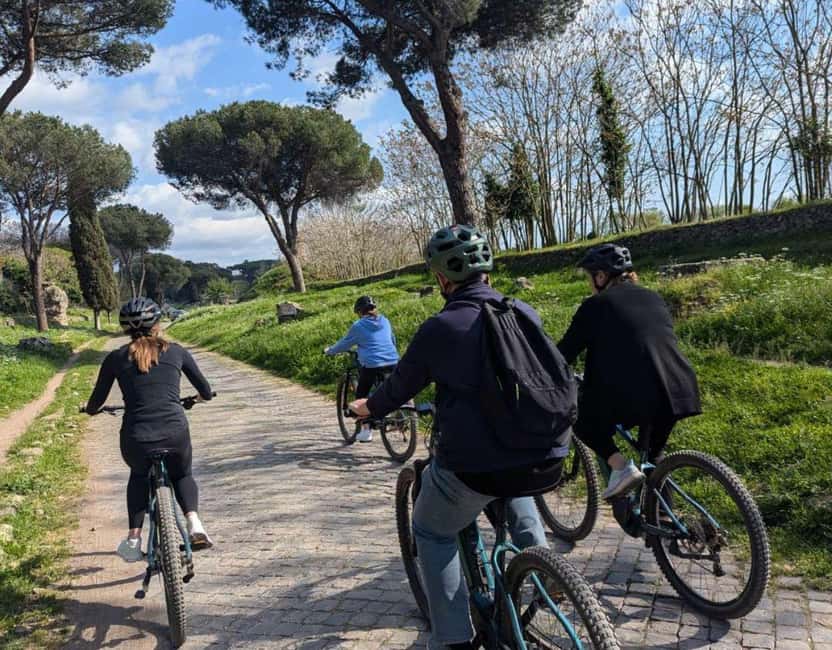
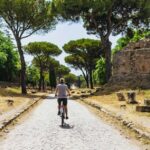
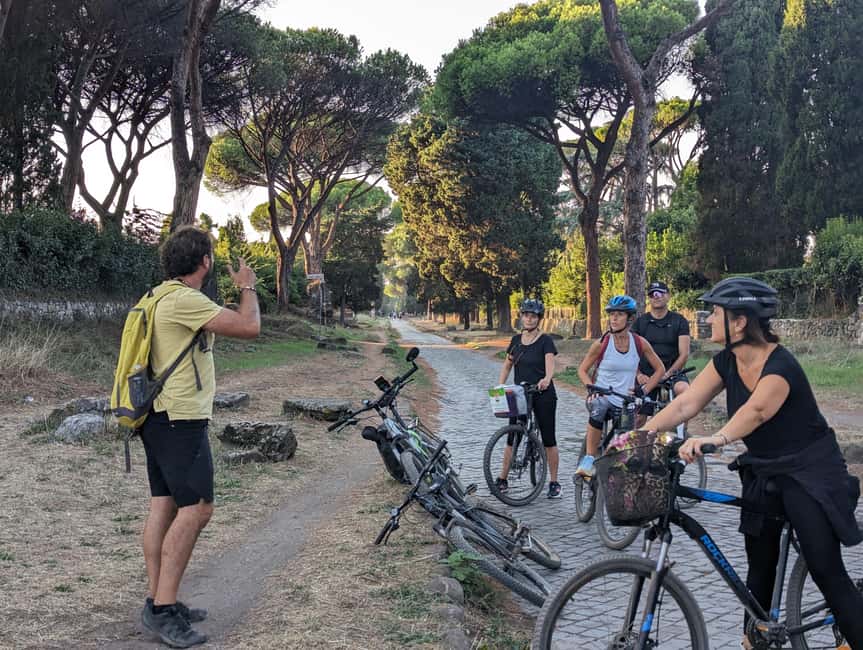
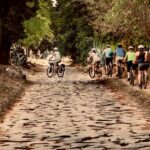
The core of the tour is the Appia Antica bike time (about 2 hours). This is where the tour earns its “appia” in a big way. You’ll roll along the legendary road—famous for being among the best preserved stretches of ancient paving you can actually ride on.
Here’s what I think you’ll feel quickly after the first stretch:
- The cobblestones aren’t decorative. They change how you hold your line and how your body responds, even with an e-bike helping.
- The route is calmer than you might expect, since there’s no car traffic on most of the road (only residents’ cars have access). That matters for comfort and focus.
- After a while, you start noticing the road as infrastructure, not just scenery—built to last, built for movement, built to connect Rome to what came next.
If you’re short on bike experience, don’t panic, but do take the “minimum experience” note seriously. The guide will also handle the tour with safety in mind, including deciding not to admit participants who aren’t deemed suitable based on skill or body/mind health. That’s not a threat—it’s a real part of how these underground-and-cobblestone days stay comfortable.
A possible drawback to factor in
Because you spend so much time on historic paving, this isn’t the kind of tour where you can coast the whole way without thinking about footing and posture. If you’re looking for an ultra-easy ride, you might find the cobblestones demanding, even with support from the motor.
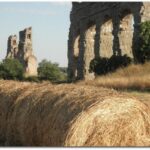
Parco degli Acquedotti photo stop: aqueduct vibes that make sense on foot and bike
After the big Appia stretch, the day shifts to the Parco degli Acquedotti area. You’ll have a photo stop and guided tour (about 30 minutes), mixing viewpoints with context.
This segment works well because aqueducts are one of those “how did they do that?” parts of Rome. They’re not just impressive from a distance; they’re tied to geography and engineering. And since you’re already riding along the ancient movement corridors, the aqueducts feel like part of the same story—water moving through the landscape, the city functioning as a system.
What to expect here:
- A chance to pause, take photos, and listen.
- Less “time-on-bike” than the Appia section, more “look, understand, snap, roll.”
If you’re the type who likes explanation even when you just want the view, you’ll probably appreciate this stop.
Torre Fiscale Park: a short, electric-feeling break
Next comes Torre Fiscale Park, with photo stop + guided tour and about 20 minutes of electric bike riding. The timing is smart: after earlier cobblestones and a heavier-looking road segment, this feels like a reset.
This is also one of those practical segments where the bike type matters. If you booked an e-bike, you’ll feel the power assist more obviously in the rhythm of short climbs or transitions. It’s not meant to turn the day into a thrill ride—it’s still a historic route—but it can make the difference between feeling tired and feeling “I could do one more hour.”
You can also read our reviews of more tours and experiences in Rome

Caffarella Park biking: where ruins and green space share the frame
Then you shift into Caffarella Park for about 30 minutes of guided tour and biking. This is a key emotional change in the itinerary. You’re not just chasing monuments; you’re moving through a space that feels like Roman countryside—open air, paths, and a sense of space compared to central Rome.
And it sets up the main event underground. The tour uses the park time to connect what you’ll see above ground (tombs, aqueduct-area atmosphere, the sense of old Rome continuing in the open landscape) to what you’ll encounter below.
If you like tours that explain the “how and why,” this part helps the underground visit feel less random. You’re building a mental map before you step into the quarry maze.
Sotterranei di Roma underground quarry: what to expect below ground
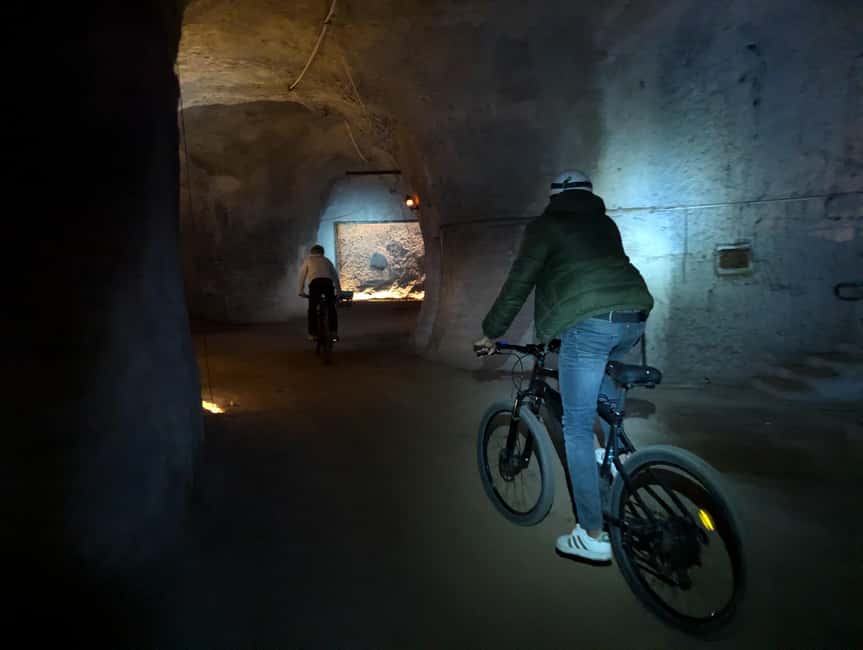
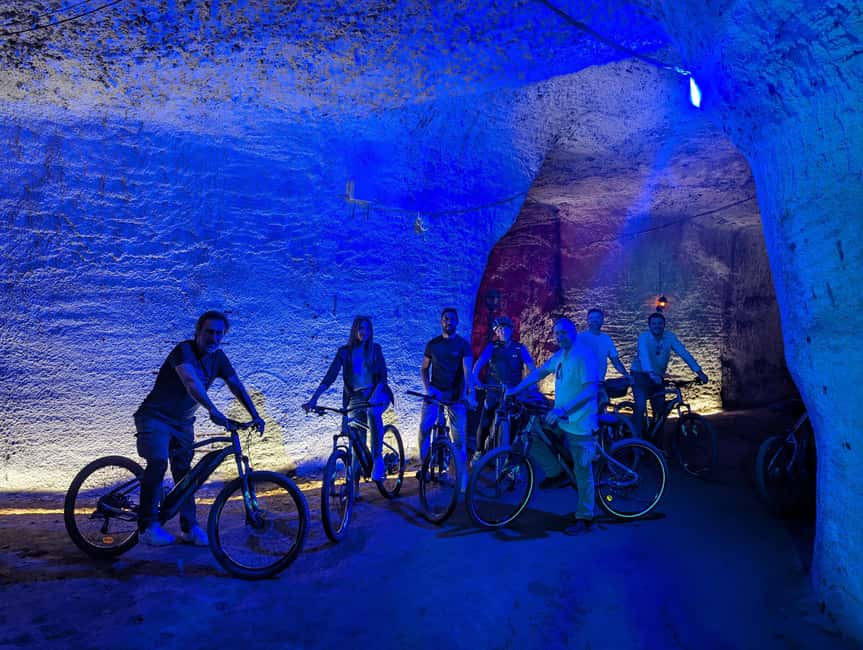
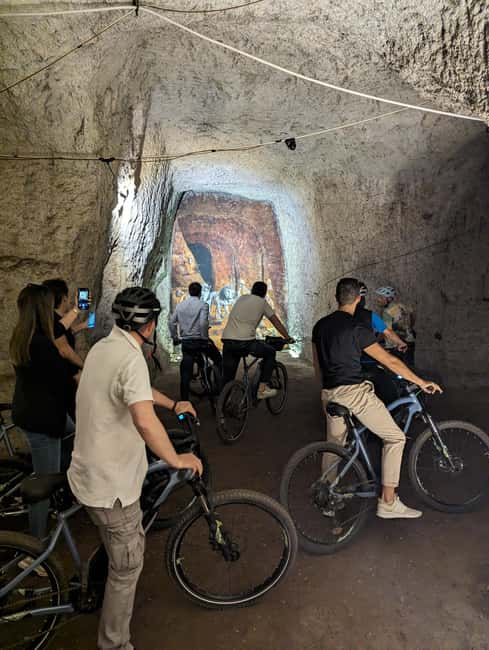
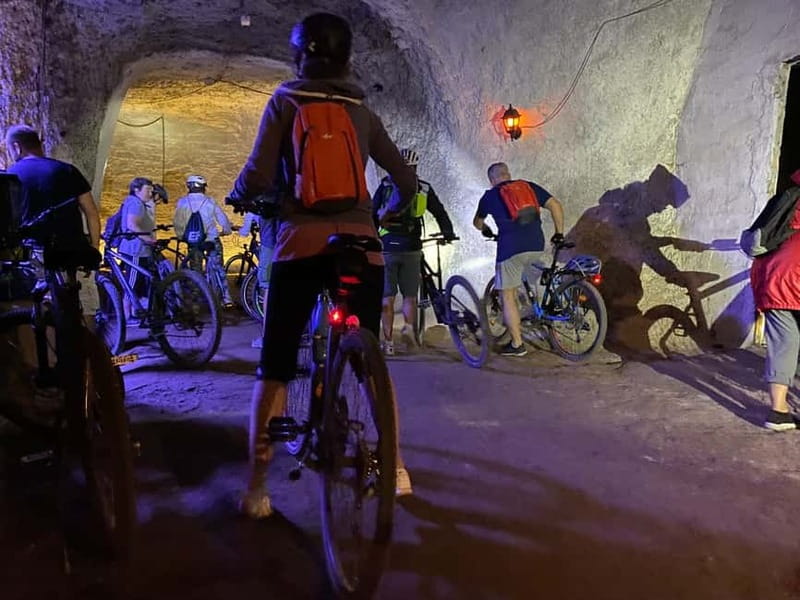
This is the signature moment: Sotterranei di Roma. You’ll spend about 30 minutes there with guided tour + bike time around the segment (the visit itself is the underground part).
Here’s the practical side you should plan for:
- A jacket is recommended because the quarry interior is around 15°C.
- The experience is not suitable for claustrophobic people, which is a real heads-up. This is the one segment where comfort depends on your personal tolerance for enclosed underground spaces.
What makes this worth your time is that you’re not just seeing a building. You’re stepping into a man-made labyrinth space—part history, part geology made usable by humans. You’ll likely walk away with that rare feeling of Rome having a second level: above ground and below ground, both telling the same story.
Small comfort tips that matter
- Wear comfortable clothes you don’t mind getting a little damp-cool.
- If you get cold easily, bring a warmer layer even if you start the day in mild weather.
- Keep your phone secured if the tunnels feel tight or if you’ll be moving quickly with the group.
What the day feels like: pace, safety, and group size
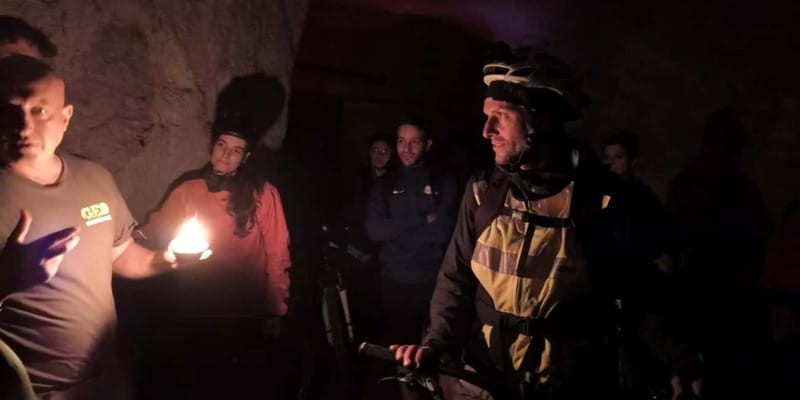
The tour is designed to be active, but not chaotic. You’ll have a mix of riding and short guided segments on foot. The bike portion dominates, and the underground part provides a major contrast.
A few details help you gauge whether it will fit your body and travel style:
- Up to 10 people in a group tour, which usually means better control and more attention from the guide.
- Safe and quiet itineraries with an expert local guide.
- About 90% on Roman paving on Appia Antica, plus only a couple transitions off the main route (to enter the aqueduct park, and again from Tor Fiscale toward Caffarella).
The guide also has the right to not admit participants after the briefing if they’re not deemed suitable due to skills or health issues, and there’s no refund in those cases. Read that as “this is taken seriously,” not “they’re looking for trouble.”
And yes, the tour includes a poncho in case of rain. Bring it for the emotional weather check: even if rain doesn’t stop the day, the cobblestones can feel rougher when wet.
Price and value: why $82.34 can make sense

At about $82.34 per person for roughly 3.5 hours, this isn’t a bargain version of Rome. But it also isn’t just “a guide walking you around.”
You’re paying for:
- A local guide
- A bike (e-bike or regular bike)
- Roman Underground ticket entrance
- A poncho if needed
- A Roma ’n Bike Card that’s a discount circuit for cycle tourists
- A structured route that includes both major surface highlights and the underground portion
If you compare that to the cost of getting yourself around (transport, bike rental, and the underground entrance ticket), the price starts to look more reasonable. The e-bike component is a big part of that value equation too—without it, you’d either skip sections or spend a lot more energy than this itinerary is aiming for.
For families, there’s an extra practical angle: there’s a baby seat up to 20 kg if needed, and infants travel for free in that seat.
Who should book this tour (and who should skip it)
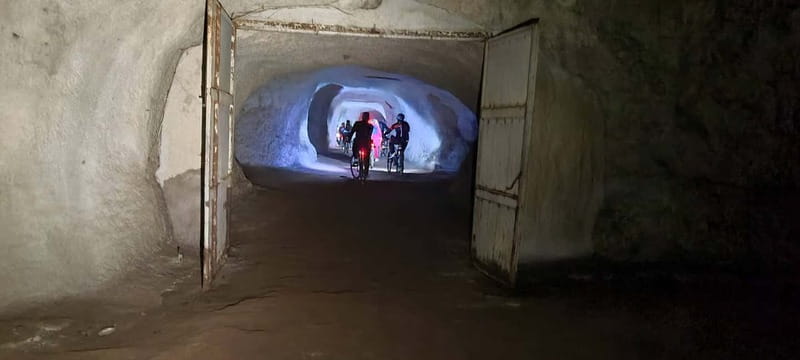
This is a strong match if you:
- Want an active day outside the crowded center
- Like history you can feel under your wheels
- Enjoy engineering and real place-based stories (aqueduct area context)
- Want an underground stop that’s guided, not a DIY gamble
Skip or think twice if you:
- Are claustrophobic (underground quarry)
- Are pregnant (listed as not suitable)
- Have limited comfort with cobblestones and enclosed spaces
It’s also not for pets, and you shouldn’t bring alcohol and drugs—standard tour rules, but still important.
Guide quality: when the stories actually land
In Rome, the difference between a good tour and a great one is often the guide. The best sign here is that the tour’s guide style is built around explaining what you’re looking at, not just reciting dates.
One practical lesson from real-world experience: the meeting instructions matter. If the directions you have don’t match what you see when you arrive, don’t freeze—find your way to the Sebastiano Catacombs entrance area (next to the drinking fountain), then follow your guide’s lead. When that part clicks, the day tends to flow smoothly, and guides like Emmanuel have a reputation for making the Appia and aqueduct landscape feel alive rather than distant.
Getting there and where you end up
You’ll start at Basilica di San Sebastiano Fuori le Mura and you end back at the same meeting point. That’s a big convenience win. You don’t have to plan a second transportation puzzle after the underground visit—your logistics are basically solved for you once you handle the initial transit.
For arrival, use bus 118 as described earlier. For departure, just plan to hang around near the basilica after the tour ends.
Should you book the Rome: Appia Antica & Ancient Underground Labyrinth by Ebike?
Book it if you want Rome that isn’t only about famous facades. The combination of Appia Antica cobblestones plus a guided visit to the underground quarry labyrinth is a pairing you don’t see every day. The e-bike makes it doable for more people than a traditional long bike route, and the planned transitions keep the day from feeling random.
Don’t book it if underground spaces make you uncomfortable or if cobblestones will stress you out. This tour isn’t trying to be gentle; it’s trying to be real.
If you’re a history-and-adventure person who likes your learning hands-on—this is the kind of day that sticks.
FAQ
How long is the e-bike tour?
The tour lasts about 3.5 hours. Starting times depend on availability.
What’s included in the price?
You get a local guide, an e-bike or regular bike, Roman Underground ticket entrance, a poncho if needed, and a Roma ’n Bike Card discount circuit. There’s also a baby seat option up to 20 kg if needed.
Where do we meet and where do we end?
You meet near the Basilica di San Sebastiano Fuori le Mura, in front of the Sebastiano Catacombs entrance next to the drinking fountain. The tour ends back at the same meeting point.
What should I bring?
Bring your passport or ID card, comfortable shoes, and comfortable clothes. A jacket is recommended for the underground area because it’s around 15°C inside the quarry.
Is it okay for children?
Children up to 139 cm join with a children’s extension. Children can ride an e-bike from age 12. Infants up to 20 kg can travel for free in a child seat.
Is the tour suitable for claustrophobic people?
No. It’s explicitly not suitable for people with claustrophobia due to the underground quarry portion.
Are pets allowed?
No, pets are not allowed on this tour.