REVIEW · ROME
Rome: Castel Sant’Angelo Private Tour & Skip-the-Line Entry
Book on GetYourGuide →Operated by LivTours - We craft tours, you live them · Bookable on GetYourGuide
A secret corridor in Rome and no queue. This private Castel Sant’Angelo tour pairs skip-the-line entry with a guide so you can focus on the big scenes: Hadrian’s mausoleum, papal rooms, and the views from the Belvedere terrace.
I like how the route is tight and story-driven, starting where the site began in 138 AD and ending with Archangel Michael overlooking the city. One consideration: at 1.5 hours, you’ll move at a brisk but manageable pace, so if you need extra time in slower moments, tell your guide up front.
In This Review
- Key Things to Know Before You Go
- Castel Sant’Angelo: A Roman Landmark That Moves With the Centuries
- Meeting at St. Angelo Bridge and Getting In Without the Hassle
- Stop 1: St. Angelo Bridge as Your Rome Setup
- Stop 2: Castel Sant’Angelo Interior Walkthrough (Hadrian to Papal Power)
- 1) Hadrian’s Mausoleum Roots (138 AD)
- 2) The Treasury Room and the Ashes Story
- 3) Papal Apartments and Their Frescoed Rooms
- 4) A Courtyard Torture Chambre and the Price of Power
- 5) The Passetto Secreto: The Secret Passage to the Vatican
- Stop 3: Views From the Belvedere Terrace and Archangel Michael
- Price and Value: Is $203.91 Worth It?
- What the Tour Feels Like in Real Life (Private Group Pace)
- Who Should Book This Private Castel Sant’Angelo Tour
- Small Practical Tips Before You Go
- Should You Book This Tour?
- FAQ
- How long is the Castel Sant’Angelo private tour?
- Where do I meet the guide?
- Is there skip-the-line entry?
- Is this tour private?
- What languages are available?
- What’s included in the price?
- Are food and drinks included?
- Is the tour wheelchair accessible?
- Can I cancel for a refund?
Key Things to Know Before You Go
- Skip-the-line tickets via a separate entrance, so you don’t lose your time window to crowds
- Private guide who can explain the scenes as you walk, with multiple language options (including English, French, German, Italian, Spanish)
- Hadrian-to-Vatican storyline: funeral monument roots, papal apartments, then the secret Passetto Secreto
- Courtyard torture chamber stops plus execution history, presented as part of the site’s function over time
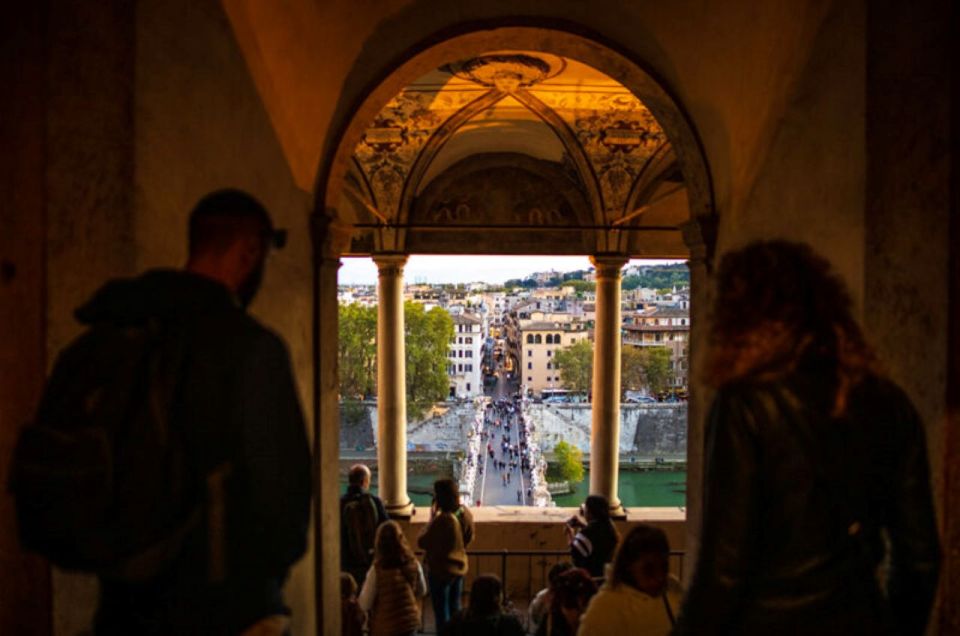
- Belvedere terrace views with the Archangel Michael statue and a top-of-monument perspective
Castel Sant’Angelo: A Roman Landmark That Moves With the Centuries
Castel Sant’Angelo is the kind of place that can confuse you if you only wander. You see stone, you see rooms, and you may think, So… who used this, and when? A guided visit fixes that fast.
The tour starts by framing the site in 138 AD, when it was built as a funeral monument for Emperor Hadrian. From there, the meaning of the building shifts as you go—mausoleum to power center to secret passage link to the Vatican. You’ll walk the “how and why” of the fortress, not just the “what is this room.”
And yes, the best reward is the view. The Belvedere terrace gives you a high vantage point across Rome, with Archangel Michael standing armed with a sword, guarding the city from above. Even if you’ve seen photos, the angle from the monument makes it feel more real.
You can also read our reviews of more private tours in Rome

Meeting at St. Angelo Bridge and Getting In Without the Hassle
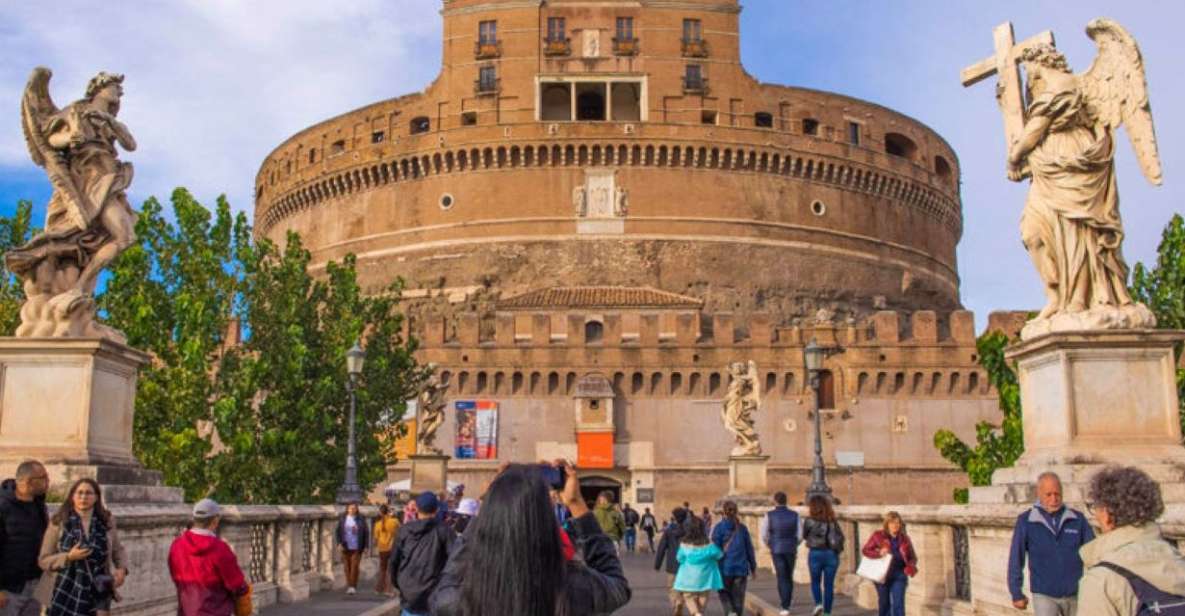
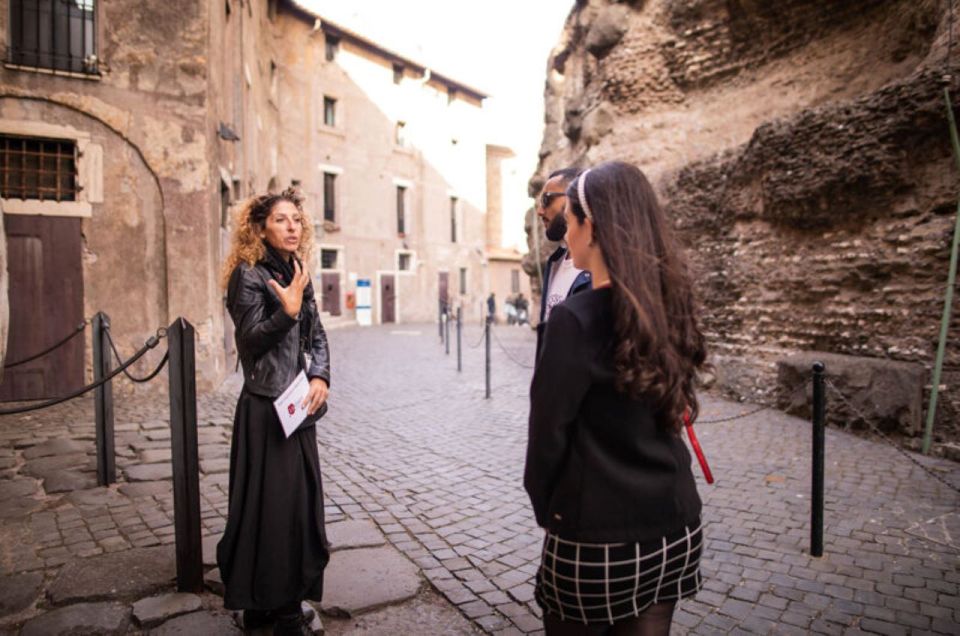
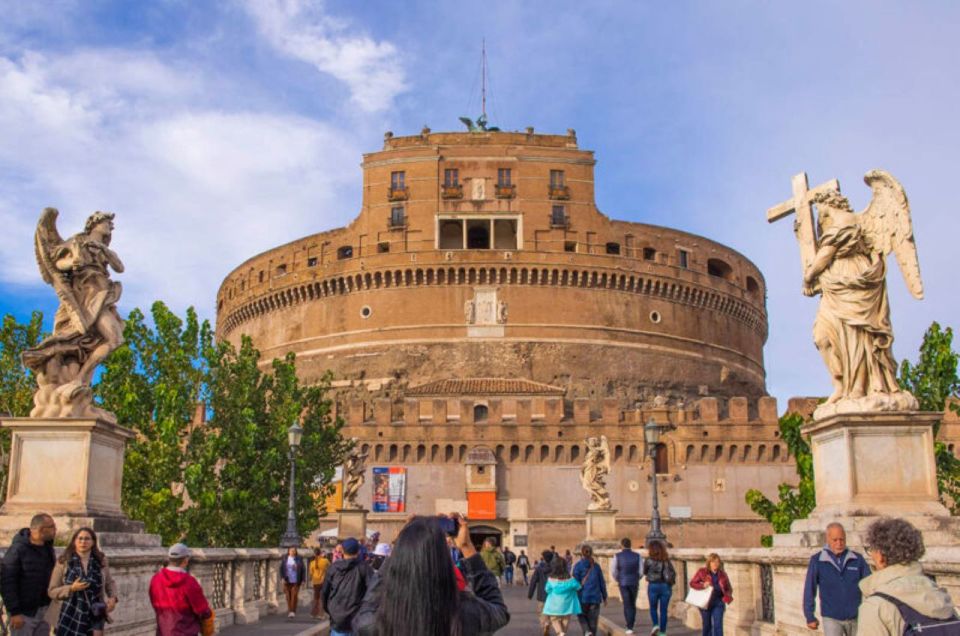
You begin at St. Angelo Bridge, then head to the castle itself. The guide meets you at the entrance, holding a LivTours sign, and the tour ends back at the meeting point.
The biggest practical win here is the skip-the-line entry. The tickets use a separate entrance, which matters on a popular monument where waiting can eat up the time you paid for. If you’re visiting Rome during busy season, this is exactly the kind of “small advantage” that stops the day from feeling like a waiting game.
Also keep in mind: this is a private group, so you’re not squeezed into a large herd with a guide speaking to the loudest person in front. That tends to make the explanation feel more tailored, especially when the guide adjusts to your walking speed.
Stop 1: St. Angelo Bridge as Your Rome Setup
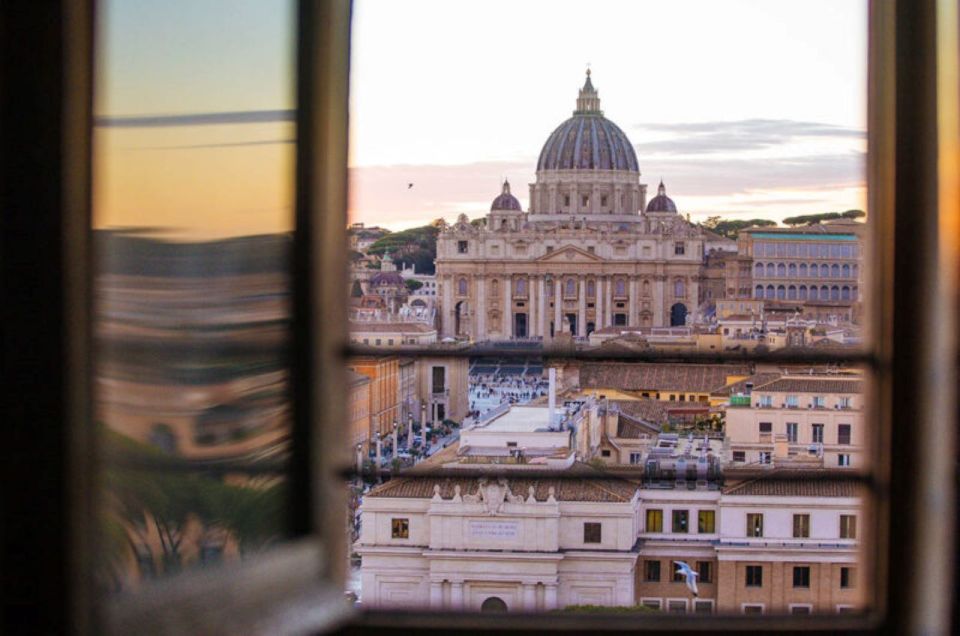
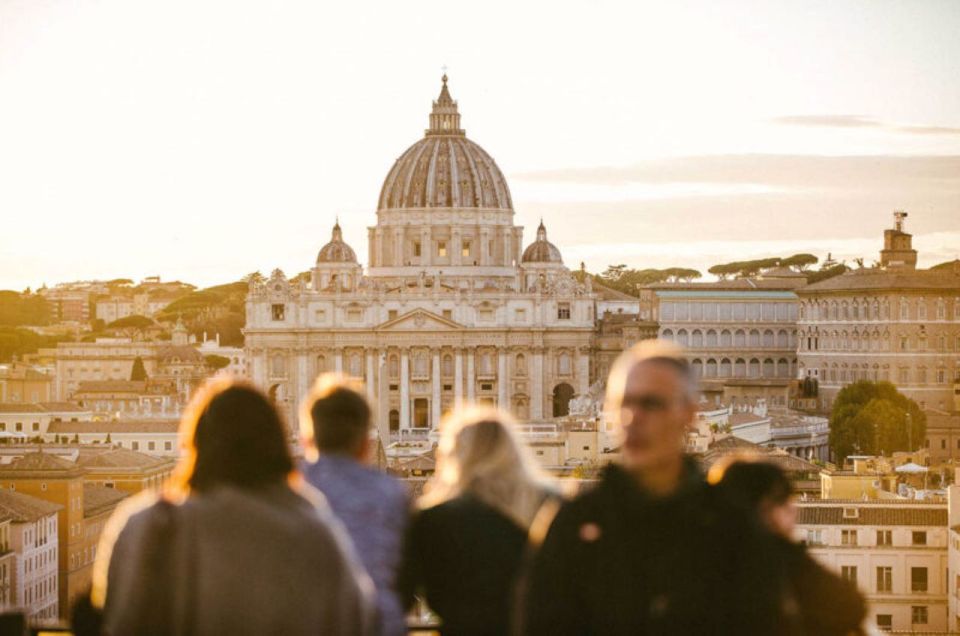
Even though the tour quickly transitions from the bridge into the castle, I like using this stop as a mental warm-up. St. Angelo Bridge puts you right in the story’s geography: you’re near a key crossing that connects the area to the Vatican side of the city.
You’re not expected to linger here, but it helps you understand that Castel Sant’Angelo isn’t an isolated island. It’s part of a larger corridor of movement—literal and political—across Rome.
Stop 2: Castel Sant’Angelo Interior Walkthrough (Hadrian to Papal Power)
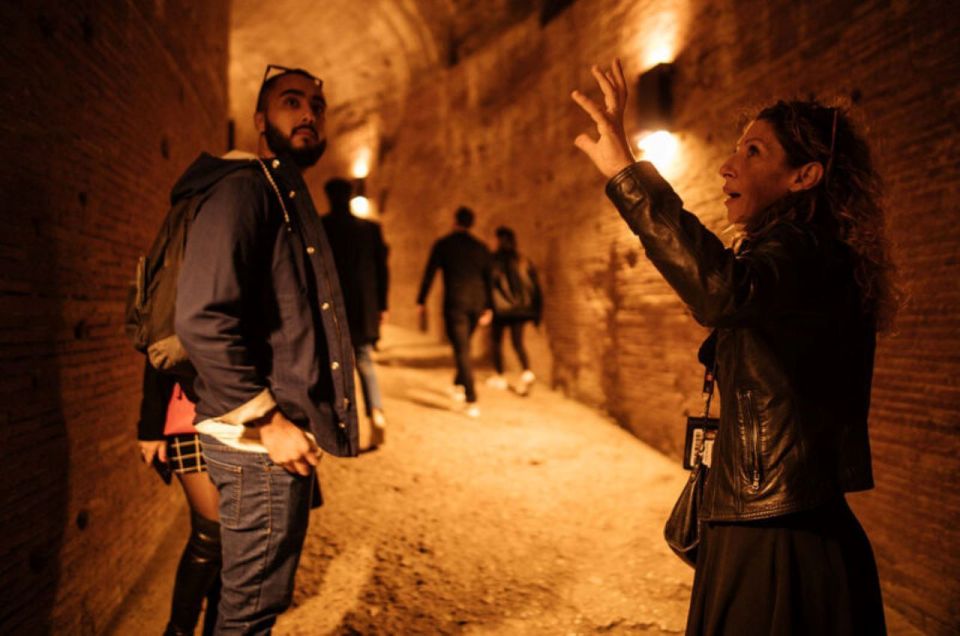
Once inside, the tour becomes a sequence of “chapters” inside the building. The route is built to keep your attention on what changed over time.
1) Hadrian’s Mausoleum Roots (138 AD)
You start in the core idea of the monument: it began as a funeral monument dedicated to Hadrian. The tour takes you through spaces tied to his legacy, including the mausoleum area where you can connect the building’s original purpose to what it later became.
If you only know Castel Sant’Angelo as the fortress you climb for photos, this is the moment it clicks. You’re stepping into a structure meant for remembrance—then watching that function evolve.
You can also read our reviews of more tours and experiences in Rome




2) The Treasury Room and the Ashes Story
From there, you move toward the Treasury room deep inside the castle. The tour includes the tradition that Hadrian’s ashes were originally placed there before the 5th-century sacking of Rome.
Even if you take the “said to be” phrasing as part legend and part interpretation, it still helps you read the site better. The building isn’t just stones in the middle of Rome. People believed they were guarding something important, and that belief shaped what happened next.
3) Papal Apartments and Their Frescoed Rooms
As you work your way forward, you’ll reach the Papal apartments, described as frescoed. This is a big shift—from imperial monument to a place tied to popes and cardinals.
Your guide explains the lives of clergy who resided here, including figures such as the Borgia. What I like about this section is that it doesn’t treat the rooms as museum pieces. The apartments are presented as real spaces where people hid, waited, planned, and tried to survive crises.
You’ll also get a sense of how art and decoration functioned in that kind of atmosphere—comfort on the surface, tension underneath.
4) A Courtyard Torture Chambre and the Price of Power
The tour includes the torture chamber in the courtyard area and connects it to executions held there.
This part can feel heavy. It’s also one of the reasons Castel Sant’Angelo works so well with a guide: you don’t want vague storytelling here. You want context so the tour doesn’t turn into guessing. A good guide keeps the tone factual and helps you understand the function of the courtyard within the broader castle story.
If you’re sensitive to this topic, you can still go, but it’s worth knowing it’s part of the itinerary.
5) The Passetto Secreto: The Secret Passage to the Vatican
Now comes the “wait, that’s real?” element: the Passeto Secreto, the secret passageway connecting the castle directly with the Vatican. It’s also noted for inspiring Angels and Demons.
This is one of those stops where a guide’s framing matters. The passage is short on your feet, but long on meaning. You’re looking at a physical solution to a political problem: moving people safely between power centers when the city wasn’t calm.
Even if you read the book or saw the movie, the site brings it back down to the practical reality of architecture.
Stop 3: Views From the Belvedere Terrace and Archangel Michael
The tour ends with one of Rome’s most satisfying “finisher” moments: panoramic views from the top of the monument.
At the terrace, you get the sense of why this building mattered. From up here, Castel Sant’Angelo isn’t just a landmark. It’s a command point—high enough to watch the city, positioned with meaning in the relationship between castle and Vatican.
And then there’s Archangel Michael, standing armed with a sword, guarding the city. The statue isn’t just decoration; it’s a visual punctuation mark, a reminder that this place has been framed as protection and authority in different eras.
Price and Value: Is $203.91 Worth It?
At $203.91 per person, this is not the cheapest way into Castel Sant’Angelo. The value comes from three places:
First, you’re getting skip-the-line tickets using a separate entrance. If you’d otherwise spend a chunk of your paid time waiting, the “value” part becomes obvious quickly.
Second, you’re paying for a private guide. At this price point, you’re not just paying for facts—you’re paying for pacing, explanation, and the ability to ask questions while you’re inside the rooms.
Third, you’re buying time efficiency. A 1.5-hour private tour can feel short, but in a monument like this, short is sometimes good. You don’t want to wander aimlessly through fortress rooms. You want the key scenes connected in the right order.
If you’re a couple, or you’re traveling with a small group that prefers control over a fixed schedule, this price can feel fair. If you’re traveling solo and you’re comfortable doing museums on your own, you might be able to save money elsewhere. But if you hate queues and you want the story tied together, the structure justifies the spend.
What the Tour Feels Like in Real Life (Private Group Pace)
A private group changes the vibe. In past experiences with guides here, I’ve found that pacing becomes more humane—especially in places where stairs and narrow passages can slow you down.
One guide name that has come up in feedback is Carlotta, praised for excellent French and for delivering relevant, clear information. Another theme from feedback is how the guide adjusts to your walking speed, including when guests need slower pacing. That’s a practical detail you’ll appreciate on a fortress tour where everything is stone, steps, and changing floor levels.
Also, the tour includes multiple languages. If you’re traveling with someone who wants to switch languages, it helps that English, French, German, Italian, and Spanish are supported.
Who Should Book This Private Castel Sant’Angelo Tour
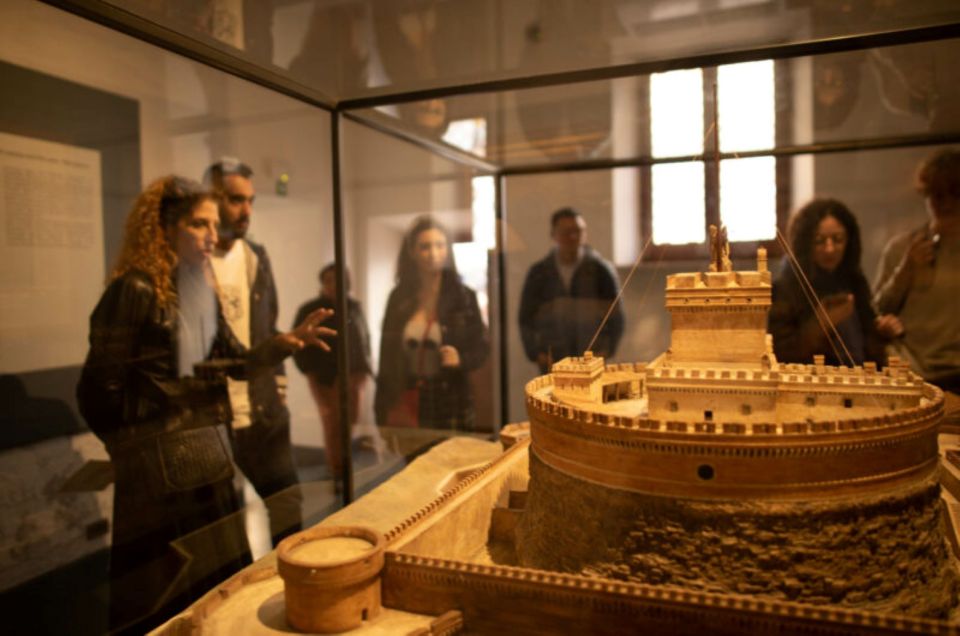
I’d point you toward this tour if you:
- Want skip-the-line entry and don’t want to spend your best hours in Rome queueing
- Like monuments that tell a story across time, from Hadrian to papal life and the Vatican connection
- Prefer a private group experience, with room for questions and a guide who can adjust to your pace
- Want big visuals at the end, especially the Belvedere terrace and Archangel Michael viewpoint
I’d think twice if you:
- Are comfortable reading on your own and don’t mind slower wandering
- Need a long, flexible museum-style visit. At 1.5 hours, you’ll get a guided highlight route, not a slow deep exploration
- Expect food or drinks to be included. This tour doesn’t include either
Small Practical Tips Before You Go
- Wear shoes you can trust on stone steps and uneven areas. Fortress interiors are not the place for soft soles.
- If you care about certain scenes—papal apartments, the secret passage, or the terrace—tell the guide at the start. Private tours work best when you steer the conversation.
- Bring a light layer if you’re sensitive to temperature shifts inside and outside. Rome can change quickly, and the castle’s air feels different from the street.
Should You Book This Tour?
If your goal is to get into Castel Sant’Angelo efficiently and understand what you’re seeing—Hadrian’s mausoleum origins, frescoed papal apartments, the courtyard torture chamber, and the Passetto Secreto—then booking this private tour makes a lot of sense. The guide structure helps you see the building as a timeline, and the skip-the-line entry protects your schedule.
I’d book it especially if you’re traveling with limited time, don’t want to gamble on finding the “right” explanation elsewhere, or you simply dislike waiting in Rome’s lines. The terrace views and the secret passage storyline are the kind of memories that stick.
FAQ
How long is the Castel Sant’Angelo private tour?
The tour duration is 1.5 hours.
Where do I meet the guide?
Meet your guide at the entrance of Castel Sant’Angelo. Your guide will be holding a LivTours sign. The tour starts from the St. Angelo Bridge area.
Is there skip-the-line entry?
Yes. You get skip-the-line tickets through a separate entrance.
Is this tour private?
Yes, it’s a private group tour.
What languages are available?
The live tour guide is available in English, French, German, Italian, and Spanish.
What’s included in the price?
Included: an expert private tour guide and skip-the-line entrance tickets.
Are food and drinks included?
No, food and drinks are not included.
Is the tour wheelchair accessible?
Yes, it is wheelchair accessible.
Can I cancel for a refund?
You can cancel up to 24 hours in advance for a full refund.