Rome has a second face, if you walk. This 2.5-hour secrets walk from Campo de’ Fiori toward Trastevere pairs a licensed English guide with macabre-but-funny stories and close-up stops like the Jewish Ghetto and Teatro di Pompeo. I love how the guide connects Popes’ hidden love affairs and executions for witches and heretics to real street corners, not just dates on a sign. I also love the storytelling style that keeps you moving, so the city feels like a living puzzle instead of a checklist.
One possible drawback: it’s still a real walking tour, and it’s not suitable if you have back problems or mobility needs. Plan for uneven old streets and bring comfortable shoes and water, because the best parts are the ones you reach on foot.
In This Review
- Key highlights to look forward to
- From Campo de’ Fiori to Trastevere: why this route works
- The Irish storyteller and the English guide: what you’ll feel in the group
- Campo de’ Fiori to Piazza Benedetto Cairoli: executions, popes, and quick street magic
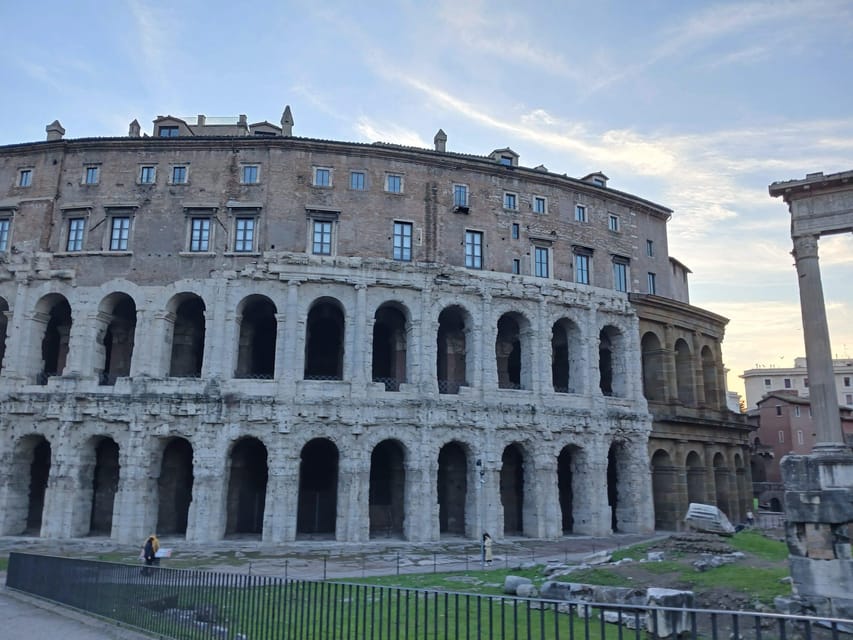
- Teatro di Pompeo, Piazza Mattei, and the alleyway feeling of 2000 years
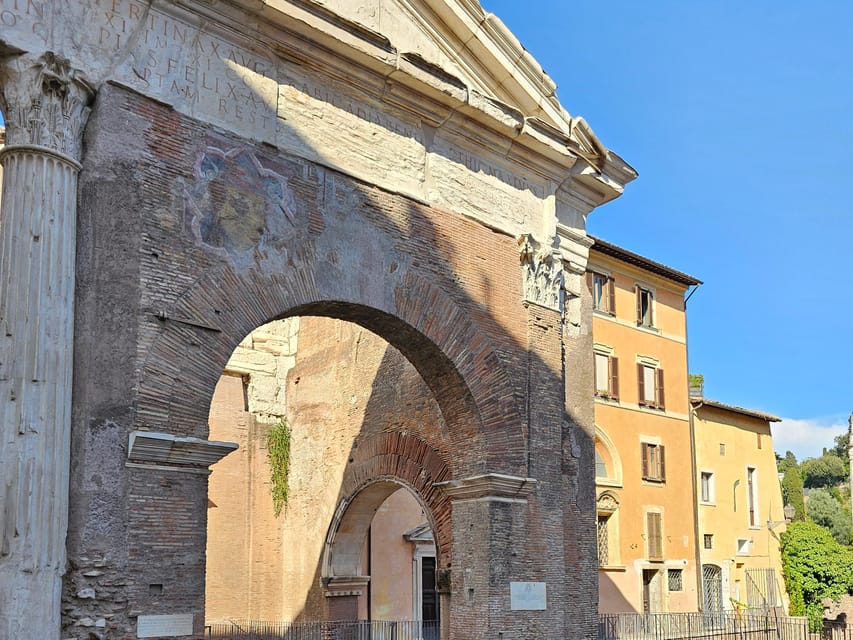
- The Jewish Ghetto and Portico d’Ottavia: history you can see in your footsteps
- Tiber Island and Santa Cecilia: assassination-attempt vibes and a calmer ending
- Pace and practical tips: how to enjoy the walk without getting worn down
- Value check: is $34 a good deal for this kind of storytelling?
- Should you book this walking tour?
- FAQ
- Where does the tour start?
- Where does the tour finish?
- How long is the walking tour?
- How much does it cost?
- What language is the tour offered in?
- What should I bring?
- Is the tour suitable for people with mobility impairments?
- Is it suitable for back problems?
- Are entrance fees included?
- What cancellation options are available?
Key highlights to look forward to
- Popes’ hidden love affairs and witch-and-heretic legends told through street-level scenes
- 2000-year-old alleyways you actually walk through, not just see from a bus window
- Ancient theaters and river landmarks (Teatro di Pompeo, Teatro di Marcellus, Tiber Island)
- Jewish Ghetto and Portico d’Ottavia stops that expand your Rome beyond the usual monuments
- An end-of-tour Trastevere finish at Santa Cecilia with a nice setting for sunset or dinner
From Campo de’ Fiori to Trastevere: why this route works
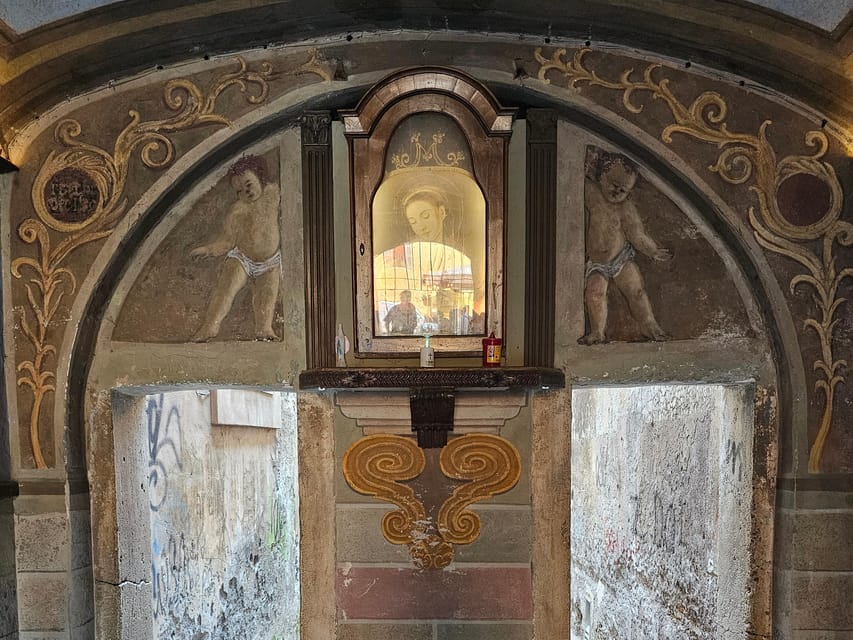
This walk starts in Campo de’ Fiori and ends at Basilica di Santa Cecilia in Trastevere, so you’re not stuck in one tight museum loop. You’ll spend the middle of the tour cutting through the historical center on foot, where Rome’s “today” and “then” sit side by side. It’s a smart setup for understanding how the city layers itself: you move a few minutes, and the story shifts from modern street life to ancient power and danger.
The end point matters, too. The tour’s finish in Trastevere puts you by the river and in one of Rome’s best zones for evening plans. After the walking and the tales, you’re positioned to either grab a panorama and watch the light change or jump straight into Trastevere’s restaurant energy.
You can also read our reviews of more walking tours in Rome



The Irish storyteller and the English guide: what you’ll feel in the group

The guide is both a professional Irish storyteller and a licensed tour guide, and the difference shows up fast. The pacing is built for spoken stories: short guided moments at key stops, then walking breaks that let the setting sink in. From the feedback tied to this experience, the guides tend to teach with energy and humor, keeping even non-history-fan energy hooked.
You’ll also get practical “how to move through Rome” help. One of the strongest takeaways from feedback is that the guide doesn’t just talk about buildings; they help you avoid the chaos of street patterns and crowded intersections. That’s underrated. Rome rewards confidence, and a good guide helps you build it in real time.
One more thing: the tour is in English, and it’s a good length for most visitors who want real context without committing to a full-day program. Two and a half hours feels like enough time to learn a lot, but not so long that you fade before the best scenes.
Campo de’ Fiori to Piazza Benedetto Cairoli: executions, popes, and quick street magic
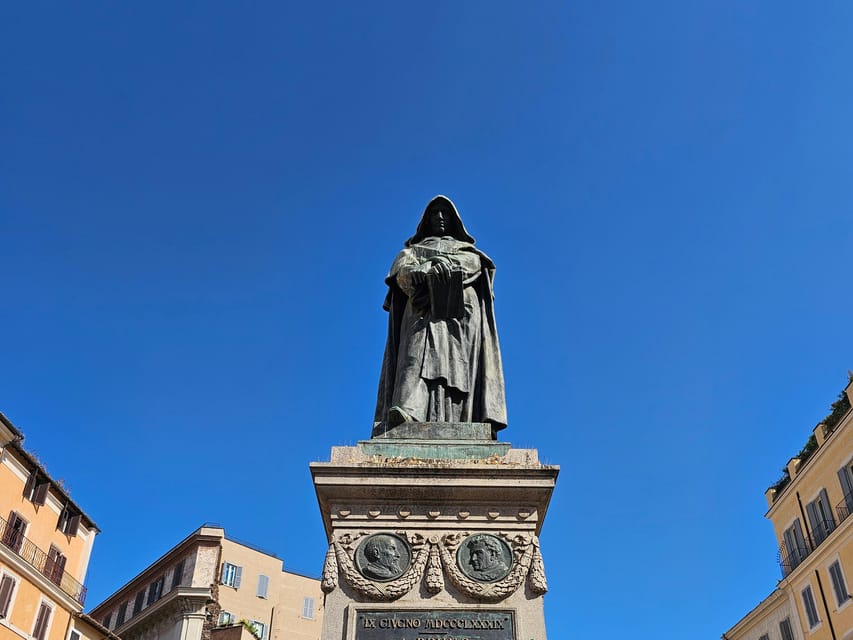
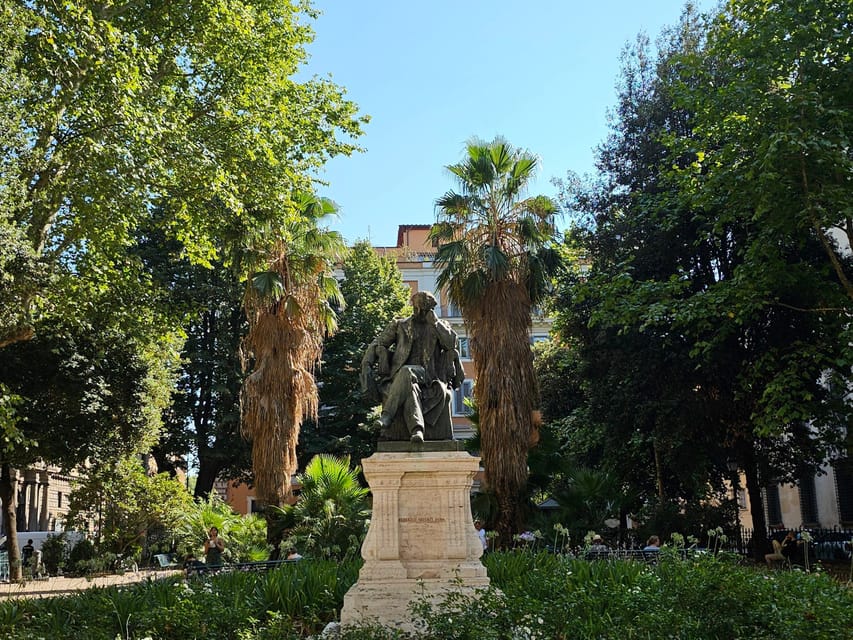
You begin at Campo de’ Fiori, meeting your guide in the middle of the piazza, under the statue. The first guided segment runs about 15 minutes, and it’s designed to get your bearings right away. This is where the tour leans into some of its darker legends, including Rome’s execution site for witches and heretics. It’s not delivered like a history lecture. It’s framed as story, with the streets acting like stage props.
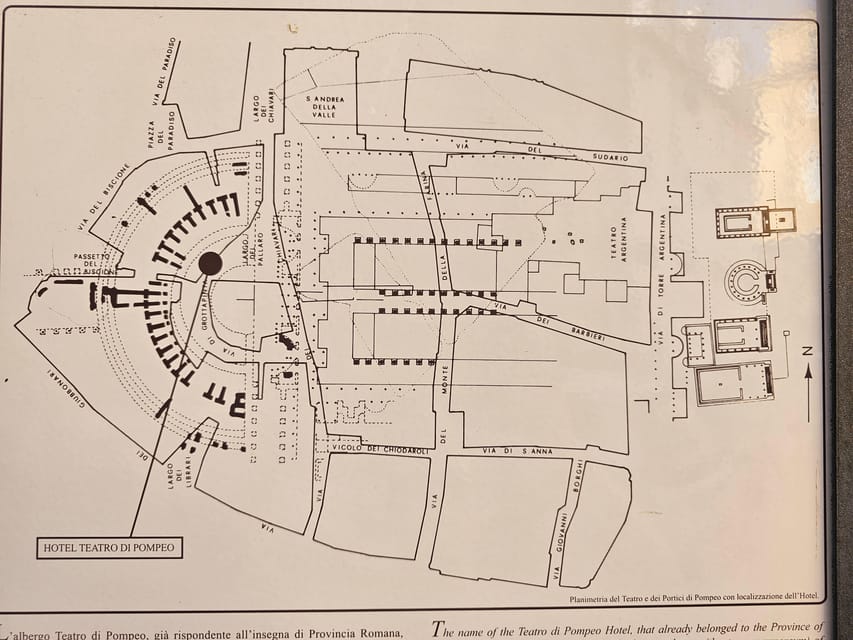
Then you move on foot for short stretches, with quick stops that keep the rhythm tight. You’ll reach Piazza del Biscione (around 5 minutes), then head toward the Teatro di Pompeo area (about 5 minutes at the stop). Even when the guided moments are brief, they’re meant to connect the dots: where you stand now, and what used to matter there long ago.
Piazza Benedetto Cairoli is one of the longer guided breaks (about 15 minutes), and it’s a strong chance to slow down. This is part of the tour’s trick: it uses a mix of tiny “wow” stops and a few longer anchors, so you don’t only rush past things.
A theme you should watch for across these early stops: the tour highlights hidden lives of controversial figures, including the hidden love affairs of Popes. That blend of scandal and religion can sound like sensational filler, but in this format it works because you’re not hearing it in the abstract. You’re watching the story attach to real locations, so it sticks.
Teatro di Pompeo, Piazza Mattei, and the alleyway feeling of 2000 years
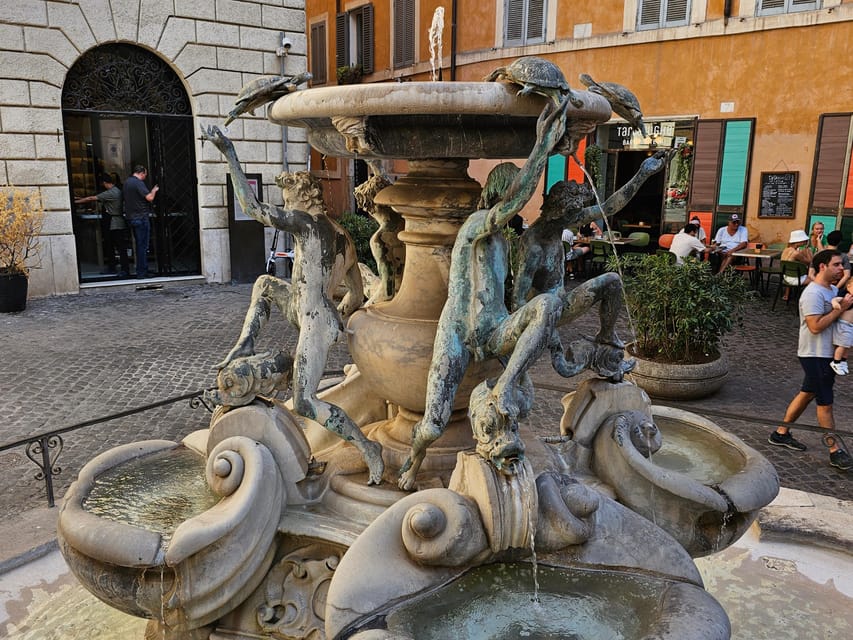
After Pompey’s theater stop, you’ll keep walking, with short guided or scenic moments sprinkled in. Piazza Mattei comes next (about 10 minutes guided), and this section is where you start to feel the “hidden Rome” approach. The tour is built around hidden 2000-year-old alleyways, and you’ll get those narrow-street sensations here: tighter sightlines, smaller spaces, and that unmistakable feeling that Rome’s older layers are still close.
One of the best values of doing this kind of walking tour is how it makes Rome’s geography easier to understand. The city’s main sights can be overwhelming, but a route like this gives you a mental map through smaller waypoints: piazzas, theaters, porticoes, and a river finish. You’ll come away knowing how parts of central Rome connect, not just memorizing landmarks.
This part is also where you should keep your pace steady. The guided moments are short, so if you stop to photograph every corner without listening, you’ll miss the story links. If you want photos, do it, but stay present when the guide starts speaking.
The Jewish Ghetto and Portico d’Ottavia: history you can see in your footsteps
A key mid-tour highlight is the stop at the Jewish Ghetto, with a guided moment of about 5 minutes. This isn’t the kind of stop where you’re given endless narration, but it’s short enough to keep you moving while still signaling that Rome isn’t only emperors and grand monuments. You’re being shown a different kind of historical weight: community life shaped by power and pressure.
Right after, you’ll walk over to the Portico d’Ottavia (about 5 minutes guided). Porticoes are a Rome skill test: they look similar at first glance, but each has its own story and context. In this tour, that context is meant to reinforce the bigger idea that Rome changes over time while still reusing the bones of older structures.
Then you’ll hit Theatre of Marcellus (about 5 minutes guided). This is where the ancient-Rome punch lands. Even if you don’t go deep on architectural details, theaters are perfect for storytelling because they were engines of public life. They help explain why Rome loved spectacle—and why political conflict could feel personal.
If you’re the kind of person who learns best by moving, this segment is ideal. You’ll be walking from stop to stop without losing the thread.

Tiber Island and Santa Cecilia: assassination-attempt vibes and a calmer ending
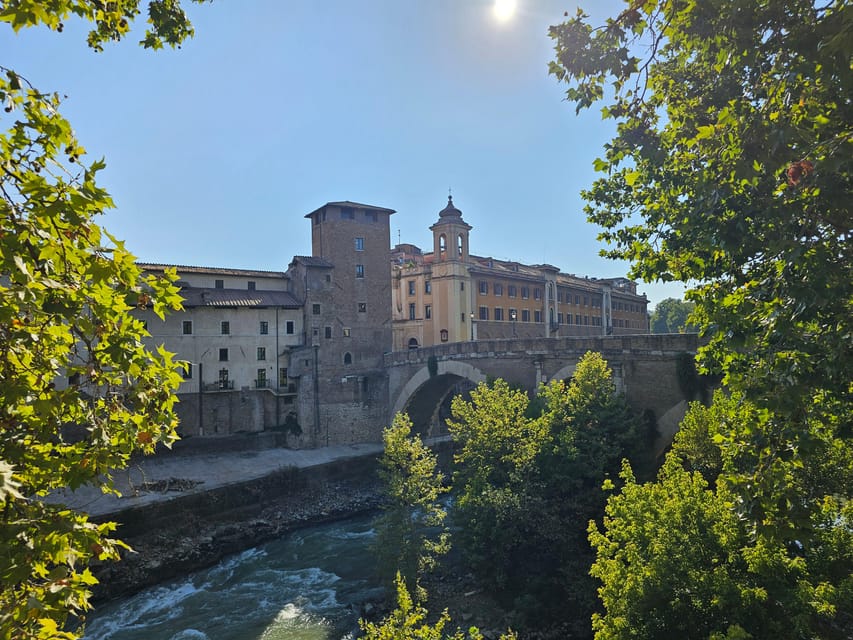
The tour includes Tiber Island (about 10 minutes guided), followed by a short walk to the final church segment. The Tiber area works like a reset button: your eyes get a wider view, your pace slows slightly, and your mind shifts from “what happened here” to “how Rome flows today.”
This is also where the tour’s darker highlight returns in a different form: you’ll hear about ancient underground dwellings tied to a site of an assassination attempt. The key is that it’s woven into the route rather than treated like a random spooky detour. The result is a stronger sense of stakes. Rome wasn’t just elegant. It was dangerous in the way politics can be.
The last big moment is Church of Santa Cecilia, with about 20 minutes of guided visit time, finishing at Basilica di Santa Cecilia in Trastevere. This ending is carefully chosen. After all the high-intensity stories—witches and heretics, papal scandals, and plots—you finish with a place that feels grounded. It’s a different emotional color on the same timeline.
Practical note: the information you’re given about where you end can be presented two ways. One description says it finishes at Basilica di Santa Cecilia in Trastevere, while another says the activity ends back at the meeting point. Before you go, confirm how the operator plans to close the route for your exact departure time.
Pace and practical tips: how to enjoy the walk without getting worn down
The duration is about 2.5 hours, with lots of short guided stops and frequent on-foot segments. That format is friendly for a broad range of visitors, but it does demand basics: comfortable shoes and water. The route is in central Rome, where streets can be uneven and sidewalks can get narrow around busy areas.
From the feedback tied to this experience, one thing stands out: the guide keeps people glued to the story. That can matter if you’re traveling with teens, or if you worry a walking tour will turn into boredom-by-walking. A well-told narrative helps you keep moving at an attentive pace.
If you have mobility limitations or back problems, this is likely the wrong fit. You’ll be on your feet for most of the 2.5 hours, and the tour is clearly not designed around wheelchair access.
Who it suits best:
- People who want Rome stories that feel street-level, not museum-only
- Travelers who like a guide with humor and energy, not just dates
- Anyone who wants to finish in Trastevere with a ready-to-go dinner plan
Value check: is $34 a good deal for this kind of storytelling?
At $34 per person for a 2.5-hour English guided walk with entrance fees included, this sits in the “value if you like stories” category. The reason it feels like good value is that you’re not just paying for walking guidance. You’re paying for:
- A professional storyteller plus a licensed tour guide
- Multiple guided stops across central Rome’s major “in-between” zones (theaters, piazzas, ghetto area, river)
- Entrance fees to visited attractions, so you’re not scrambling for extra ticket costs mid-walk
If your goal is only to check boxes of big monuments, this might feel indirect. But if your goal is understanding how Rome works as a layered city—modern life alongside ancient sites—then $34 is a fair price for the amount of human context you get per minute.
Also, the route is structured so the best “saved until last” ending in Trastevere doesn’t feel like a random finish. You end with a place to linger, and that’s part of the value. You’re not only learning. You’re also getting a built-in evening option.
Should you book this walking tour?
I’d book it if you want Rome with a pulse: scandal, danger, and comedy wrapped around real streets. The mix of execution-site legends, papal love affairs, ancient theaters, and a Trastevere finish is exactly the kind of route that makes Rome feel personal rather than postcard-flat.
Skip it or reconsider if you need a mostly seated option, because it’s a walking-heavy format and not suited to back or mobility challenges. Also, if you dislike darker historical themes, you may find parts of the story tone more intense than you want.
If you match the vibe—curious, comfortable on foot, and open to story-driven history—this is a smart way to spend your time in central Rome and end in Trastevere with momentum.
FAQ
Where does the tour start?
It starts at Campo de’ Fiori. You meet your guide in the middle of the piazza, right under the statue.
Where does the tour finish?
The route finishes at Basilica di Santa Cecilia in Trastevere.
How long is the walking tour?
The duration is about 2.5 hours. Starting times vary, so you’ll want to check availability.
How much does it cost?
The price is $34 per person.
What language is the tour offered in?
The live tour guide speaks English.
What should I bring?
Bring comfortable shoes and water.
Is the tour suitable for people with mobility impairments?
No. It is not suitable for people with mobility impairments or wheelchair users.
Is it suitable for back problems?
No. It is not suitable for people with back problems.
Are entrance fees included?
Yes. Entrance fees to visited attractions are included.
What cancellation options are available?
Free cancellation is available up to 24 hours in advance for a full refund.