REVIEW · ROME
Rome: Ancient Mosaic Making Workshop
Book on GetYourGuide →Operated by Studio Cassio · Bookable on GetYourGuide
Your hands learn ancient Rome. This class at Studio Cassio in Monti mixes technique with real studio time, taught by a master mosaicist. I like the focus on marble tile cutting and texture, and I love that you leave with a framed mosaic you can actually transport. One thing to consider: this is a hands-on craft session, not a sightseeing tour, so you’ll get the most out of it if you enjoy making things rather than just watching.
The best part is the flow: you start with mosaic history and practical rules, then you spend most of the 2.5 hours designing and building your own piece in a working workshop. The group stays small (up to 9), and the instruction runs in English and Italian, which helps if you want guidance without feeling lost.
Location is another plus. You’re near the Colosseum and just a quick walk from the Cavour metro stop on Line B—ideal when you want a break from the biggest tourist concentrations. The workshop is recommended for ages 12 and up, and for safety reasons it’s not the best fit for younger kids who need more supervision.
In This Review
- Key Mosaic Workshop Takeaways
- Why This Mosaic Class Feels Like Real Roman Craftwork
- Studio Cassio in Monti: A Family Workshop Setup
- The 2.5-Hour Flow: History, Planning, and Tile Work
- What You Actually Learn: Texture, Composition, and Cutting
- Texture isn’t just decoration
- Composition is the quiet secret
- Marble tile cutting is the skill you feel most
- Your Take-Home Mosaic: Size, Frame, and 14-Oz Reality
- Price and Value: Is $106 Worth It?
- Who This Workshop Suits Best
- Getting There and Timing It With Your Rome Day
- Should You Book the Studio Cassio Mosaic Workshop?
- FAQ
- How long is the Rome Ancient Mosaic Making Workshop?
- Where do I meet for the workshop?
- What will I take home at the end?
- Is this a small group class?
- What languages are offered?
- What age is the workshop suitable for?
- What’s included in the price?
Key Mosaic Workshop Takeaways
- Master instruction in a real studio setup: You’re not just doing a craft demo; you’re practicing the steps.
- Cutting marble tiles the Roman way: Texture, composition, and piece-by-piece control matter here.
- A defined take-home size: Your mosaic is about 7 x 5 inches and weighs about 14 oz.
- Built for travel: You get a frame and a sturdy box to protect your finished artwork.
- Small-group teaching (max 9): More time with your instructor and enough space to work.
- Monti location with easy access: Close to the Colosseum area and 2 minutes from Cavour metro (Line B).
Why This Mosaic Class Feels Like Real Roman Craftwork
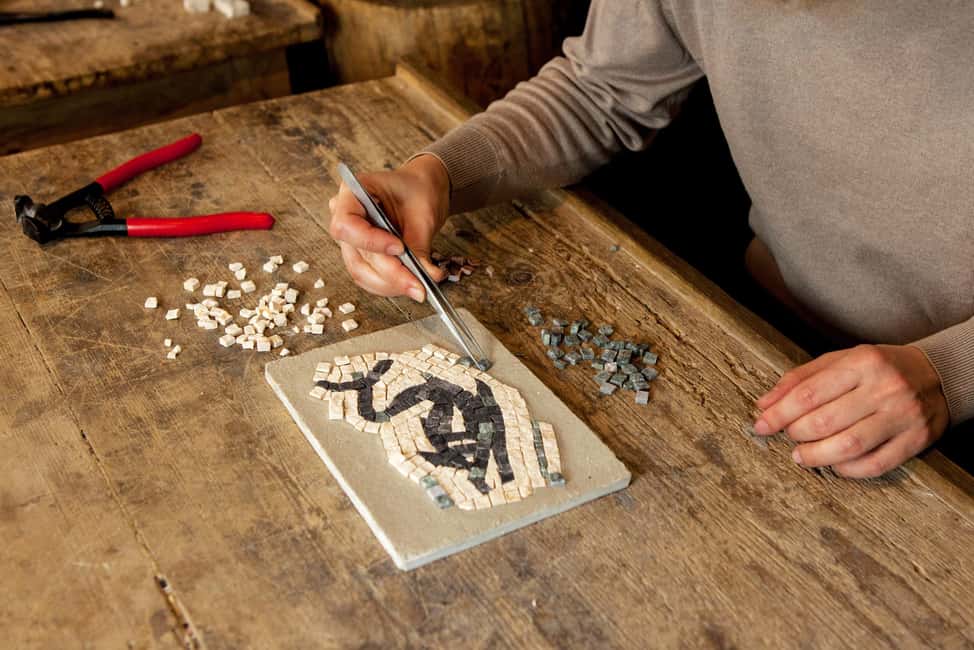
Rome can tempt you into passive sightseeing—line up, look, move on. This workshop flips the script. You sit down at a professional bench, use specific mosaic tools, and build a small artwork that follows the same basic idea as Roman mosaics: controlled pieces creating a whole image.
I also like that the instruction isn’t abstract. The class centers on practical skills you can feel in your hands—texture choices, how you plan composition, and how marble behaves when you cut it. Even if your drawing skills are average, the process helps you get to a satisfying result.
And yes, you’re making a souvenir. But it’s the kind you earned. With a finished mosaic weighing about 14 oz, framed and boxed, it’s not just a postcard of Rome. It’s proof that you learned a technique, not just bought an object.
You can also read our reviews of more tours and experiences in Rome



Studio Cassio in Monti: A Family Workshop Setup
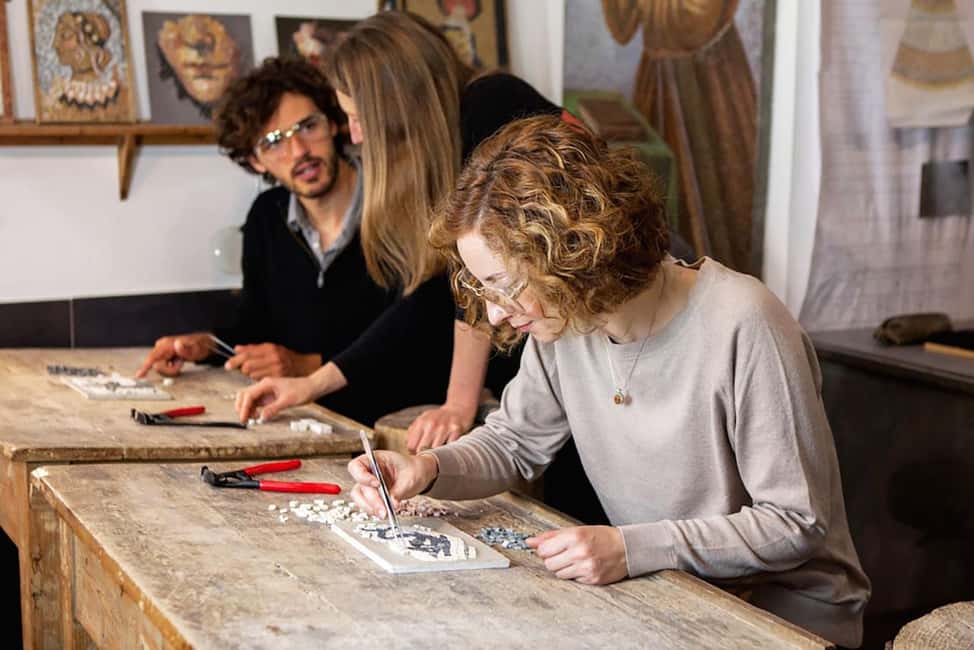
This is hosted at Studio Cassio, a professional mosaic studio in Rome’s Monti neighborhood. The workshop is described as historical and family-owned, and the vibe matches that. You’re in a working craft space, not a classroom with props.
That setting matters. Mosaic-making has a “slow skill” rhythm. You need time to plan, cut, adjust, and place. In a studio like this, you can actually focus on details—how tiles fit, how lines build, and how texture changes the look.
The human side is also a big deal. Names that come up in the guidance include Alex, and the hosting team includes Julia, Hope, and Ellie (sometimes spelled Elandria in the notes). Multiple people also highlight the hosts’ friendliness and laid-back encouragement, which is exactly what you want when you’re learning a tool-based craft in a foreign language environment.
One practical note: you’ll want to bring the right expectations. This is recommended for ages 12 and up. If you’re traveling with a younger child, this workshop likely won’t be the best use of your time or theirs.
The 2.5-Hour Flow: History, Planning, and Tile Work
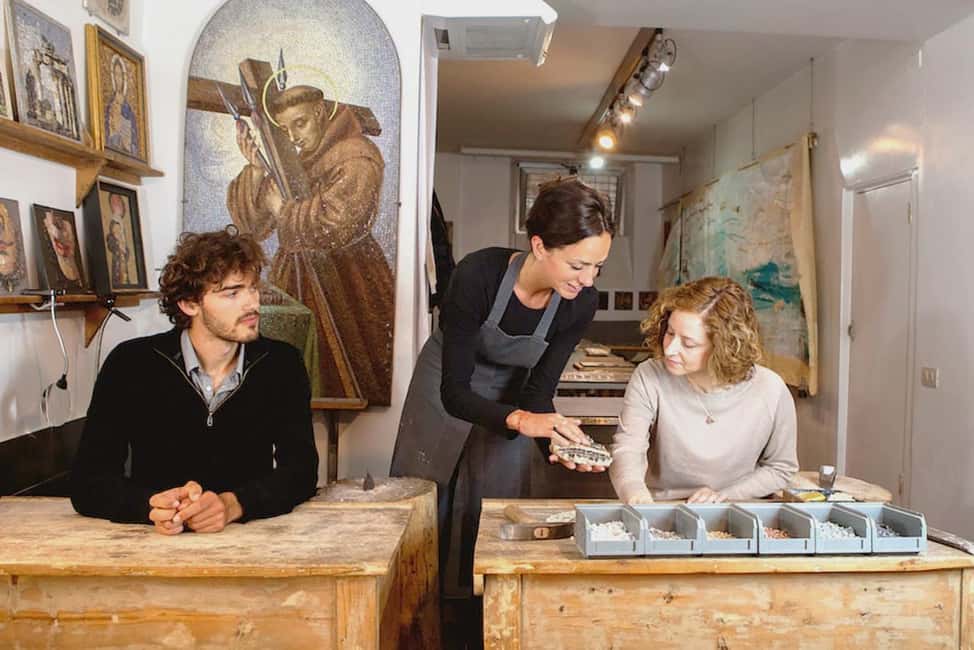
You’ll start with a short introduction to Roman mosaic techniques and mosaic history. That context isn’t there for decoration—it helps you understand why certain choices exist. Roman mosaics weren’t random decoration; they were planned compositions built from many small pieces, often using local materials.
After the intro, the workshop shifts into hands-on work:
- You practice the principles behind the finished piece, focusing on texture and composition.
- You learn the basics of marble tile cutting, then apply that learning as you create your design.
- You build your mosaic using local marble in the studio’s process, with tools provided.
The end result is a finished mosaic about 7 x 5 inches, created by you, with the studio ensuring it follows the kind of authenticity they aim to teach. The whole class runs for 2.5 hours, so it’s enough time to learn the method and produce something you can bring home without feeling rushed.
Also, it helps that you get breaks in the structure. You’re not stuck just cutting marble the whole time. Planning and building go in stages, which makes the experience feel calmer than you might expect.
What You Actually Learn: Texture, Composition, and Cutting
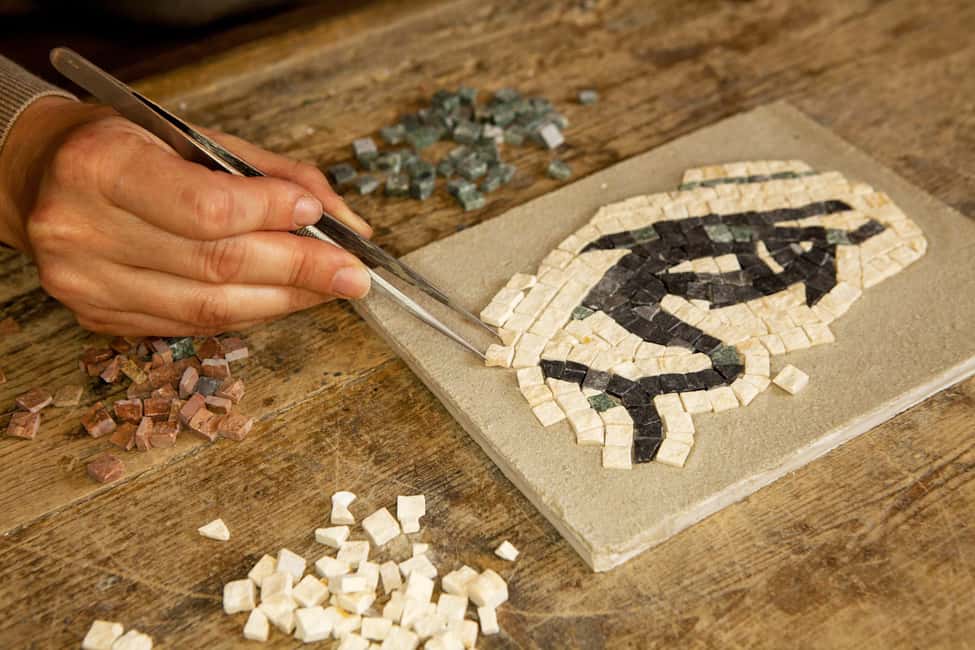
Most mosaic workshops teach “make something.” This one tries to teach the underlying craft logic.
Texture isn’t just decoration
Texture affects how light bounces across the surface and how the image reads from different angles. When you choose varied textures, your mosaic gets depth—even at a small size. In a class like this, you’ll learn the idea that texture is part of the design, not a finishing touch.



Composition is the quiet secret
Roman mosaics often look simple at first glance, but the success is in planning. You’ll work on composition principles so your pieces don’t just cover space—they form something clear. This is where a guided approach helps a lot. Even if your sketch plan changes, the instructor’s feedback keeps your layout coherent.
Marble tile cutting is the skill you feel most
Marble tile cutting is hands-on and specific. You’ll handle the tools needed to cut the marble pieces correctly for fitting and visual effect. That means your mosaic won’t look like a craft kit. It will look like the logic of Roman mosaicwork, translated into a modern workshop format.
If you’ve ever seen large Roman mosaics in museums and wondered why they look so crisp and controlled, this class addresses the reason: repeated small decisions, done consistently.
Your Take-Home Mosaic: Size, Frame, and 14-Oz Reality
This is one of the best practical parts of the workshop. Your finished mosaic is about 7 x 5 inches and weighs around 14 oz. That’s big enough to feel meaningful on a wall or shelf, but small enough to travel with—especially because you get a frame and a sturdy box designed to protect it.
You also get bottled water and coffee and/or tea. That sounds small, but in a workshop right after busy Rome days, it really helps you settle in and keep your energy steady.
And since the class is hands-on, the most valuable souvenir isn’t the marble itself. It’s the fact that you can point to a specific technique you learned and say, I made that using the steps they teach in the studio.
Practical tip from a traveler point of view: plan to pack it carefully on the way home and keep the box in your luggage where it won’t get crushed by heavier items. The workshop wraps it for protection, but your airline baggage still has its own opinions.
Price and Value: Is $106 Worth It?
At $106 per person for 2.5 hours, the price sounds like a “Rome activity” cost—until you break down what’s included.
You’re not just paying for time. You’re paying for:
- instruction from a mosaic master
- access to high-quality natural local marble
- the necessary tools
- a frame plus a sturdy protective box
- bottled water and coffee and/or tea
- a finished mosaic sized for take-home
For many Rome classes, you’re left with a craft object that feels generic. Here, you’re working with marble and tools and leaving with a finished piece that follows the authentic requirements the studio teaches. That pushes the value toward “learning a technique,” not “buying a souvenir.”
The small group size (max 9) also matters for value. When the group is limited, you get more feedback and help during cutting and placement. If you’ve ever taken a hands-on class that turns into watch-and-wait, you’ll appreciate the more personal pace here.
The only time I’d call the price a stretch is if you’re not interested in making something. If your trip style is mostly must-see sights and fast photo stops, this workshop may feel like it steals time. But if you want something real you can take home and remember, it fits the bill.
Who This Workshop Suits Best
This class is a strong match if you:
- want an activity that’s different from the usual museum pattern
- enjoy hands-on work more than lecture-only tours
- like the idea of making a small artwork with real marble tools
- want a calmer break after big sightseeing days, especially around the Colosseum area
It also seems to work well for pairs and families with older kids, since the workshop is recommended for ages 12 and up. If you’re traveling with a teen who’s curious about art, this kind of structured making can be a better use of time than another long attraction queue.
Two things to consider before you book:
- You’re creating your own mosaic, so it helps if you’re willing to focus for 2.5 hours.
- The class is tool-based, so it’s not built for very young kids.
Getting There and Timing It With Your Rome Day
Meeting point is near the Colosseum, about a 2-minute walk from Cavour metro on Line B. That makes planning easy. You can hit the big sights in the morning, then come here for an afternoon craft session when the city is at its busiest and warmer.
This location also helps you avoid a big logistics headache. You don’t need complicated routes just to find the workshop, and you’re back in a neighborhood that feels more lived-in than the most central tourist corridors.
As for timing, I’d place it on a day when you know you’ll want a break from crowds. The studio format makes it feel slower and more grounded, which helps after long walking days.
Should You Book the Studio Cassio Mosaic Workshop?
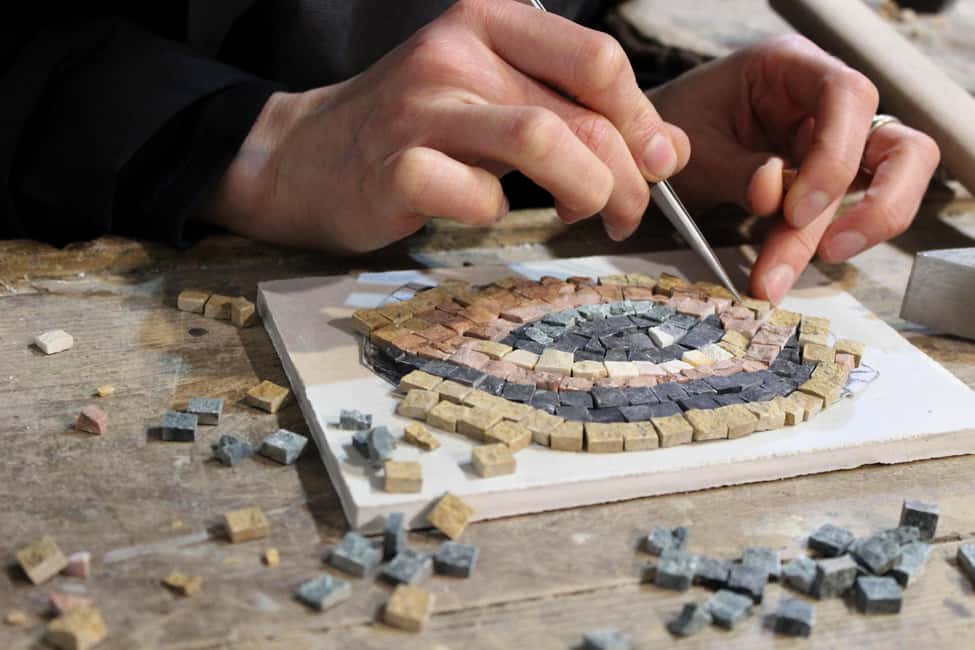
Book it if you want a hands-on Rome activity that produces something you can display and transport. I especially think it’s worth it when you’re curious about how Roman mosaics are built—because this class teaches the method: texture, composition, and marble cutting.
Skip it if you’re only interested in seeing famous sites, snapping photos, and moving fast. This workshop is the opposite of that pace. You’ll do the work. That’s the point, and that’s why people seem to love leaving with a piece they made themselves.
If your schedule allows, this is the kind of activity that gives Rome a second dimension: not just what you saw, but what you learned to make.
FAQ
How long is the Rome Ancient Mosaic Making Workshop?
The workshop lasts 2.5 hours.
Where do I meet for the workshop?
The meeting point is near the Colosseum, about a 2-minute walk from the Cavour stop on Metro Line B.
What will I take home at the end?
You’ll take home your finished personal mosaic, approximately 7 x 5 inches, weighing about 14 oz, along with a frame and a sturdy box for protection.
Is this a small group class?
Yes. It’s limited to a small group of up to 9 participants.
What languages are offered?
The instructor teaches in English and Italian.
What age is the workshop suitable for?
For safety reasons, it’s recommended for ages 12 and up.
What’s included in the price?
The price includes an introduction to Roman mosaic technique and history, access to natural local marble and all necessary tools, a frame, a sturdy storage box, bottled water, and coffee and/or tea. Your unique mosaic creation is also included.