REVIEW · ROME
Rome: Pasta Making Class with Wine, Limoncello, and Dessert
Book on GetYourGuide →Operated by Experience in Florence · Bookable on GetYourGuide
Rome has a way of feeding you before you even sit down. This pasta class brings fresh dough, real coaching, and a shared table into the heart of the city. You’ll learn classic shapes—ravioli, tortelli, and fettuccine—and eat what you make in a historic Palazzo Grazioli setting a few minutes on foot from both the Pantheon and Piazza Venezia.
I especially like two things: first, the hands-on pace, where each person kneads and rolls at their own station with instructors like Olga and Giorgio guiding the steps; second, the meal format, where your work lands on the table with housemade sauces, organic Tuscan wine, and a limoncello finish.
One consideration: this experience isn’t built for everyone. It requires standing and hands-on cooking, and the venue can’t accommodate wheelchair users. Also, it can’t support vegan, gluten-sensitivity, or lactose intolerance, so you’ll want to double-check dietary fit before booking.
In This Review
- Key takeaways before you go
- Fresh pasta in Rome, where history meets dinner
- What you’ll make: ravioli, tortelli, and fettuccine
- The pasta-making rhythm inside Palazzo Grazioli
- Sauces you can actually explain after class
- Wine and limoncello: the meal that makes it feel like Rome
- Small group size means real attention
- The $48 value: what you actually get
- Location: near the Pantheon, easy to build into your day
- Who should book this pasta class (and who should skip it)
- How to prepare so you enjoy it from minute one
- Should you book the Rome pasta making class at Palazzo Grazioli?
- FAQ
- How long is the pasta making class?
- Where do I meet the instructor?
- What pasta types do we make?
- Is the class taught in English?
- Is it a small group?
- What food and drinks are included?
- Can the class accommodate vegetarian diets?
- Is it suitable for vegans, gluten intolerance, or lactose intolerance?
- What’s the minimum age?
- Can I cancel for a refund?
Key takeaways before you go
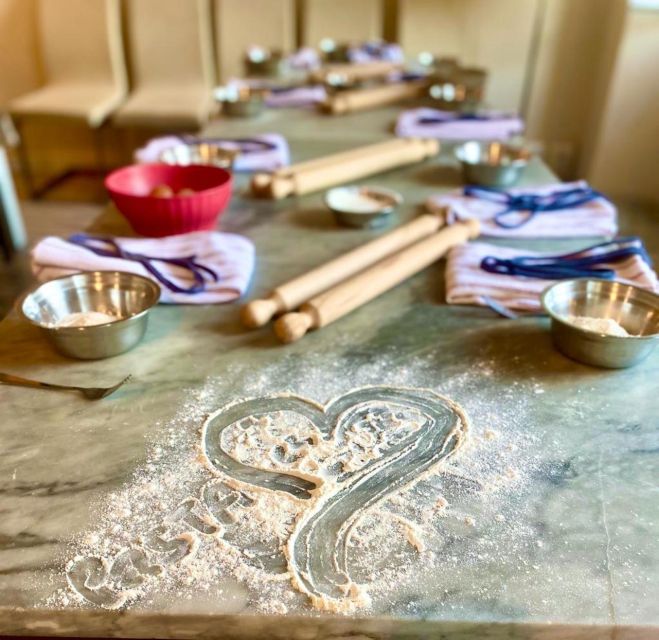
- 3 pasta shapes per person: ravioli, tortelli, and fettuccine, not just watching from the sidelines
- Cook-and-share setup: you shape pasta, then everything gets cooked together in the same pot
- Sauce timing that matters: tomato sauce is pre-simmered, while butter-and-sage finishes happen right before serving
- Organic Tuscan wine plus limoncello: Dalle Nostre Mani wine paired with your meal, then a traditional shot
- English instruction in a small group: limited to 10 participants, so you get hands-on help
- Take-home recipes: English recipe booklets so you can recreate it later
Fresh pasta in Rome, where history meets dinner
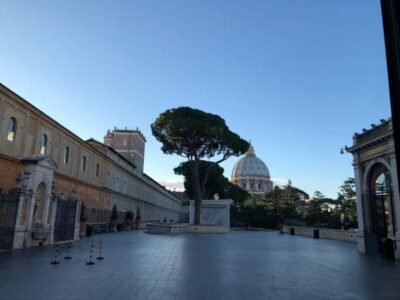
If you want a Rome activity that feels like Italian life—not just a sightseeing stop—this is it. The class takes place inside Palazzo Grazioli, and the location is a major part of the appeal: you’re close enough to famous sights like the Pantheon and Piazza Venezia that the whole experience feels like you’re eating inside the city itself, not on its edge.
The setting adds a little “occasion” energy. You’re not in a generic kitchen studio. You’re in a historic building, and that matters when you’re spending three hours turning flour and eggs into something you’ll actually taste at the end of the class. It’s also a nice break from the museum rhythm: instead of walking and looking, you’re hands-first involved.
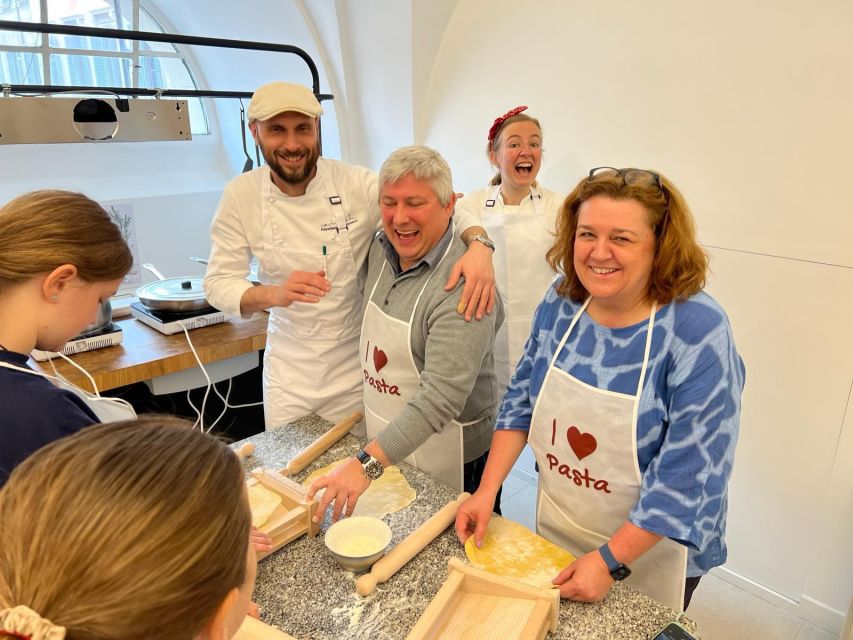
For me, the best part is that the class doesn’t treat pasta as a science project. You’re taught by instructors—often with the kind of personality you remember after you leave, like Giorgio and Christian—so the room feels friendly while still staying focused on technique.
You can also read our reviews of more cooking classes in Rome

What you’ll make: ravioli, tortelli, and fettuccine
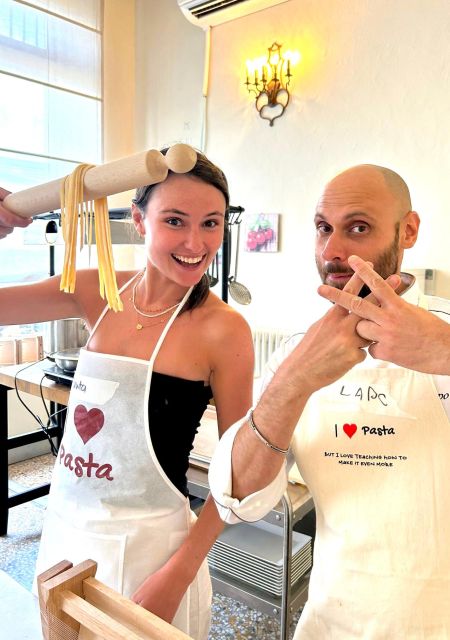
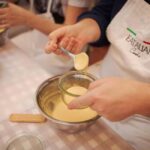
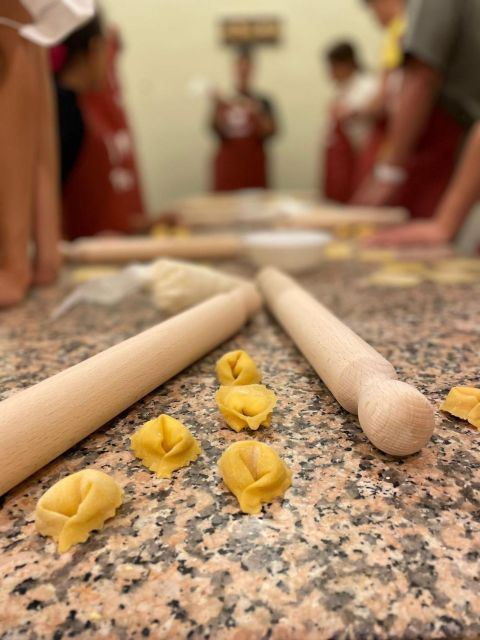
This isn’t a “one pasta type” class. Each participant makes three fresh pasta types: ravioli, tortelli, and fettuccine. You’ll work with eggs and flour dough—kneading, rolling, and shaping until it’s the right texture for cooking.
Two of the shapes are filled. That’s a good sign if you like variety and texture. Filled pasta is where small differences in thickness and sealing show up fast, so the instructor guidance really pays off. And because you’re doing the shaping yourself, you learn the feel of dough—something you can’t get from watching a video later.
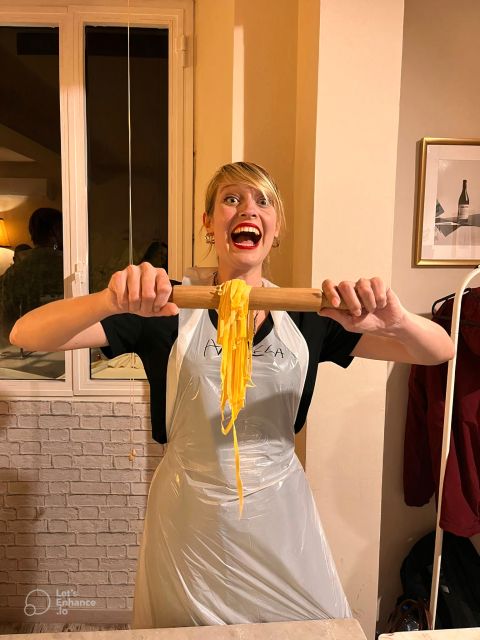
Meanwhile, fettuccine gives you the satisfying “roll it, cut it, cook it” experience. It’s a classic move and a great confidence-builder: once you see the dough turn into noodles that hold up, you’ll understand why fresh pasta cooks differently than dried.
The pasta-making rhythm inside Palazzo Grazioli
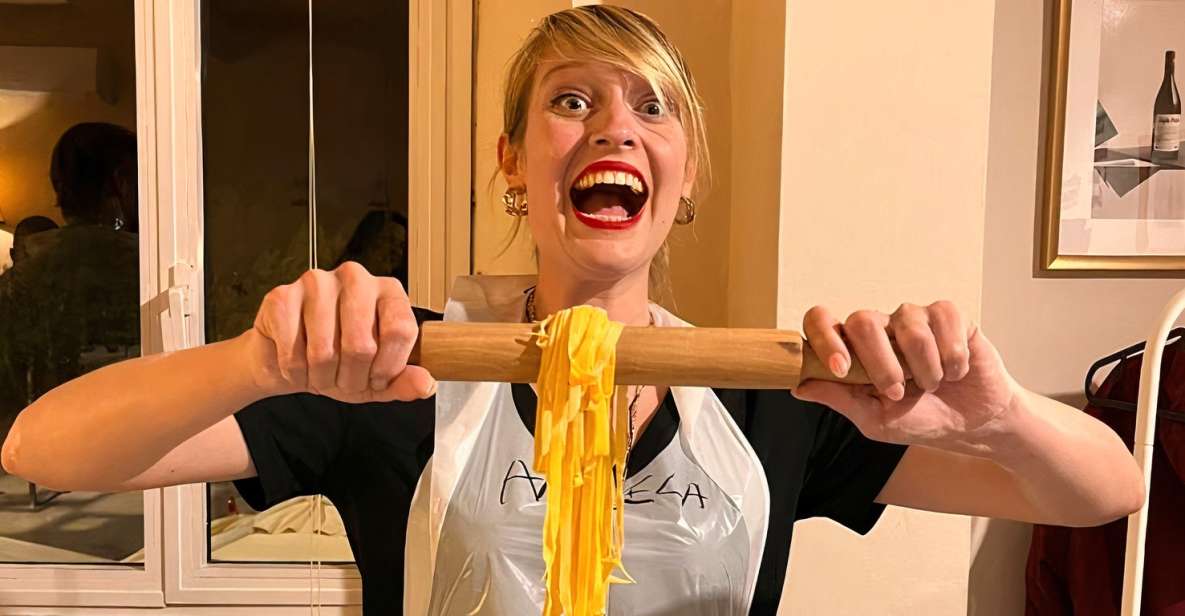
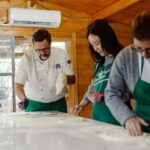
The flow is designed to keep you moving. You start with an introduction so you understand what you’re aiming for—dough texture, thickness, and why shape and cooking timing matter. Then you jump into hands-on practice right away.
Here’s what makes this style of teaching work for real beginners: the instruction is practical, and you’re not left guessing. In many sessions, instructors like Fabrizio, Noemi, Olga, Marco, or Christian are constantly checking in, correcting small issues early, and showing what to do next. That matters because fresh pasta is sensitive: if you roll too thick or your filling leaks, you’ll feel it during cooking.
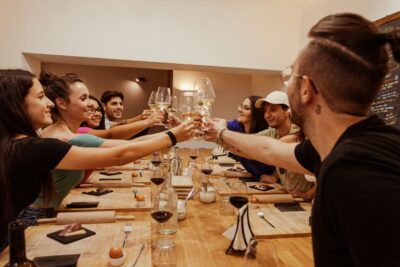
A nice detail in how the class is organized: while you’re making your pasta at your stations, the group shares the kitchen “output.” After everyone finishes shaping, the pasta is cooked together. It turns the end of class into a true group meal instead of separate plates handed out like a cafeteria.
Sauces you can actually explain after class
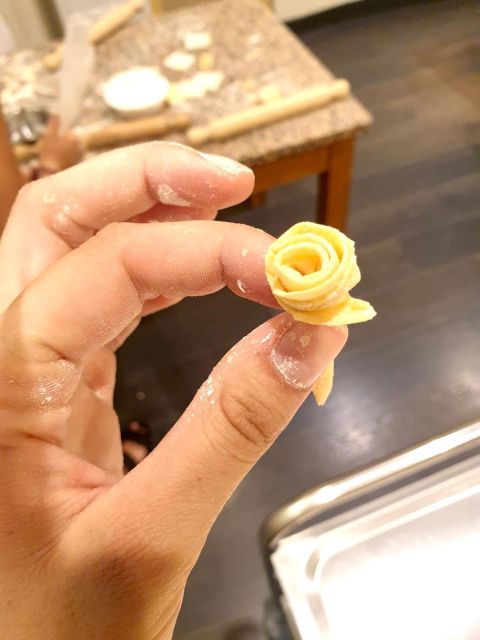
The sauces are handled with smart timing. The signature tomato sauce simmers for hours in advance, so it’s flavorful and ready when you sit down. But for the filled pastas, you get the fresh, high-smell finish of butter and sage sauce prepared right before serving.
That split—slow simmer for tomato, last-minute handling for butter and sage—helps you understand why Italian sauce is as much timing as it is ingredients. You’ll taste the difference between sauces that need time to build depth and sauces that should stay light and aromatic.
And yes, you’ll eat what you made. That’s not a throwaway detail. When you cook your own pasta and then taste it right away, you’ll remember the texture, the thickness, and the reason certain steps were emphasized. It’s the fastest way to turn a “fun activity” into actual kitchen knowledge you can use later.
Wine and limoncello: the meal that makes it feel like Rome
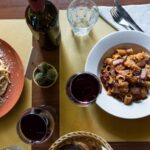
This class doesn’t end when the pasta cools. It turns into a proper tasting moment. You sip a glass of Dalle Nostre Mani Tuscan wine that’s produced organically, then finish with a traditional limoncello shot and dessert.
Wine is part of the Italian dining culture, and here it fits the pace: you’re learning in the first half, then you settle in while the food lands on the table. The limoncello at the end is a classic palate-cleanser move—sweet, bright, and a fun way to close a hands-on experience.
One practical note: alcohol is served only to participants of legal drinking age. If you don’t drink, you can still enjoy the experience; multiple instructors are described as offering alternatives for non-drinkers, so you won’t feel shut out of the social part of the meal.
You can also read our reviews of more wine tours in Rome

Small group size means real attention
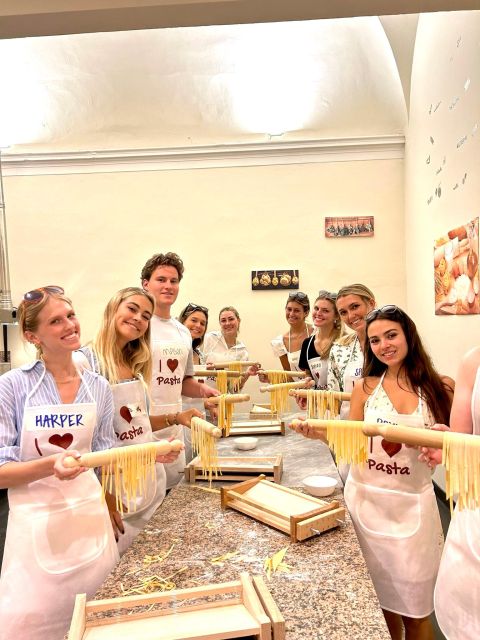
You’ll be in a small group—limited to 10 participants. For a cooking class, that size is the sweet spot. You get enough people to make the communal table feel lively, but not so many that you disappear into the background.
This is where those instructor personalities really matter. People talk about instructors being warm and interactive, explaining the why behind the steps, and helping individuals as they work. I like that you can ask questions and get direct feedback, rather than having a demo and then hoping your dough behaves the same way.
It also helps that the class is taught in English. That’s important because pasta technique is full of little cues—how dough should feel, how thickness affects cooking, and what you should watch for while sealing filled pasta. With English instruction, you can follow along fast and move confidently.
The $48 value: what you actually get
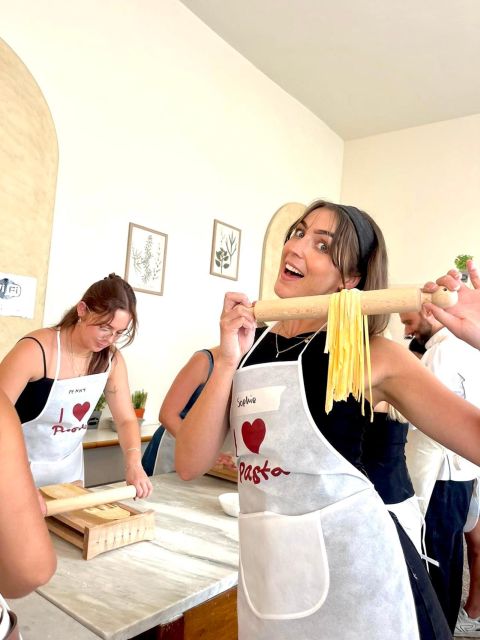
At $48 per person for about three hours, you’re paying for much more than instruction. Here’s what makes the value feel real:
- You make three pasta shapes, not one
- You get coached in technique (dough, rolling, shaping)
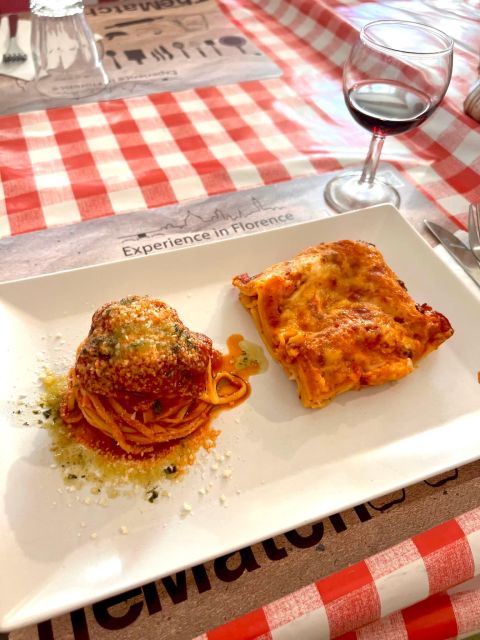
- You eat the finished pasta at a communal table
- Wine, limoncello, and dessert are included
- You receive English recipe booklets so the class doesn’t disappear the moment you leave
In other words, the cost isn’t just the cooking. It’s the full experience: training plus meal plus take-home instructions. If you’ve had the “great tour, but I only saw it” problem before, this avoids that. You leave with food knowledge you can reproduce.
And with small group limits, you’re not paying for a crowd. You’re paying for time with an instructor and a shared meal that ties it together.
Location: near the Pantheon, easy to build into your day
The meeting point is in Via della Gatta 14, inside the activity provider’s cooking school area at the back corner of Palazzo Grazioli. You ring the bell at Pastamania.
What’s helpful is that you’re dropped into a walkable part of central Rome. Even if you start late in the day, you can typically fit this between sightseeing stops. And because it’s so close to major landmarks, you don’t have to plan a complicated route just to get to the class.
There’s also a little extra charm: the entrance is associated with the marble cat statue that gives the street its name. It’s the kind of detail that makes the arrival feel like part of Rome, not a generic meeting point.
Who should book this pasta class (and who should skip it)
This class is a good fit if you want a hands-on Rome experience with food as the main event. It works well for individuals, couples, friends, families, and even group events like corporate teams, as long as everyone can comfortably cook and sit at the communal table.
The minimum age is 8 years old, so it can work for families with kids who like interactive activities.
But skip it if any of these are true:
- You use a wheelchair or have mobility impairments, since it’s not suitable for those needs
- You need a vegan option (it can’t accommodate vegan)
- You must avoid gluten or lactose (it can’t accommodate gluten-sensitivity or lactose intolerance)
- You have a nut allergy (it’s not suitable for people with nut allergies)
Also, if you have allergies, inform the provider in advance. The class can support vegetarian and other diets, but the non-supported categories are clearly stated, so you’ll want to match your needs early.
How to prepare so you enjoy it from minute one
You don’t need to be a cook. You do need to be comfortable enough to work with dough.
Wear comfortable clothing that can handle flour and the physical rhythm of kneading and rolling. If you’ve ever worn a crisp shirt in a kitchen workshop, you know why this matters. Also, arrive ready to participate—this experience works best when you treat it like your station is your focus.
If you drink alcohol, you’ll enjoy it as part of the pacing. If you don’t, it’s still a social meal, so tell them ahead of time so you can plan around the alternatives.
Finally, bring any allergy or dietary details to booking. The class requires advance information to make sure your menu fits what’s possible.
Should you book the Rome pasta making class at Palazzo Grazioli?
Yes—if you want a Rome experience where the main event is fresh pasta you make yourself. The format hits the sweet spot: small group size, clear instruction in English, three different pasta types, and a sit-down meal with wine, limoncello, and dessert. It’s also a strong value at $48 when you compare it to paying for a restaurant meal plus an activity.
Don’t book if you need wheelchair accessibility, vegan or gluten/lactose-safe accommodations, or you have a nut allergy. In those cases, the stated limits mean you might feel unsafe or disappointed.
If your goal is an authentic, tasty memory you can recreate later, this class is the kind of “one ticket, three skills” activity that earns its spot on your itinerary.
FAQ
How long is the pasta making class?
The experience lasts 3 hours.
Where do I meet the instructor?
Meet at the cooking school in Via della Gatta 14, 00186 Roma, and ring the bell at Pastamania.
What pasta types do we make?
You’ll make ravioli, tortelli, and fettuccine.
Is the class taught in English?
Yes, the instructor teaches in English.
Is it a small group?
Yes. The class is limited to 10 participants.
What food and drinks are included?
The class includes the pasta-making session, instructors, a meal, Tuscan wine, dessert, and a shot of limoncello.
Can the class accommodate vegetarian diets?
Vegetarian and other diets are supported, but you should inform the provider of dietary needs when booking.
Is it suitable for vegans, gluten intolerance, or lactose intolerance?
No. Vegan, gluten-sensitivity, and lactose intolerance are not accommodated.
What’s the minimum age?
Participants must be at least 8 years old.
Can I cancel for a refund?
Free cancellation is available up to 24 hours in advance for a full refund.