REVIEW · ROME
Rome: Ostia Antica Private Walking Tour with Skip-the-Line
Book on GetYourGuide →Operated by Askos Tours · Bookable on GetYourGuide
Ostia Antica feels like a time machine. You get a private guide and skip-the-line entry, then you walk through the ruins of Rome’s river port—mosaics, civic buildings, and street-level stuff that makes the past click. I especially love how the route centers on Neptune’s Thermal Baths, including the mosaics tied to Neptune and Amphitrite. One thing to keep in mind: it’s a focused 2-hour highlights walk, so you won’t get long hours of wandering.
What really makes this tour work is the way the guide connects objects to real life in the city. Guides such as Paolo Gardelli and Alessandro are the kind who explain what you’re seeing as you pass it, with enthusiasm that keeps your attention from flagging. The main drawback for some people is simply walking: the activity level is listed as medium, so comfortable shoes matter, and the tour isn’t set up for mobility needs.
In This Review
- Quick hits before you go
- Ostia Antica: the Roman port town just outside Rome
- Meet at Parco Archeologico: how the private tour starts
- Skip-the-line entry: saving time where it actually counts
- Neptune’s Thermal Baths and the mosaics of Neptune and Amphitrite
- Theatre di Ostia: seeing how crowds gathered
- Forum and civic life: the business end of Ostia
- Domus of Amor and Psyche excavations: old Ostia beneath the surface
- House of Diana, Thermopolium, and Forica: everyday routines you can picture
- How the city’s walls and neighborhoods shape what you see
- What you’re paying for: $314.37 of time, guide skill, and saved hassle
- Pacing and comfort: the medium-walk reality
- Who this tour suits best (and who might prefer another style)
- Should you book this Ostia Antica private tour?
- FAQ
- FAQ
- Where is the meeting point?
- How long is the tour?
- Is the tour private or group?
- Are skip-the-line tickets included?
- What languages are available?
- Is food and drink included?
- What’s the cancellation policy?
- Is it wheelchair accessible?
Quick hits before you go
- Skip-the-line entry gets you into Ostia Antica faster, without standing around at the gate
- Neptune’s Thermal Baths is a signature stop, including mosaics of Neptune and Amphitrite
- Theatre and forum time keeps the civic story clear and gives you a sense of how people gathered
- Domus of Amor and Psyche excavations add an extra layer to the “old Ostia” story
- Private pacing means you can move at a steady speed and ask questions along the way
Ostia Antica: the Roman port town just outside Rome
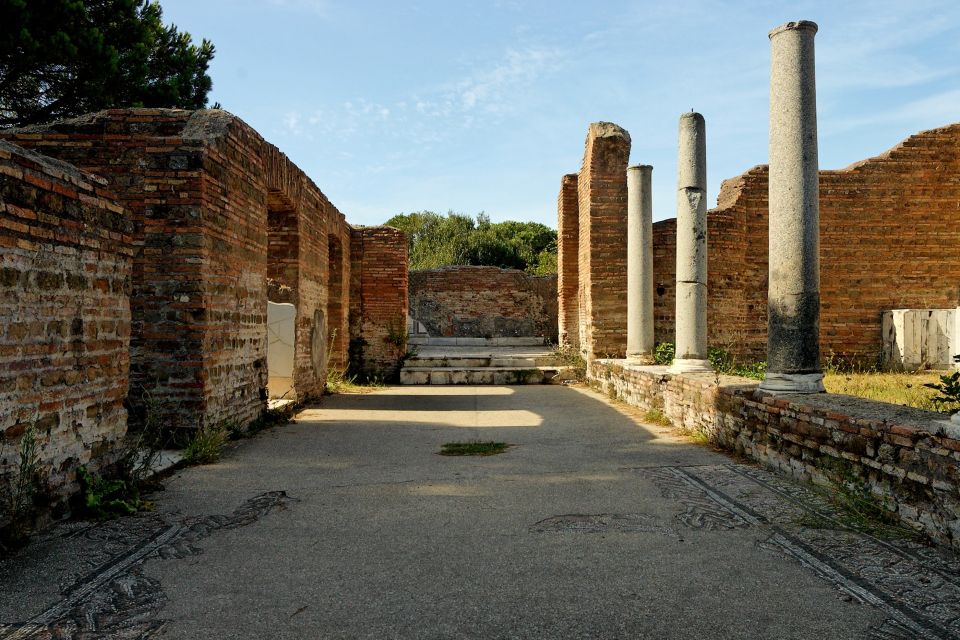
Ostia Antica is one of those places that makes you rethink what Rome was. Instead of only picturing emperors in marble and triumphal arches, you see a working settlement built around the Tiber River—where ships, supplies, and strategy mattered day to day.
The roots go back to the early 4th century B.C., when the area functioned as a military outpost. It wasn’t only about local control; it was also about managing access to the river and its lower course and nearby regions to help defend Rome. Later, the city grew into a first Roman colony and developed a strong commercial role, supplying Rome with foodstuffs, especially wheat—while the naval and strategic side stayed important.
What makes this tour especially satisfying is that these bigger stories aren’t told in the abstract. They’re connected to specific ruins you’ll stand in front of—so the city’s layout and purpose start to make sense in under two hours.
You can also read our reviews of more walking tours in Rome



Meet at Parco Archeologico: how the private tour starts
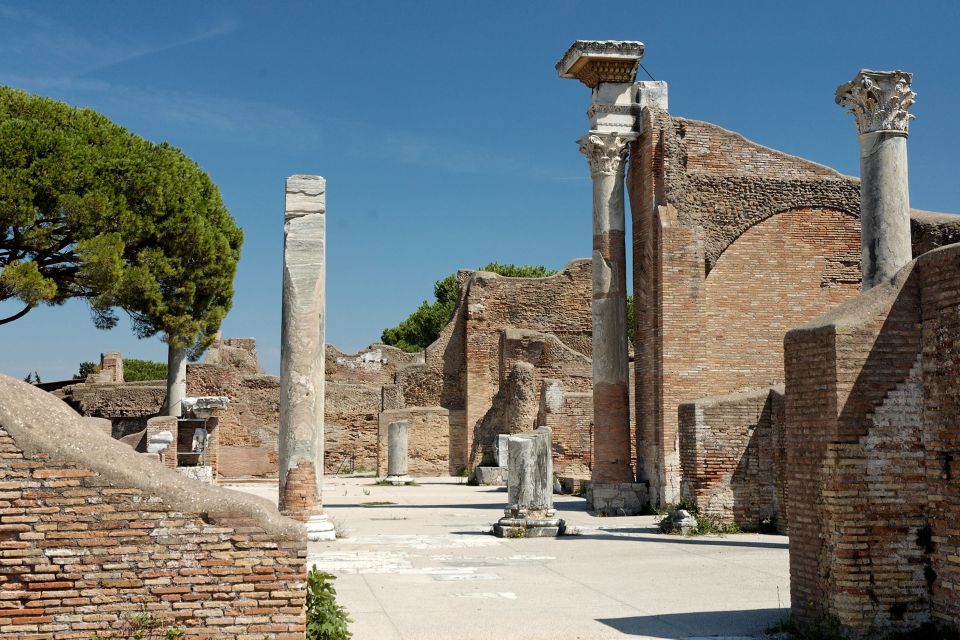
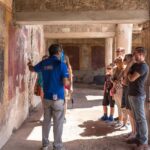
You meet your guide at the ticket office of the Parco Archeologico di Ostia Antica. The guide holds a sign with your name, so you can find the right person without guesswork.
This is a private group experience, and that matters more than it sounds. With only your group, you can keep questions tight, and you’re not stuck watching someone else’s pace. The tour runs about 2 hours, and you’ll loop back to the same meeting point at the end.
Languages offered include Spanish, English, French, German, and Italian. So if your travel party wants to use one language comfortably, you can usually match that here.
One practical note: the activity level is listed as medium. That usually means you’ll be doing real walking across uneven historic ground, not museum-sitting. Plan for your feet more than your imagination.
Skip-the-line entry: saving time where it actually counts
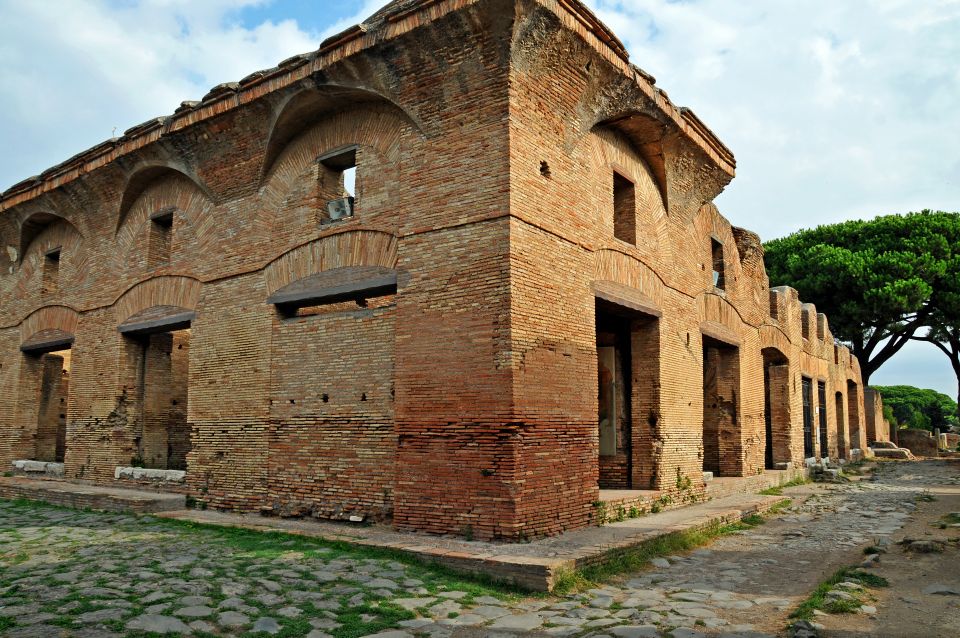
Skip-the-line tickets sound like a convenience feature, but here they’re a big quality-of-life win. You’re going to a site where you don’t just look at one building—you move between multiple key areas. Time spent waiting at the start is time you can’t get back.
With the skip-the-line included, you can get into the flow of the city sooner. And because this is a guided private walk, once you’re inside, the guide can start interpreting right away—rather than meeting you with a long stretch of silent ruins.
In other words: it’s not only faster. It’s also more satisfying because you’re not forced to start your visit half-distracted by logistics.
Neptune’s Thermal Baths and the mosaics of Neptune and Amphitrite
This is the kind of stop that makes Ostia Antica feel like a real place, not just a collection of stones. Neptune’s Thermal Baths are a standout, and the tour specifically calls out mosaics that represent Neptune and Amphitrite.
Why this matters: baths in Roman life weren’t only about cleanliness. They were social spaces—places where people went to talk, relax, and handle the rhythms of daily life. When you see the mosaics of sea gods, you’re seeing how the Romans decorated even leisure with meaning and mythology.
On this tour, you don’t just look at the mosaic. You get the historical context that makes the imagery feel intentional: why these figures belong here, and how the bath complex fits into the city’s broader story.
If you like “what you’re looking at, explained in plain terms,” this stop delivers. It also sets a strong tone early, so the rest of the walk feels connected.
Theatre di Ostia: seeing how crowds gathered
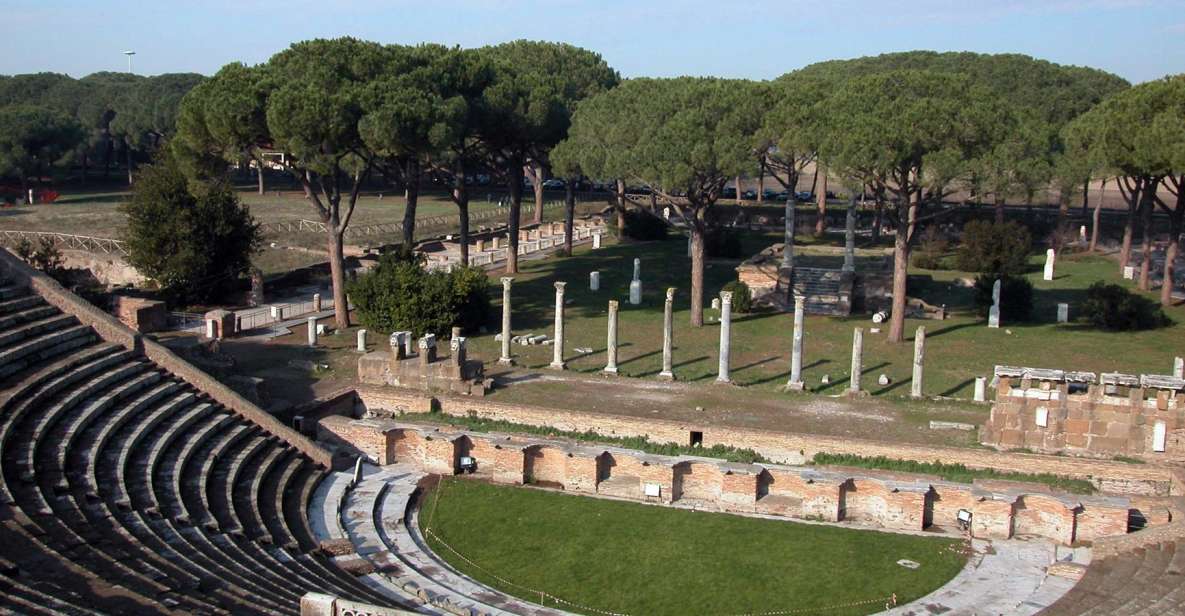
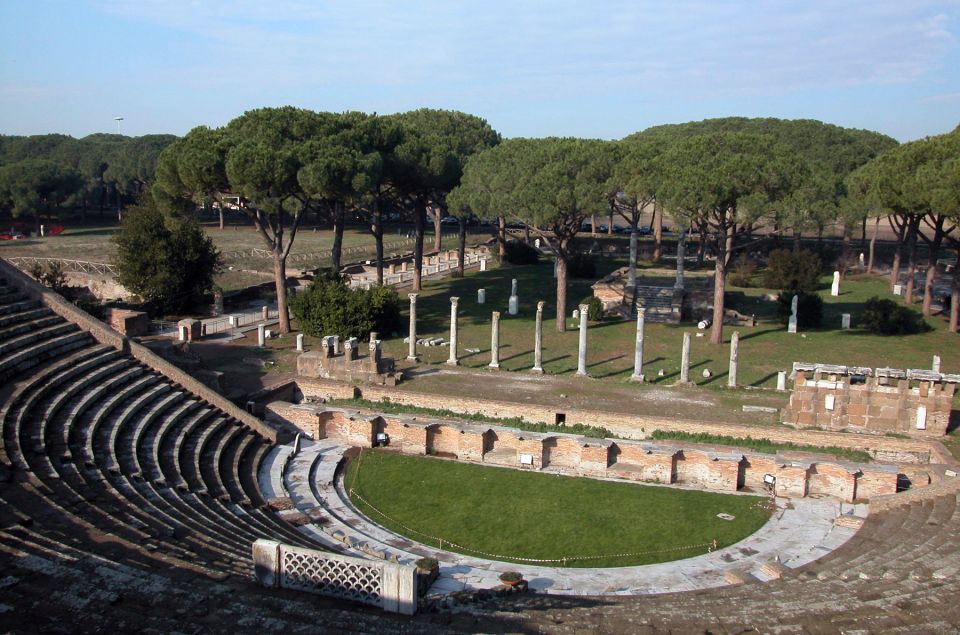
After the early highlights, the itinerary shifts to entertainment and civic gathering, including the Teatro di Ostia. You’ll spend about 30 minutes here with guided time.
A theatre can feel abstract unless someone explains what it meant for people. With a guide, you start reading the site like a piece of public infrastructure: where people would have sat, how performances fit into social life, and how such a venue signals what the city valued.
The practical win is time management. You get a chunk of guided focus at the theatre instead of glancing and moving on. That makes it easier to remember what you saw and why it mattered.
One drawback to note: if you’re hoping for a slow, linger-at-every-corner kind of stop, the schedule keeps you moving. That’s not bad—just a style choice.
You can also read our reviews of more private tours in Rome




Forum and civic life: the business end of Ostia
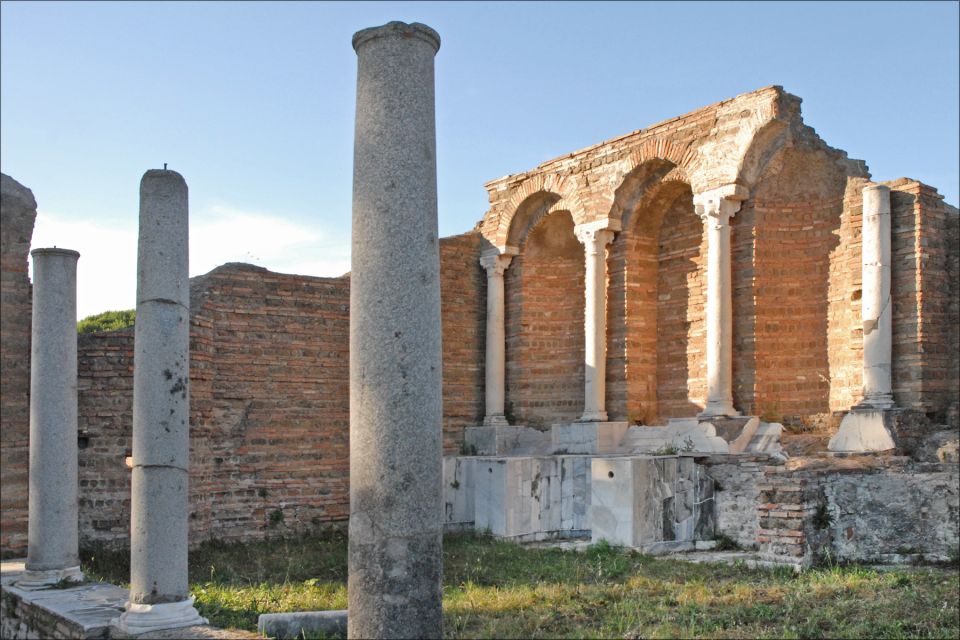
Next comes the forum area, plus major civic spaces that help you understand the city’s day-to-day function. The forum is where power and public life intersect: markets, administration, and the kind of routine that keeps a port running.
Even if you’re not a history buff, you’ll likely feel the logic of the layout more easily with a guide walking you through it. The tour ties Ostia’s role as a river port and food supplier to the kind of public space you see at the forum. It’s the difference between seeing ruins and realizing how people organized themselves.
This part of the tour works especially well if you like architecture that reflects behavior. You’re not just admiring columns—you’re learning why people built in certain places.
Domus of Amor and Psyche excavations: old Ostia beneath the surface
One of the more intriguing stops is the Domus of Amor and Psyche excavations of old Ostia. Your time here is about 20 minutes, and it adds depth to the “how the city evolved” story.
Excavations can be tricky to interpret on your own because you’re looking at partial remains. With a guide, you get the way-finding: what you’re looking at in terms of the city’s development and what this specific domestic area suggests about who lived there and how life changed.
Why I like this stop for first-timers: it shifts the narrative from public life into private life without pretending the ruins are fully intact. You still get a grounded sense of the city’s layers.
If you’re sensitive to time limits, plan your attention here. Twenty minutes goes fast when you want photos and explanations.
House of Diana, Thermopolium, and Forica: everyday routines you can picture
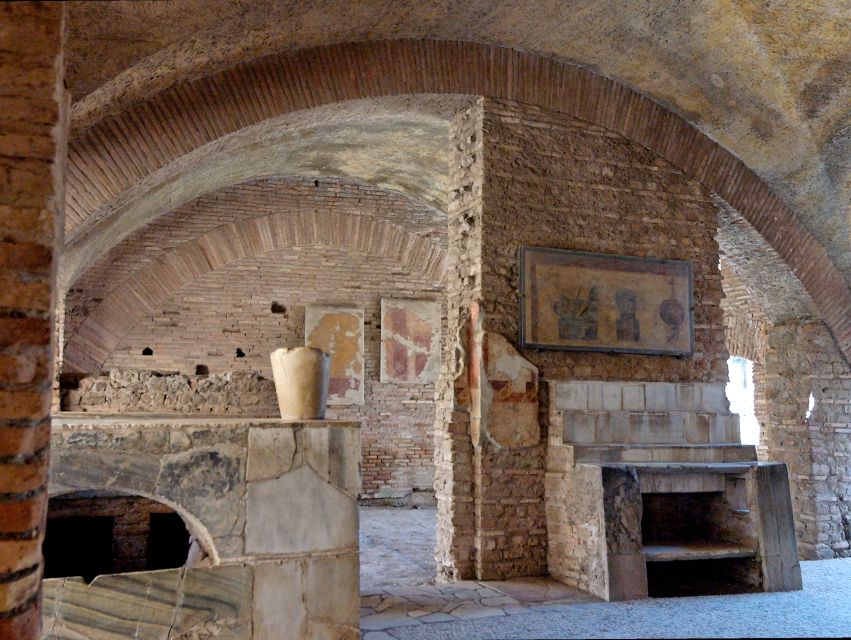
As you move deeper into the urban fabric, you’ll see additional key sites, including the House of Diana, the Thermopolium, and the Forica. These stops are where Ostia stops feeling like a textbook and starts feeling like a place where people ate, relaxed, and handled routine needs.
The tour doesn’t treat these as random add-ons. It uses them to flesh out what daily life looked like in a port city—how social spaces and everyday services would have worked in a settlement tied to shipping, supply, and constant movement.
Here’s what you should do to get the most out of these sections: keep your questions practical. Ask how each spot fits into the flow of the neighborhood. A good guide will connect the buildings to the daily rhythms you can almost imagine.
How the city’s walls and neighborhoods shape what you see
One of the most helpful parts of the tour is the way it frames Ostia’s structure. The city was later surrounded by a new circle of walls, and the enclosed urban area is described as about 50 hectares. Within that space, it was divided into five regions or neighborhoods.
That kind of overview is more than trivia. It’s a mental map. Once you understand that Ostia had defined districts, you start noticing how the ruins you see fit into a bigger plan rather than feeling like separate attractions.
If you’ve only visited big-city ruins like the Forum in Rome, this scale can feel refreshing. You’re not constantly overwhelmed by too many monuments competing for your attention. You get a sense of a city designed for function—defense, access to the Tiber, and a commercial engine that fed Rome.
What you’re paying for: $314.37 of time, guide skill, and saved hassle
The price is listed at $314.37 per person for this private walking tour with skip-the-line tickets, lasting about 2 hours.
That might sound steep at first. Here’s how to judge the value fairly: you’re paying for two things that are hard to replicate on your own. First, you’re buying a guide who can explain what you’re looking at as you walk through the site. Second, you’re paying for skip-the-line entry, which saves time and keeps the experience moving.
This is usually most worth it when:
- You want a guided storyline rather than a self-paced museum day
- Your group includes people who don’t want to spend time reading every sign
- You’d rather pay to avoid waiting and get straight to the best ruins
If you’re traveling solo and you’re the type who’s happy with audio guides and guidebooks, you might find a less expensive option appealing. But if you value conversation, quick clarifications, and a tight route through the highlights, this private format can feel like paying for less effort and more understanding.
Also remember what’s not included: food and drink. Since Ostia Antica visits can make you hungry, I’d plan a snack stop before or after on your own.
Pacing and comfort: the medium-walk reality
The activity level is listed as medium. That typically means you should come prepared for a decent amount of walking on historic ground. Wear comfortable shoes with good traction, and plan your day so you’re not rushing from Rome without time to settle.
It’s also a private group, which helps with pacing. Your guide can keep you from feeling dragged along, but you still need to match the walking rhythm.
One thing to double-check before booking is accessibility. The description includes wheelchair accessibility, yet it also states it is not suitable for wheelchair users and not suitable for people with mobility impairments. If anyone in your group relies on a wheelchair or has mobility limitations, I’d contact the operator to confirm what’s realistic for your needs at Ostia Antica.
Who this tour suits best (and who might prefer another style)
This is a great fit if you:
- Like guided interpretation tied to what you’re seeing
- Want a structured highlights route in 2 hours
- Appreciate the blend of public buildings and daily-life sites like the theatre, forum, and smaller functional spaces
It’s not ideal if you:
- Want an all-day, slow wander with lots of downtime
- Need a tour that avoids walking over uneven ruins
- Prefer totally independent exploration with no guided structure
If you want to see Ostia Antica as more than a quick stop, the private guide format helps you get more meaning out of every step.
Should you book this Ostia Antica private tour?
I’d book it if you want the fastest path to understanding Ostia Antica and you value interpretation as part of the experience. Skip-the-line entry plus a private guide is a strong combo here, especially for first-timers who want the site’s story connected to Neptune’s Thermal Baths, the theatre, the forum, and the domestic and daily-life stops like the House of Diana, Thermopolium, and Forica.
I’d think twice if your group is looking for long free time, or if mobility needs make a medium-walk format difficult. In that case, ask detailed questions about routes and on-the-ground conditions before you commit.
FAQ
FAQ
Where is the meeting point?
Meet the guide at the ticket office of Parco Archeologico di Ostia Antica. The guide will hold a sign with your name on it.
How long is the tour?
The duration is 2 hours.
Is the tour private or group?
It’s a private group tour with a private guide.
Are skip-the-line tickets included?
Yes. Skip-the-line tickets are included.
What languages are available?
The live guide is available in Spanish, English, French, German, and Italian.
Is food and drink included?
No. Food and drink are not included.
What’s the cancellation policy?
You can cancel up to 24 hours in advance for a full refund.
Is it wheelchair accessible?
The activity description includes wheelchair accessibility, but it also notes it is not suitable for wheelchair users. If this matters for your group, check with the operator before booking.