REVIEW · ROME
Highlights of Rome: Historical Center Walking Tour
Book on GetYourGuide →Operated by Tour in the City - Travel Agency Rome - · Bookable on GetYourGuide
Rome is best seen with a plan.
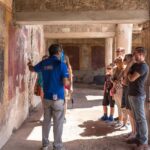
This private 3-hour walking tour strings together Baroque and Renaissance squares and fountains in a smooth loop, starting at the Spanish Steps area and pushing toward the Pantheon, Piazza Navona, and more. I like that it’s paced for families too, so kids can tag along without turning it into a marathon.
What I really like is the way the guide connects the obvious icons to the stories behind them. You’ll spend time at Trevi Fountain, then move on to the Pantheon and the Baroque theatre of Piazza Navona, with explanations you can actually use while you’re standing there.
One caution: you’ll do a moderate amount of walking, and St. Peter’s Basilica is included as part of the day, but not the Dome, Necropolis, or the Treasury Museum.
In This Review
- Key highlights to look for
- Why this 3-hour Rome squares-and-fountains route makes sense
- Start smart: Piazza della Trinità dei Monti and a punctual meetup
- Spanish Steps: viewpoint energy, then real guidance
- Trevi Fountain: the photo moment, plus the why
- Piazza Colonna and the Temple of Hadrian: the quieter power stops
- The Pantheon: why that dome still stuns people
- Piazza Navona and the Fountain of the Four Rivers: Baroque theatre in stone
- Campo de’ Fiori and Largo di Torre Argentina: everyday Rome plus a big shock
- Ponte Sant’Angelo and Castel Sant’Angelo: the Tiber-side reset
- St. Peter’s Basilica: why the audio guide is a smart add-on
- Vittoriano and the final storytelling beat, then back to the start
- Price and pace: when $141.61 feels fair
- Who this tour suits best (and who should think twice)
- Should you book this Rome squares and fountains private tour?
- FAQ
- Where does the tour start?
- How long is the tour?
- What is the price per person?
- Is this a private tour?
- What sights will we see?
- Is St. Peter’s Basilica included?
- Are entrance fees included?
- Are the Dome or Necropolis and Treasury Museum included?
- Is skip-the-line entrance included?
- What should I bring, and are there restrictions?
Key highlights to look for
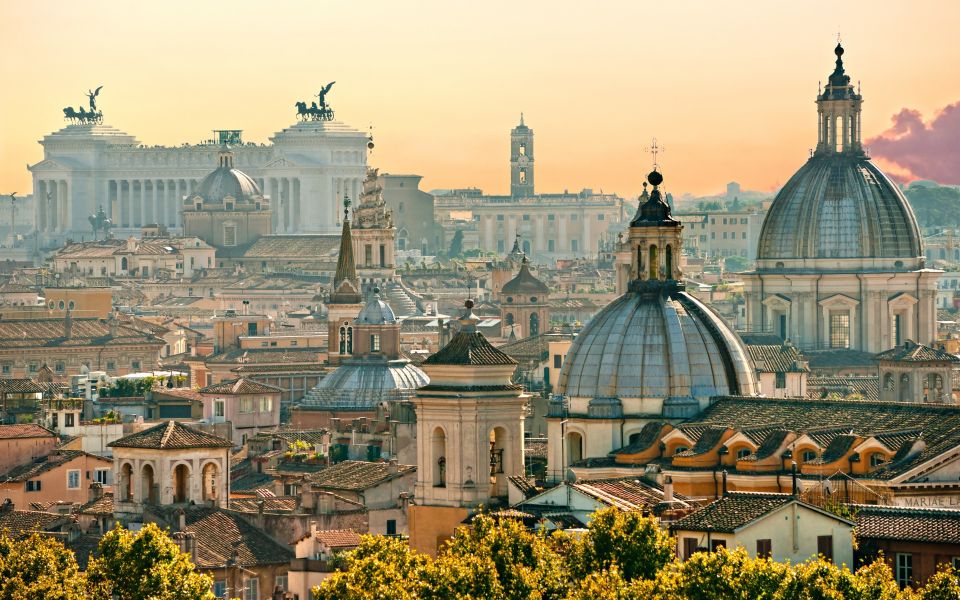
- Private guide, clear storytelling: You get real explanations, not just directions.
- Headsets if your group is larger: Helpful for hearing details as you move between monuments.
- Icon-to-context route: Trevi, Pantheon, and Piazza Navona are paired with what to look for and why.
- Family-friendly pacing: The walk is designed so younger visitors can keep up.
- St. Peter’s added value: An included audio guide in multiple languages and a paper map of the basilica area.
Why this 3-hour Rome squares-and-fountains route makes sense
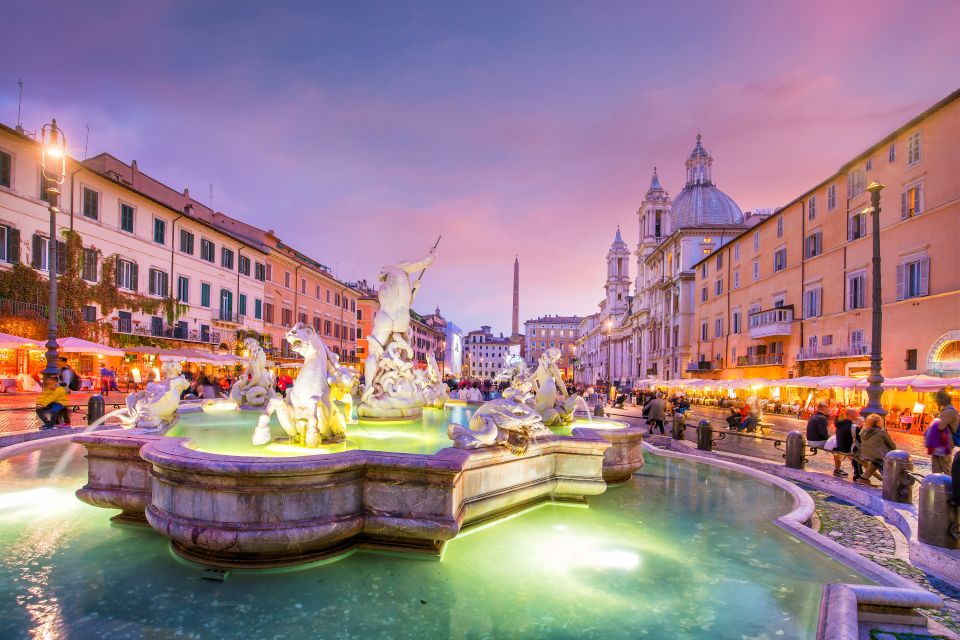
Rome can feel like a blur: streets, crowds, selfie sticks, and then a “next stop” every 90 seconds. This tour is built to slow that down just enough. In three hours, you cover a cluster of highlights that people usually scatter across multiple days.
The payoff is how the guide frames each place. A fountain isn’t treated like a landmark and done. It’s treated like a scene in a larger movie—complete with symbolism, art details, and the practical “what to notice right here” guidance that makes the photos look better later.
Also, you get a private format. Even when the group stays small, you’re still walking at a pace set by your guide. For families, that matters. For older legs, it matters even more. Comfortable shoes do the heavy lifting here.
You can also read our reviews of more walking tours in Rome
Start smart: Piazza della Trinità dei Monti and a punctual meetup
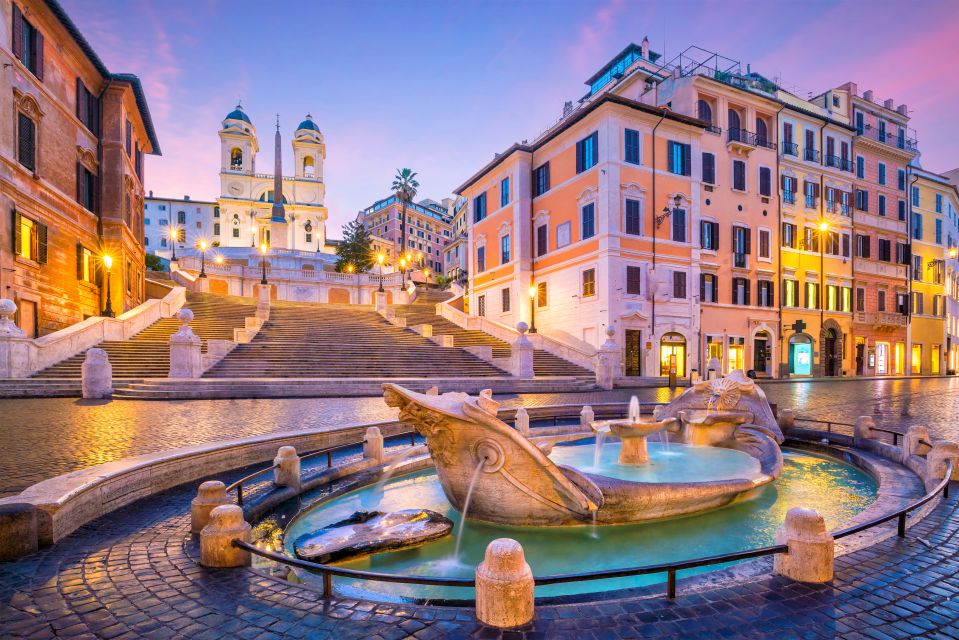
You begin in Piazza della Trinità dei Monti, by the obelisk in the middle of the square. Your guide should be easy to spot, holding a signboard that says Tour in the City.
I like this setup because it’s a good launching pad. You’re already positioned near major sights, which keeps the early part from feeling like a long transit walk. When the meeting point is clear and the guide is punctual, you don’t lose time negotiating street corners. This kind of start sets the tone for the whole three-hour loop.
Practical note: the tour is wheelchair accessible, and pets aren’t allowed. Walking frames also aren’t allowed. If anyone in your group uses mobility aids, it’s worth confirming what’s comfortable for your specific needs, since it is still a walking tour.
Spanish Steps: viewpoint energy, then real guidance
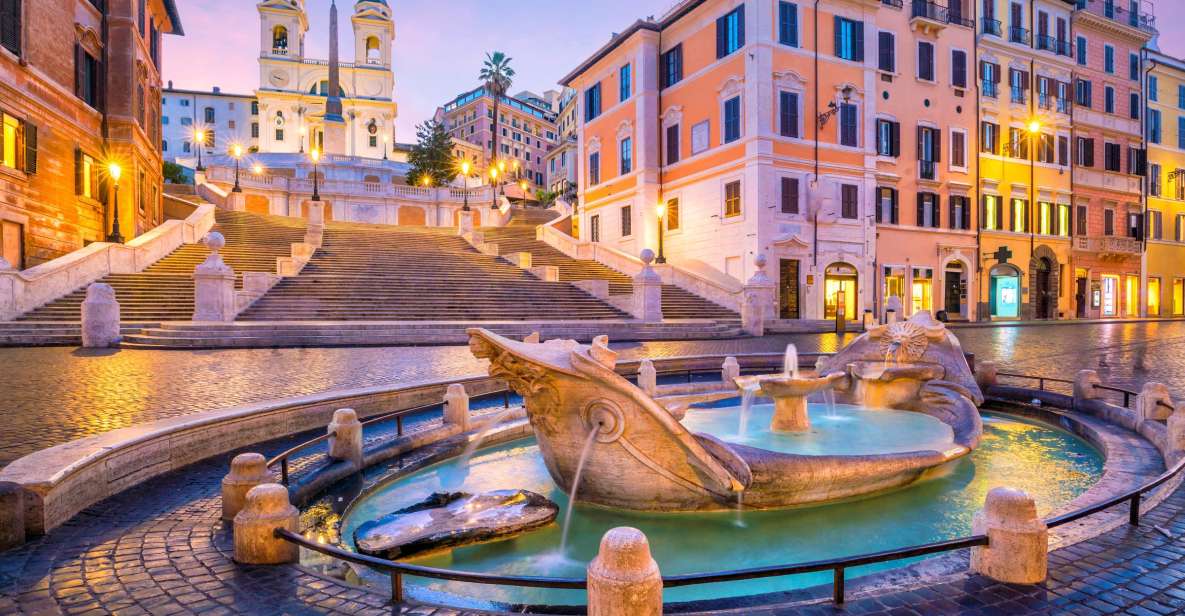
The tour’s early focus is the area around the Spanish Steps, with stops that include photo time and guided sightseeing. This is where you get that “Rome postcard” feeling fast, but the guide should also give you something better than the view: orientation.
Look for how the space is layered—steps, streets flowing away, and the way people naturally move through the square. With a guide talking, you tend to notice design choices you’d otherwise skip. Even if you’re not into architecture, the stories are short enough to stay interesting while you catch your breath.
If you’re traveling with kids, this is a strong early stop. Kids can burn energy on photo breaks and look for people-watching details while you get the background from the guide. It’s a good moment to reset after any jet lag and simply get your bearings fast.
Trevi Fountain: the photo moment, plus the why
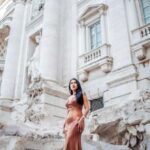
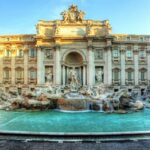
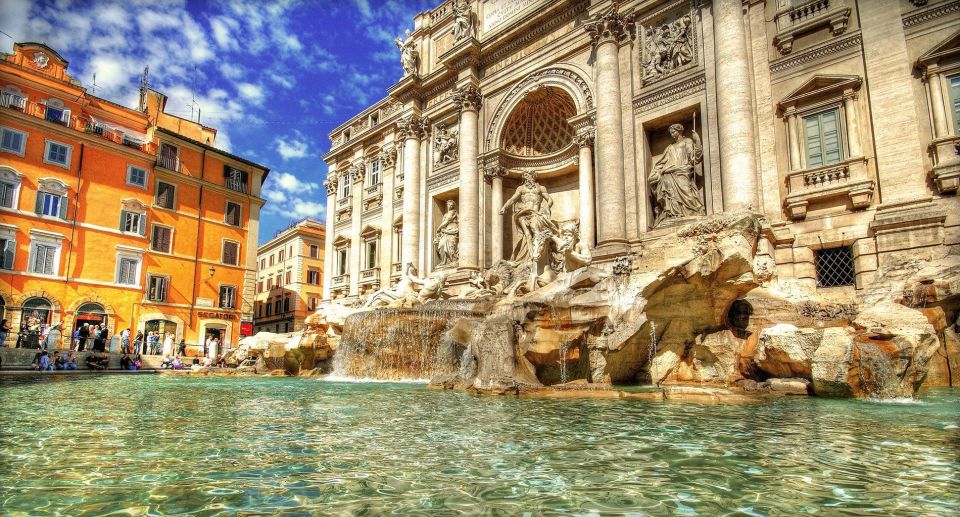
Next up is Trevi Fountain, one of the most famous fountains in the world—and not just because it’s pretty. The guide should steer you past the surface and into what makes it special, and that turns the visit from “stand and shoot” into “stand and understand.”
Trevi has a lot going on at once: sculpture groups, dramatic scale, and the feeling of a grand set piece. The trick is knowing where to look first. You’ll have time to do the classic photo, but you’ll also learn what the fountain represents and why it became the centerpiece it is today.
One practical tip for this stop: go with a simple camera plan. If you chase the perfect angle immediately, you can burn your best viewing time. Let the guide explain first, then take photos with purpose. You’ll remember what you saw, not just that it looked good.
Piazza Colonna and the Temple of Hadrian: the quieter power stops
After Trevi, you’ll pass through Piazza Colonna and see the Temple of Hadrian. These are the kinds of stops that often get rushed in faster tours, because they aren’t as instantly recognizable as Trevi or Pantheon from a distance.
That’s exactly why this route feels good. It keeps a balance between big name monuments and Roman leftovers that still carry authority. You get a breather from the “crowd magnet” energy, and you can pay attention to scale and detail without feeling like you’re constantly fighting for position.
If you like history that you can actually see, these stops help you “read” Rome better. You start to notice how different centuries reuse space, styles, and materials. Even in a quick walk, it adds up.
You can also read our reviews of more historical tours in Rome

The Pantheon: why that dome still stuns people
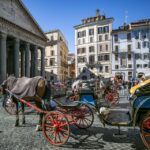
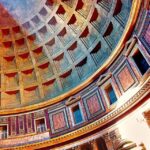
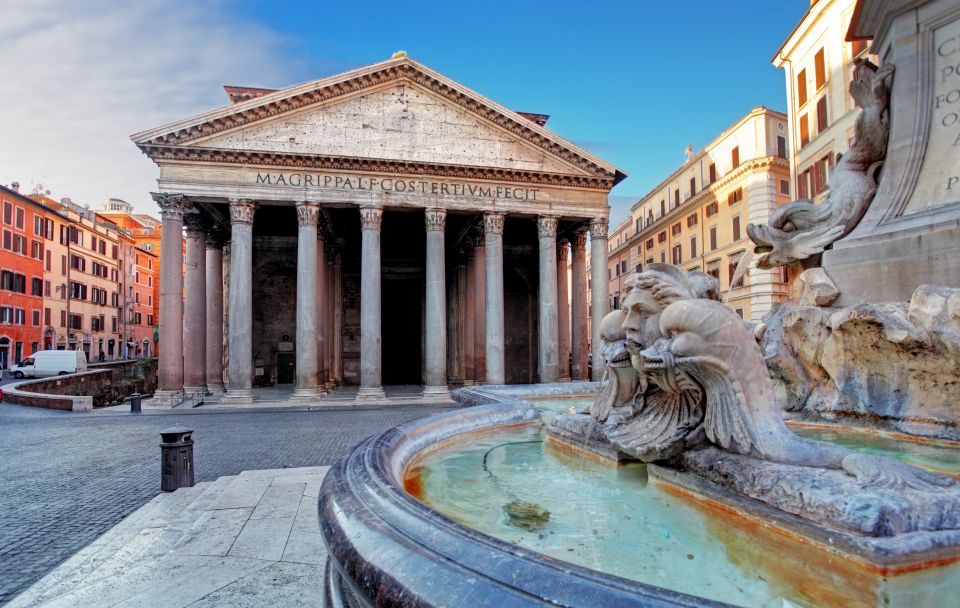
Then comes the Pantheon, and yes, it lives up to the hype—especially when you understand the dome. The Pantheon was built as a temple to all the gods of Olympus, and the guide connects what you’re looking at to the engineering and symbolism of ancient Rome.
The dome matters because it’s not just impressive art; it’s a statement of ancient capability. The tour notes that the Pantheon dome was constructed in ancient times and was the largest in the world. Even if you don’t memorize the numbers, your eyes will get it as you stand there.
This is also one of those stops where you can feel your brain slow down. People tend to stand longer at the Pantheon when they hear the guide’s context, because the building stops feeling like a single photo background and starts feeling like a space with rules. Light, openings, and proportions make sense when you’re not guessing.
Piazza Navona and the Fountain of the Four Rivers: Baroque theatre in stone
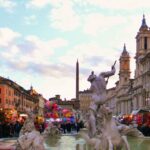
Next, it’s Piazza Navona, which the tour frames as the delight of Baroque Rome. This is a huge shift in mood from the Pantheon. Instead of the ancient “calm weight,” you get movement: art, sculpture, and the sense that the whole square is performing.
The guide should point out work connected to major artists such as Bernini, Borromini, Rainaldi, and da Cortona. You’ll also see the Fountain of the Four Rivers, including Bernini’s contribution. This is one of the reasons the tour stays interesting: you’re watching a timeline of styles, not just ticking off monuments.
What makes Piazza Navona worth your time even if you’ve seen photos before is how the details behave at human scale. The shapes make more sense when you’re standing near them. And if you’re traveling with kids, this is a good stop to let them look for figures and symbols. They may not know all the names, but they’ll enjoy the visual story.
Campo de’ Fiori and Largo di Torre Argentina: everyday Rome plus a big shock
As the tour continues, you’ll head toward Campo de’ Fiori, a colorful local market square that has been home to a market since 1869. This is your reality check: you’re not just walking through monuments. You’re stepping into an active part of the city’s rhythm.
Then there’s a darker pivot. The tour includes the area known as Area Sacra di Largo di Torre Argentina, identified here as the place connected with Julius Caesar’s assassination. That’s an intense moment to carry on a walking route, and the guide’s job is to keep it understandable, not sensational.
This part of the walk gives you contrast. You move from commerce and street life into a specific historical event tied to dramatic Roman change. It’s the kind of storytelling that makes Rome feel less like a museum city and more like a place where major decisions shaped the rest of Europe.
Ponte Sant’Angelo and Castel Sant’Angelo: the Tiber-side reset
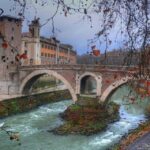
One of the most pleasant shifts on this tour is the move toward the river. You’ll stop at Ponte Sant’Angelo, then see Castel Sant’Angelo during the scenic portion of the walk.
These stops work because they change your perspective. Squares are great, but Rome’s also about its edges—water, bridges, and sightlines. Ponte Sant’Angelo gives you that classic “postcard Rome” feeling, and Castel Sant’Angelo adds a strong landmark silhouette that’s easy to appreciate even without deep technical knowledge.
If your group is tired, this section is a soft landing. You can enjoy the views while still having the guide present. It’s a better way to keep energy up than cramming another crowded square right after Piazza Navona.
St. Peter’s Basilica: why the audio guide is a smart add-on
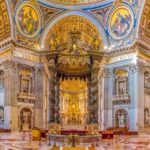
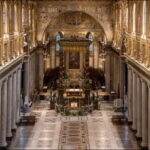
The tour includes St. Peter’s Basilica, with the day’s entry guided by an included audio guide in Italian, English, Spanish, and French, plus a paper map of the basilica area.
That audio guide matters more than it sounds. In a building this big, it’s easy to see a lot and learn very little. Audio helps you anchor what you’re looking at to information while you stand in the exact spot. And the paper map is useful if you want to retrace where the big artworks sit.
Important limitation: entrance to the Dome isn’t included, and the Necropolis and the Treasury Museum are also not included. So if you’re hoping for the full “everything in one go” Vatican experience, you’ll likely need a separate visit.
Also, skip-the-line entrance is not included. Security and entry flow can vary day to day, so arriving ready for lines is smart.
Vittoriano and the final storytelling beat, then back to the start
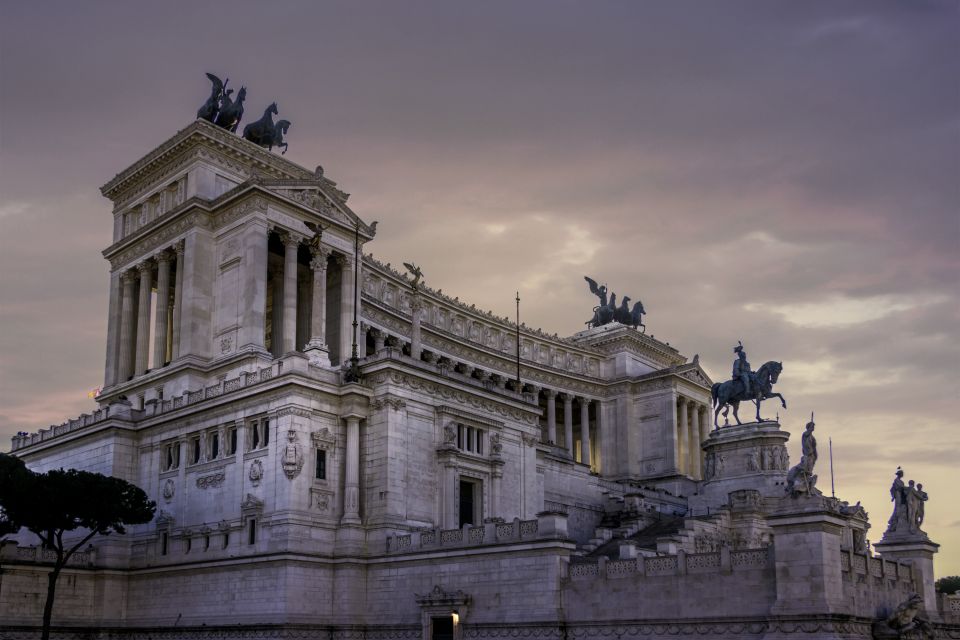
The tour includes the Vittoriano, a monument commemorating the unification of Italy. Construction began in 1885 and it was inaugurated in 1911 in honor of Victor Emmanuel II of Savoy, the first king of Italy.
This is a nice way to close the day because it moves the focus forward from ancient and early modern Rome into a nation-building story. You’ll finish with a clearer sense of how Rome connects to Italy as a whole—beyond just temples and fountains.
After the sightseeing, the tour ends back at the meeting point, Piazza della Trinità dei Monti. That wrap matters: you’re not left wandering with no sense of where you are in relation to your next plan.
Price and pace: when $141.61 feels fair
The price is $141.61 per person for a private 3-hour walking tour. At first glance, it can feel steep compared to group tours. But here’s what you’re getting value for:
- A professional guide
- A private format (so the pacing can adjust)
- Entrance fees included
- Headsets if your group size calls for them
- An included audio guide for St. Peter’s Basilica in multiple languages
- A paper map of the basilica area
In Rome, time and confusion are expensive. This route saves you that by bundling major sights into a logical walk and by giving you interpretation at each stop. If you’re a couple, a family, or a small group who wants the monuments explained in real time, it can be a good deal.
Where it might not be worth it is if your priority is maximum monument count above all else. This is a walk with depth at key places. You’re choosing understanding over rushing.
Who this tour suits best (and who should think twice)
This tour is a strong fit for:
- Families who need a pace that works for kids
- Anyone who wants the big icons explained without getting lost
- Small groups who prefer private guidance over crowds
- Visitors who want St. Peter’s Basilica information without doing it all alone
Consider a different option if:
- You want Dome access, Necropolis access, or the Treasury Museum all as part of one tour
- You dislike walking for any reason (even though it’s described as moderate)
- You’re traveling with pets or walking frames (not allowed)
Should you book this Rome squares and fountains private tour?
Yes, if you want a guided walk that links Trevi, Pantheon, and Piazza Navona to the stories behind them, with a guide who is punctual and specific with explanations. You also get useful extras at the end—an audio guide for St. Peter’s Basilica plus a map—so your time inside doesn’t feel like random sightseeing.
I’d skip it only if you’re set on Dome or museum add-ons, or if you want a faster, broader hit-list tour. This one is about getting meaning from the monuments you see.
FAQ
Where does the tour start?
It starts at Piazza della Trinità dei Monti, next to the obelisk in the middle of the square. The guide has a signboard reporting Tour in the City.
How long is the tour?
The tour lasts 3 hours.
What is the price per person?
The price is $141.61 per person.
Is this a private tour?
Yes. It’s a private walking tour in a private group setting, with a minimum of 2 persons per booking.
What sights will we see?
The tour includes stops such as the Spanish Steps, Trevi Fountain, Piazza Colonna, the Temple of Hadrian, the Pantheon, Piazza Navona, Ponte Sant’Angelo, Castel Sant’Angelo, and St. Peter’s Basilica, plus other stops along the route.
Is St. Peter’s Basilica included?
Yes. St. Peter’s Basilica is included with an audio guide in Italian, English, Spanish, and French, and a paper map.
Are entrance fees included?
Yes, entrance fees are included.
Are the Dome or Necropolis and Treasury Museum included?
No. Entrance to the Dome and to the Necropolis and the Treasury Museum is not included.
Is skip-the-line entrance included?
No. Skip the line entrance is not included.
What should I bring, and are there restrictions?
Bring comfortable shoes (and wear casual clothing). Pets and walking frames are not allowed.