REVIEW · ROME
Rome: Castel Sant’Angelo Skip the Line Private Tour
Book on GetYourGuide →Operated by Raphael Tours & Events · Bookable on GetYourGuide
Castel Sant’Angelo is a tomb that became a fortress. I like the skip-the-line convenience, and I really enjoy seeing how the site shifts from Emperor Hadrian’s burial into Pope Paul III’s world—plus you get a Rome panorama from the terrace. The only real catch: you’ll climb a series of stairs, so wear solid shoes and be ready for vertical walking.
This is built as a tight, high-value private group experience with a live English local guide (Raphael Tours & Events). In the best moments, the guide—like Mates, praised as an expert and delight—keeps the focus on the castle’s specific details and answers your questions without rushing you.
In This Review
- Key things to know before you go
- Where to meet: end of the bridge, outside the main entrance
- Getting inside faster: how the skip-the-line works
- Emperor Hadrian’s tomb: from mausoleum to story engine
- Pope Paul III’s apartment and frescos: art in a power setting
- Fortified walls, statues, and the castle’s many identities
- Treasury room: where administration and power lived
- The terrace viewpoint: Rome photos with a real payoff
- Timing and pacing: why 2 hours feels just right
- Private guide value: what you get for $214.11 per person
- Who this tour is best for
- Quick practical tips before you book
- Should you book this Castel Sant’Angelo private skip-the-line tour?
- FAQ
- How long is the Rome Castel Sant’Angelo skip-the-line private tour?
- Where do we meet the guide?
- Is this a private tour?
- What is included in the tour price?
- Do we skip the line?
- Is food or drinks included?
- Is the tour suitable for wheelchair users or people with mobility impairments?
Key things to know before you go
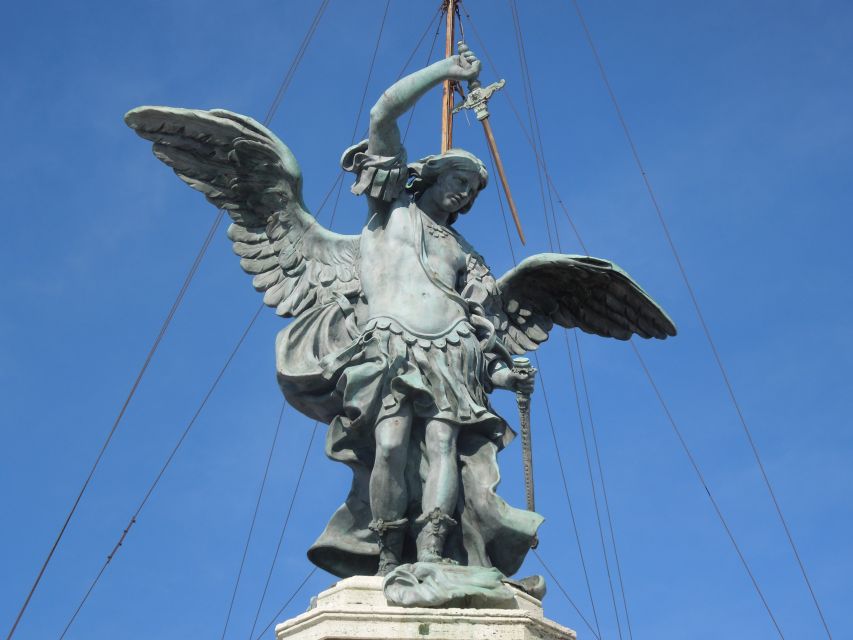
- Skip-the-line entry via a separate entrance saves real time at a busy monument
- Hadrian’s tomb connects the mausoleum story to everything that comes later
- Pope Paul III’s apartments and their frescos give you art you can actually stand in front of
- Treasury room and fortress features add texture beyond the big headline sights
- Top-terrace panoramic views are the payoff, with stairs required to reach it
Where to meet: end of the bridge, outside the main entrance
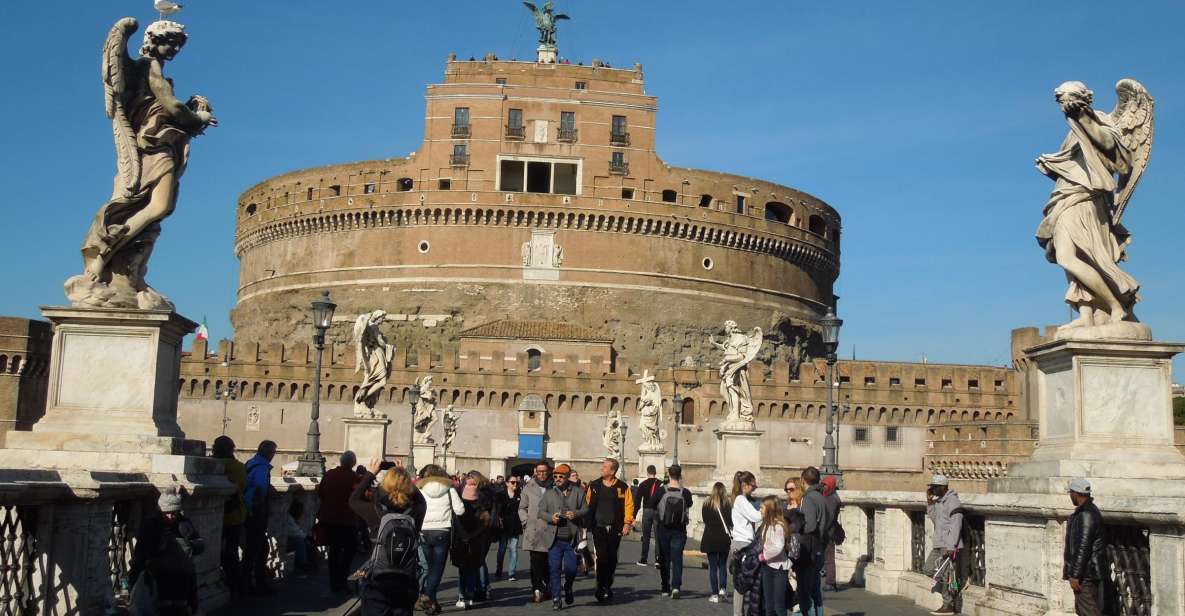
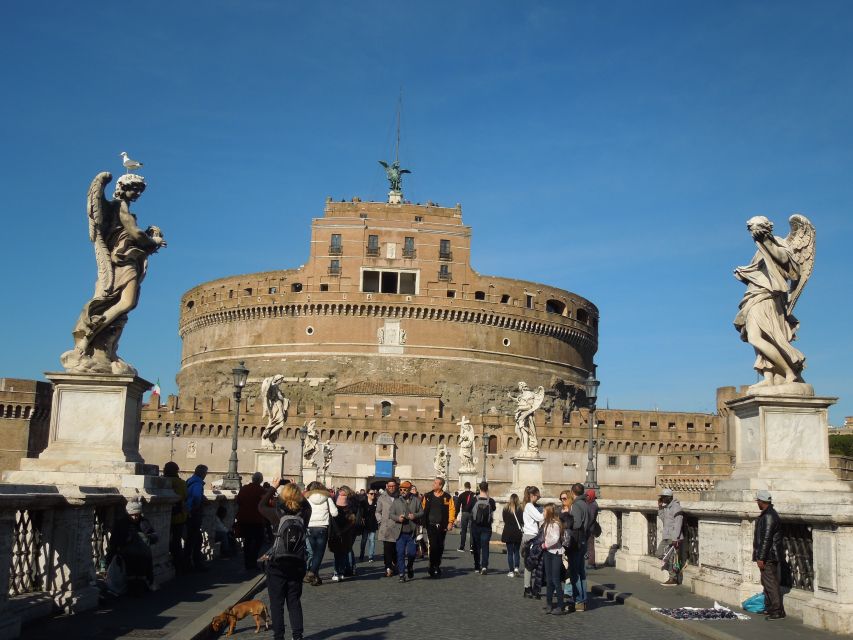
You’ll meet your guide in the square at the end of the bridge, outside the main entrance. It’s a simple starting point that keeps everyone from wandering around trying to match faces to tickets.
The tour ends back at the same meeting point. That matters because you don’t have to rebuild your plans after the visit—you’re dropped back where you started, ready to keep wandering Rome on your own terms.
You can also read our reviews of more private tours in Rome
Getting inside faster: how the skip-the-line works
The tour includes entrance tickets and skip-the-line access through a separate entrance. That’s one of the biggest practical wins here, especially for a popular Rome site where regular lines can eat into your limited time.
Because this is a private tour, the flow feels controlled: you’re not stuck waiting while a larger group shuffles forward, and you’re more likely to spend your time actually looking at the castle’s spaces. For a 2-hour visit, that efficiency is the difference between seeing highlights and just collecting photos.
Emperor Hadrian’s tomb: from mausoleum to story engine
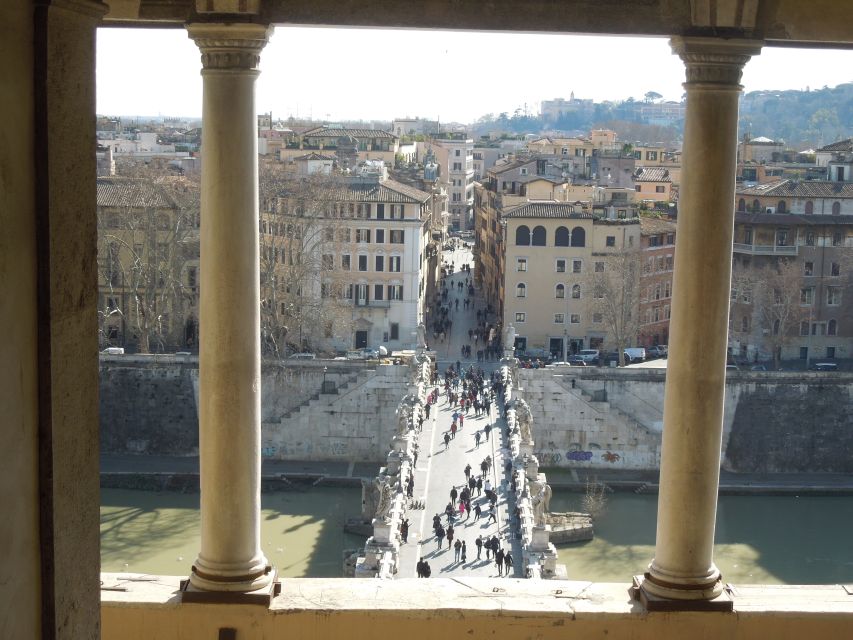
Castel Sant’Angelo began as Emperor Hadrian’s tomb, and you’ll get to step into that burial space. Even if you’ve seen the general idea of Hadrian before, being inside changes the scale and makes the whole site feel intentional—like the architecture is built to make you slow down.
What I like about starting with Hadrian is that it sets the rules for everything else. Later, the castle becomes more than a monument: it takes on new roles with popes, state functions, and punishment. When you understand the tomb origin, the later fortress and prison uses stop feeling like random history jumps.
Look closely at what the guide points out as you move through this area. The tour is designed to connect architectural form to meaning—what you’re standing in is tied directly to the emperor’s legacy and the site’s transformation.
Pope Paul III’s apartment and frescos: art in a power setting
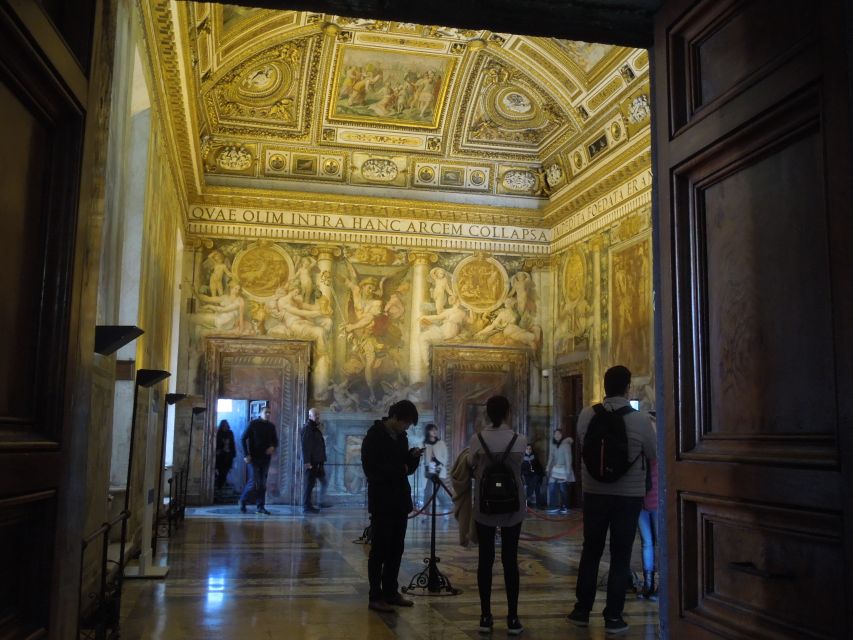
One of the tour’s standout components is a visit to Pope Paul III’s apartment, including its amazing frescos. This is where the castle stops being only stone and starts being a real stage for political life and taste.
Frescos can be easy to gloss over when you rush, but this tour builds in time for you to actually take them in. You’ll see samples of magnificent art in the way paintings and decoration appear in the castle’s rooms and architecture, not just as museum-style displays.
This part also makes a smart story link: the same castle that held an emperor’s remains later offered popes a residence. That contrast helps you understand why art mattered in these spaces. It wasn’t just decoration—it was part of the castle’s identity during papal control.
Fortified walls, statues, and the castle’s many identities
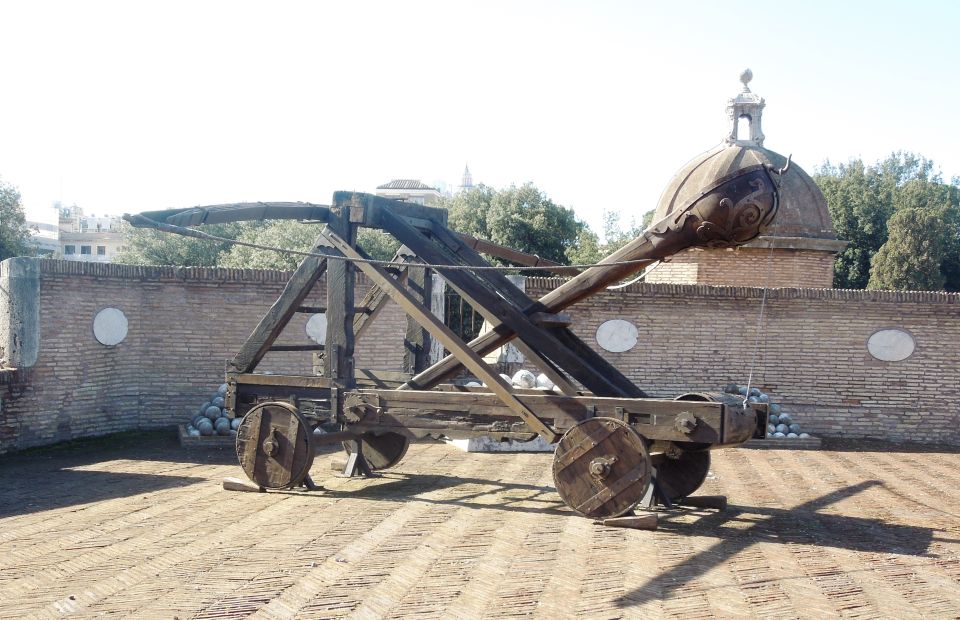
Castel Sant’Angelo didn’t stay in one job for long. Over time it served as a papal residence, a state treasury, a prison, and even a place for public executions. During your tour, you’ll see elements that reflect these shifts: ancient fortified walls, statues, and other historic rooms.
This is one of the reasons I think the guided approach works well. Without context, a fortress can feel like a pile of rooms. With the guide’s connections, you start reading the building like a timeline—who controlled it, what it was used for, and how the architecture supported those functions.
If you care about details that separate one “big attraction” from another, this is where you’ll appreciate the time spent on the castle’s internal cues. It’s not just about what you photograph; it’s about what you understand while you’re standing there.
You can also read our reviews of more tours and experiences in Rome


Treasury room: where administration and power lived
You’ll visit the treasury room as part of the tour experience. Even though “treasury” sounds dry on paper, this kind of space makes power feel physical. It’s a reminder that the castle wasn’t only about rulers and religion—it also handled money and official functions.
For practical sightseeing, treasury spaces tend to reward slower looking. Your guide can help you spot what matters in the room so you don’t just glance and move on. This is a good place to ask questions if you’re the type who wants the why behind the what.
The terrace viewpoint: Rome photos with a real payoff
The tour includes breathtaking views of Rome from the top terrace. This is the part I’d plan your mindset around: think of it as the reason to save energy for the stairs. You’ll have to climb a series of stairs to reach the panoramic terrace, so comfortable shoes are not optional here.
Once you’re at the top, you can take fantastic panoramic photos of the castle and the city. The views also make the castle feel like part of Rome’s larger geography, not an isolated monument. You’ll see how the river, streets, and skyline tie together—an experience that’s hard to get from ground-level sightseeing alone.
If stairs aren’t your thing, you can still enjoy the earlier sections, but this terrace is the tour’s natural finish line. I’d treat it like the final “payoff scene” and pace yourself accordingly.
Timing and pacing: why 2 hours feels just right
This tour is 2 hours long, designed to cover key sections without turning into a marathon. In a private setting, that time can feel focused: you’re not waiting for a group check-in, and your guide can adjust explanations based on your questions.
The typical tour flow follows the main anchors you came for: the emperor’s burial area, papal apartments (including Pope Paul III’s frescos), the treasury room, and then the panoramic terrace for photos. Because those parts are spread through the castle, pacing matters, and the guidance helps you move with purpose.
One more practical point: food and drinks are not included. If you’re doing this mid-day, consider timing it when you already planned a meal nearby. A castle visit can make you hungry, and you don’t want a long pause ruining your rhythm.
Private guide value: what you get for $214.11 per person
At $214.11 per person for a 2-hour private skip-the-line tour, the price is definitely a decision. The value comes from a few clear ingredients:
- Skip-the-line entry through a separate entrance (time saved is real money on travel days)
- Live English local guide with an experience built around how the site changed through the centuries
- Entrance tickets included, so you’re not paying twice
- A private group format that tends to mean less rushing and more tailored attention
So when does it make sense? If you want more than a fast pass—if you like art, architecture, and the story behind a place—you’re paying for interpretation and access to rooms you might miss or misunderstand on your own.
When might you reconsider? If your group is large enough that you’d be comparing against other guided options, or if you mainly want quick photos with minimal talking, a cheaper group tour could stretch your budget. But if you’re the person who asks follow-ups and actually wants the building explained, this private setup is where the cost stops feeling steep.
Who this tour is best for
I’d point this tour toward a few types of visitors:
- People who enjoy art in context, especially frescos connected to papal life
- History lovers who like the idea of one building wearing many hats: tomb, residence, treasury, prison
- Photo fans who want a terrace viewpoint with a guide’s help on where the best moments come from
- Small groups that value a private guide who answers questions, like Mates, described as an expert and delight
It’s less of a fit if you need wheelchair access or have mobility impairments, since the tour is not suitable for wheelchair users and requires stairs to reach the panoramic terrace.
Quick practical tips before you book
- Wear comfortable shoes. The stairs are part of the experience, especially for the terrace.
- Leave luggage behind: luggage or large bags are not allowed.
- Plan for no food or drink included. You’ll want water and maybe a snack from your own plans.
- No hotel pickup or drop-off means you’ll need to get yourself to the meeting point at the bridge-end square.
Also, it’s English only. If that’s your language, great. If not, you’ll need to match your guide expectations to the offering.
Should you book this Castel Sant’Angelo private skip-the-line tour?
I think you should book it if you want a high-efficiency visit with a guide who connects the dots inside the building. The mix of Hadrian’s tomb, Pope Paul III’s frescos, and the top-terrace views is a strong trio for a 2-hour window, and skip-the-line access keeps the day from getting derailed.
I’d pass or look for an alternative if stairs are a dealbreaker for you, since the panoramic terrace requires climbing. And if you only want a quick photo stop with zero interest in room-by-room context, the private guide format may feel like more than you need.
If you’re aiming for a Rome experience that’s both practical and actually informative while you’re standing in the spaces themselves, this one is a solid choice.
FAQ
How long is the Rome Castel Sant’Angelo skip-the-line private tour?
The tour lasts 2 hours. Starting times vary, so you’ll need to check availability for the schedule.
Where do we meet the guide?
The guide meets you in the square at the end of the bridge, outside the main entrance.
Is this a private tour?
Yes. It’s a private group tour with a live English guide.
What is included in the tour price?
Entrance tickets, a local guide, and a private guided walking tour are included, along with the city-view experience from the terrace.
Do we skip the line?
Yes. You enter through a separate entrance to skip the line.
Is food or drinks included?
No. Food and drinks are not included.
Is the tour suitable for wheelchair users or people with mobility impairments?
No. It’s not suitable for people with mobility impairments, and it’s not suitable for wheelchair users.