REVIEW · ROME
Appia Antica & Aqueducts e-Bike Tour – Official Provider
Book on GetYourGuide →Operated by EcoBike Roma - Parco Appia Antica · Bookable on GetYourGuide
Two thousand years of Rome, one e-bike ride.
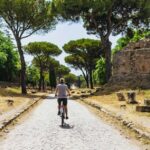
This tour takes you off the main sightseeing track and onto the Appian Way in the Regional Park of the Appian Way—4500 hectares of road history, tombs, and green lanes. I especially like how the e-bike makes it feel achievable to cover a lot of ground without turning it into a sweaty grind.
I love that you start at the Domine Quo Vadis area and follow the route where legends and real Roman engineering sit side by side. And I like the way the guide steers you through big moments of the landscape—Maxentius’s circus and then the aqueducts arches in Parco degli Acquedotti—so you’re not just pedaling past stuff, you’re understanding what you’re seeing.
One thing to consider: the ride includes some road sections with traffic and a group pace. If someone in your group is brand-new to biking, it can slow the whole flow, so if you’re nervous on a bike, tell the guide early and ask how to position yourself at crossings.
In This Review
- Key highlights worth your time
- Pedaling the Regina Viarum: where the tour actually starts
- Why the Domine Quo Vadis opening hits so hard
- Appia Antica isn’t just ruins—it’s a preserved road through time
- Catacombs as an optional add-on (and how to decide)
- Maxentius’s Circus: the moment the Roman world feels big
- Cecilia Metella’s tomb: power, geography, and medieval re-use
- Villa dei Quintili and the bridge to the aqueduct zone
- Parco degli Acquedotti: the arch views you came for
- Parco della Caffarella: countryside breathing room inside the city’s shadow
- The ride style: e-bike ease, but still be traffic-aware
- Value check: $59 for 3.5 hours in a big protected area
- Who this tour suits best (and who should skip it)
- Should you book Appia Antica & Aqueducts by e-bike?
- FAQ
- How long is the e-bike tour?
- Is there a live guide, and what language do they speak?
- Do I have to visit the catacombs?
- What’s included in the price?
- What should I bring?
- What should I know about weather?
- Who should avoid this tour?
Key highlights worth your time
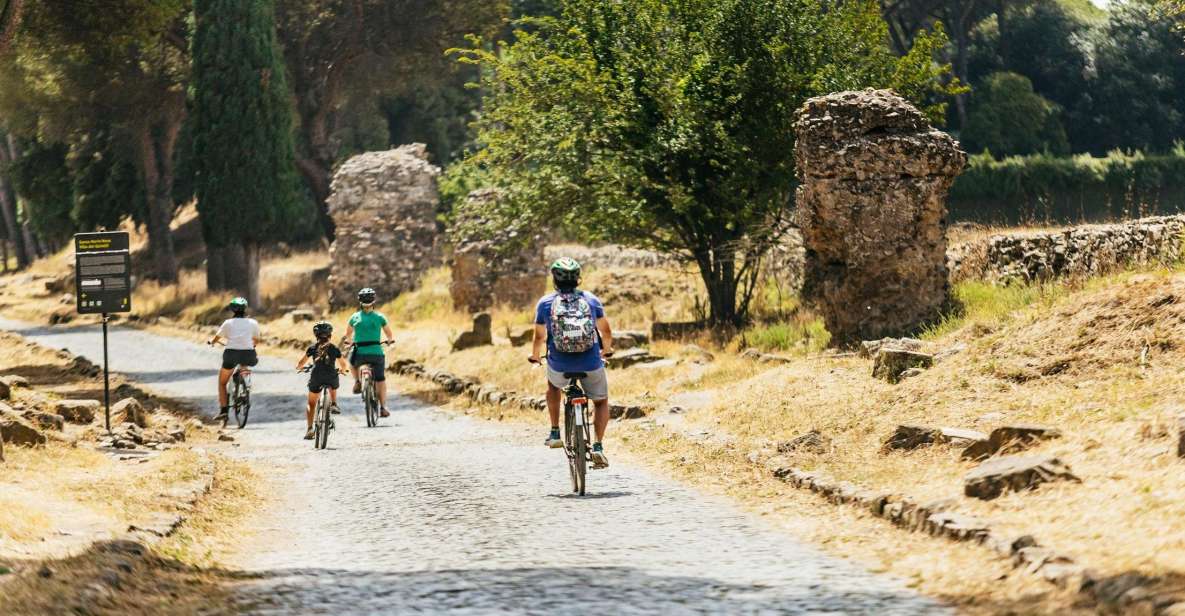
- Appian Way at Regional Park scale: 4500 hectares of protected road-and-ruins scenery beyond central Rome.
- E-bike help that keeps the ride fun: expect about 70% off-road and 30% streets, so it doesn’t feel like a slog.
- Legend + evidence in one start point: Domine Quo Vadis and the story of Peter’s encounter are part of the opening stop.
- Roman engineering on full display: Parco degli Acquedotti’s aqueduct arches are the payoff.
- Maxentius’s preserved circus complex: you can enter free and see circus, villa, and the mausoleum of his son Valerio Romolo.
- Optional catacombs add the underground layer: Saint Sebastian or Saint Callixtus for an extra on-site fee.
Pedaling the Regina Viarum: where the tour actually starts
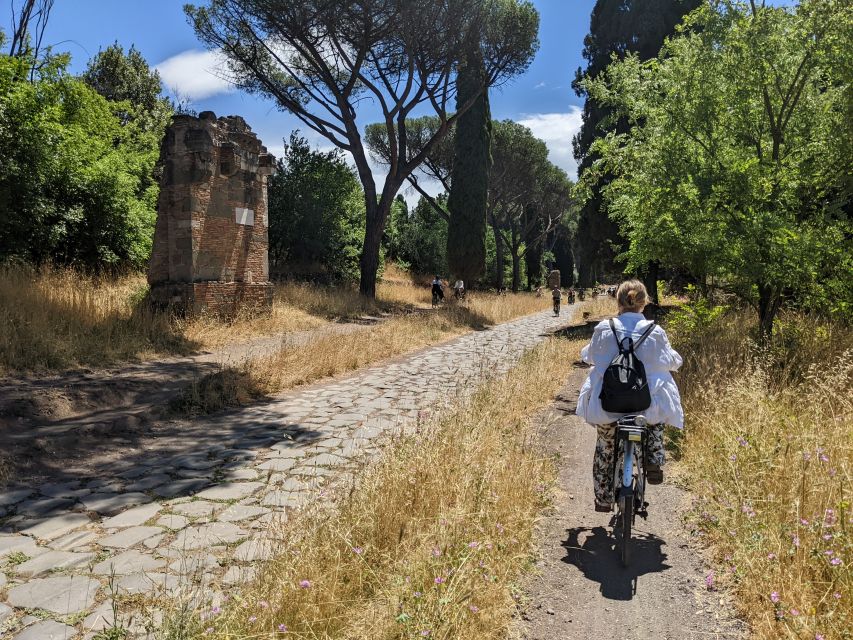
Your ride begins at Centro Servizi Appia Antica – EcoBike (the EcoBike Roma base in the Appia Antica area). This matters because it’s not the usual “walk out of your hotel and figure it out” setup. You arrive, you fit in the gear, and the guide gets you ready to move confidently on an e-bike.
From there, you follow the Appian Way through the section that runs between the Domine Quo Vadis church area and onward toward the Aqueducts Park. This is a smart way to see more than a single monument: you’re tracing the old Roman route through countryside and archaeological zones, not just hopping between isolated stops.
Also, plan for real outdoor time. This tour runs rain or shine, and you’ll be on your feet (and on your bike) long enough that weather will matter. Bring ID (passport or an ID card; a copy is accepted), and dress for comfort—no bare feet and no alcoholic drinks in the vehicle.
You can also read our reviews of more cycling tours in Rome
Why the Domine Quo Vadis opening hits so hard
The tour kicks off at Domine Quo Vadis, where the church marks a famous legend tied to the Apostle Peter fleeing persecution. According to the story, there’s a miraculous encounter with Jesus and footprints left on the pavement.
Even if you treat the legend as a story rather than a fact, it works as a powerful “keyhole moment.” You’re stepping into a spot that people have revisited for centuries, and then you move from faith-and-story into archaeology-and-route. It’s a clean narrative pivot: this road wasn’t just paved for travel; it became layered with meaning over time.
Practical tip: take a moment early in the tour to get comfortable with how the e-bike responds. The guide introduces the area and makes it clear that the point is to ride smoothly and safely—especially near crossings and busier bits of road.
Appia Antica isn’t just ruins—it’s a preserved road through time
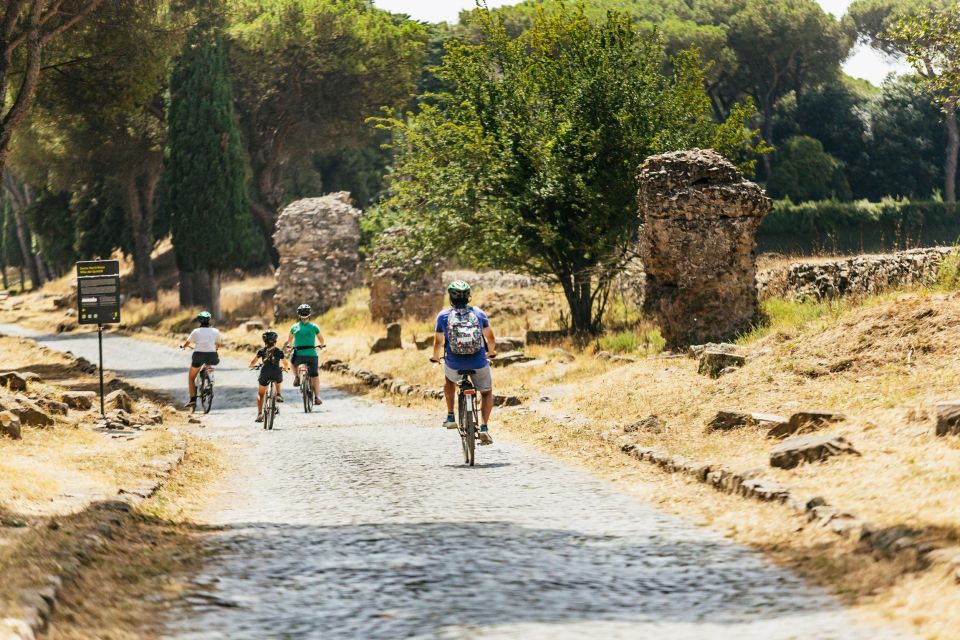
What makes this route special is that you’re riding inside the Regional Park of the Appian Way, a huge protected area where the road still carries the spirit of its past. The Appian Way is often called the Queen of all roads, and historically it shifted roles over time: first military, then used by traders, pilgrims, intellectuals, and other travelers moving across the Roman world.
That context changes how you view what you pass. You start noticing how the road itself is part of the monument. The tour includes moments where you can touch 2000-year-old stones, including stones associated with the wagon ruts marked by horses towing traffic along the road. It’s one of those experiences where your hands catch up to your eyes.
If you’ve already done the big “center of Rome” sights, this kind of experience is refreshing because it’s quieter, wider, and more spacious in its scale. You’re leaving the city’s tight blocks and exchanging them for a protected corridor of history.
Catacombs as an optional add-on (and how to decide)
One of the smartest features here is flexibility: you can add a visit to catacombs of Saint Sebastian or Saint Callixtus. The catch is simple—you pay on site (listed as €10 each) if you choose to go underground.
I like keeping this optional because underground visits aren’t everybody’s cup of tea. If you’re curious about what the Romans did with burial and memory, the catacombs can add a whole new dimension. If you’re claustrophobic or tired after being outside, you can skip it and keep the focus on the surface route and the aqueducts.
Either way, you’ll be making the decision during the tour window rather than needing to pre-plan everything before you arrive.
Maxentius’s Circus: the moment the Roman world feels big
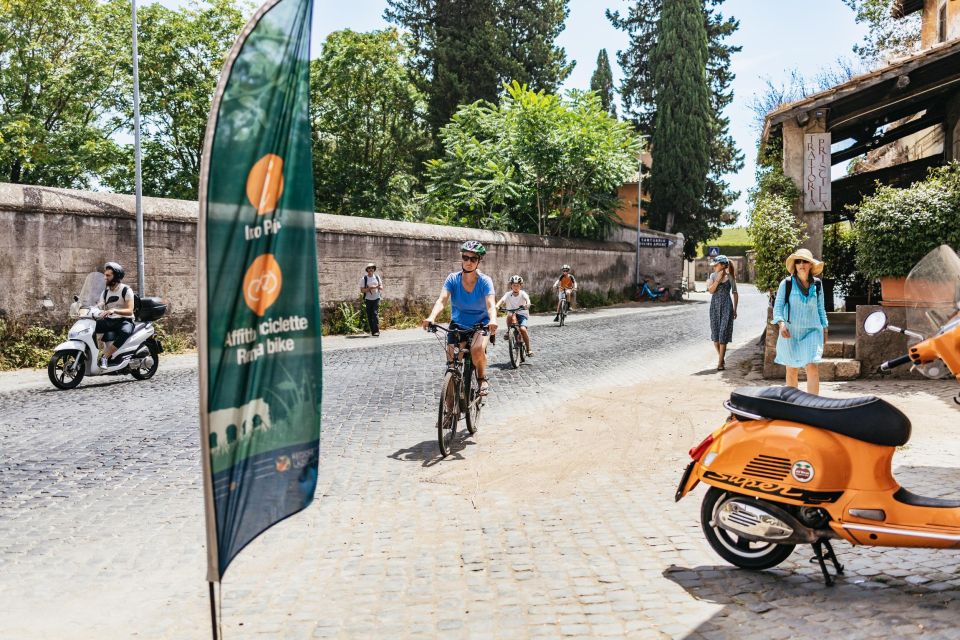
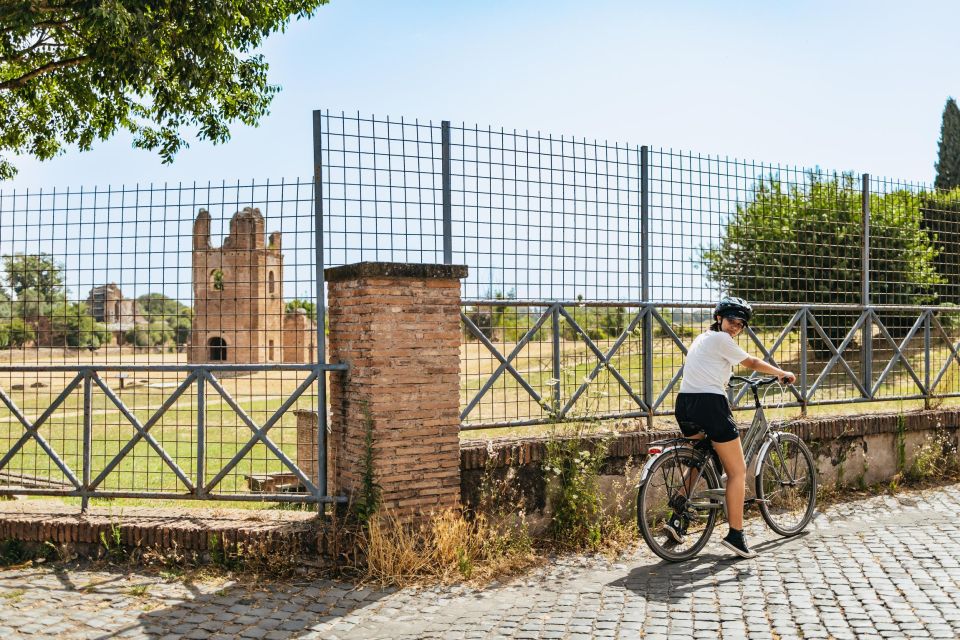
After the early Appia Way stretch, you reach the private circus of Emperor Maxentius. This is described as the best-preserved Roman circus, and the site is part of a complex you can enter for free.
What I like about this stop is the combination: you don’t just see one ruin. You get the circus setting, plus the villa and the mausoleum of Maxentius’s son, Valerio Romolo. And yes—the site has a cinematic connection: parts of the Ben-Hur chariot race scene was filmed here (directed by William Wyler with Charlton Heston).
If you’re a film buff, this stop can land especially well. If you’re not, it still works because a preserved circus gives you a sense of Roman scale—this wasn’t a small venue for locals. It was entertainment and power displayed in stone.
And from what I’ve learned about the guides like Federico and Sara, the tour doesn’t just “point at things.” They tend to connect the architecture to how it would have felt in use—what the spaces were for and why the complex was built where it was.
You can also read our reviews of more tours and experiences in Rome

Cecilia Metella’s tomb: power, geography, and medieval re-use
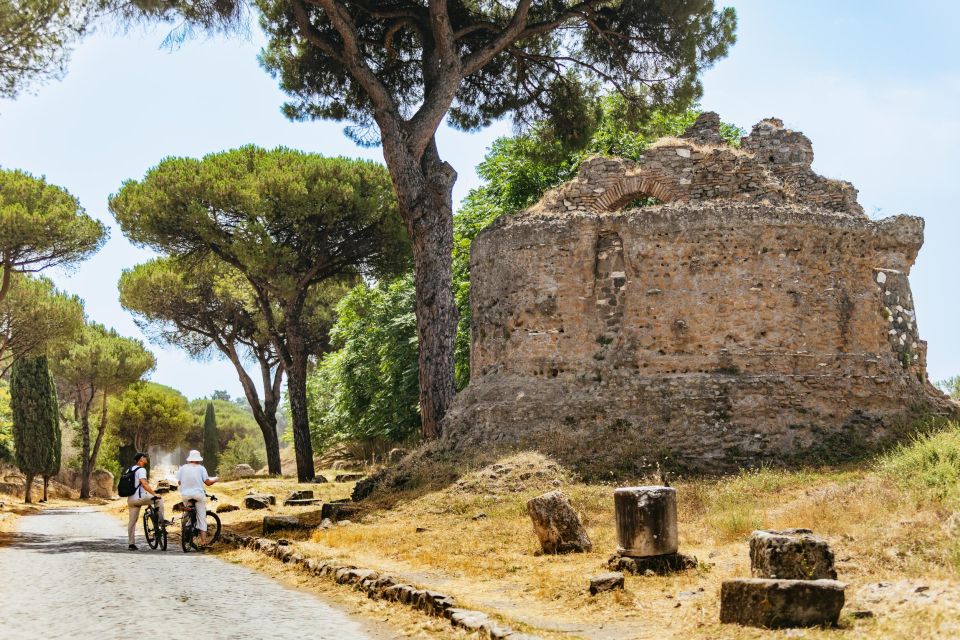
Next comes a pass-by of the Tomb of Cecilia Metella, built on a lava plateau said to date back more than 260,000 years. That age detail sounds wild, but it’s useful: it reminds you that you’re not only looking at Roman decisions; you’re riding on geology that shaped the land for an insanely long time.
The tomb’s “dominant” presence gets explained through both Roman and later history. The tour notes that later, during the Middle Ages, the strategic position was used as a fortress by families including the Caetani. They supposedly leveraged the location to control transit and even built a self-sufficient village behind a private fence, charging a duty for passers-by.
This is one of those stops where the stones feel like a record of different eras. Rome built it; later people fortified it; the road kept generating movement, and movement created control.
Villa dei Quintili and the bridge to the aqueduct zone
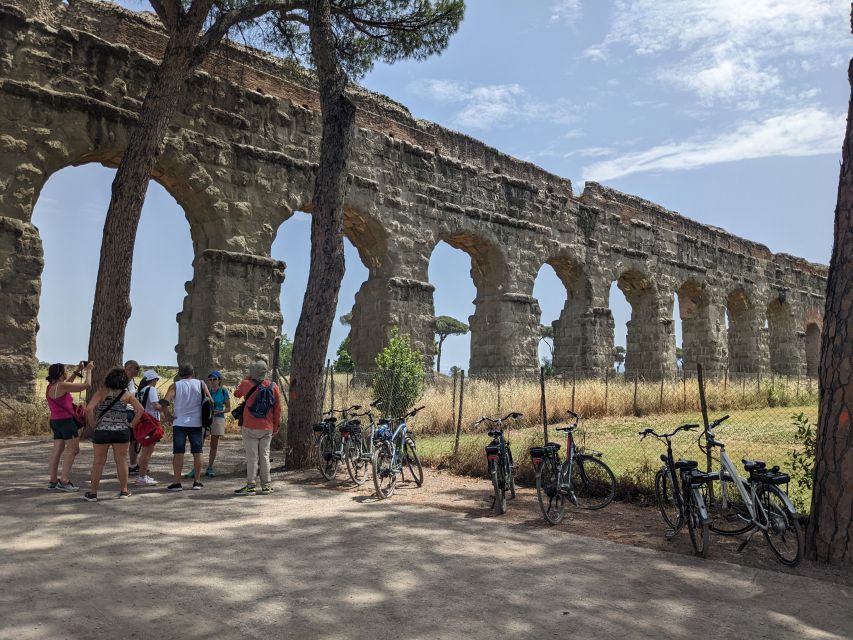
As you continue, you pass Villa dei Quintili (the route also references moving through the area toward features such as the Quintili Nympheum). This is the kind of stop that’s easy to skim if you’re just looking for “the next big thing.” But it’s an important transition because it signals you’re shifting from the road-and-tomb story into the Roman engineering climax: the aqueducts.
Even as you move, the guide’s role matters. If you’re paying attention, the stops help you understand why the aqueducts were placed where they were and how they fit into a wider system of water, settlement, and power.
Parco degli Acquedotti: the arch views you came for
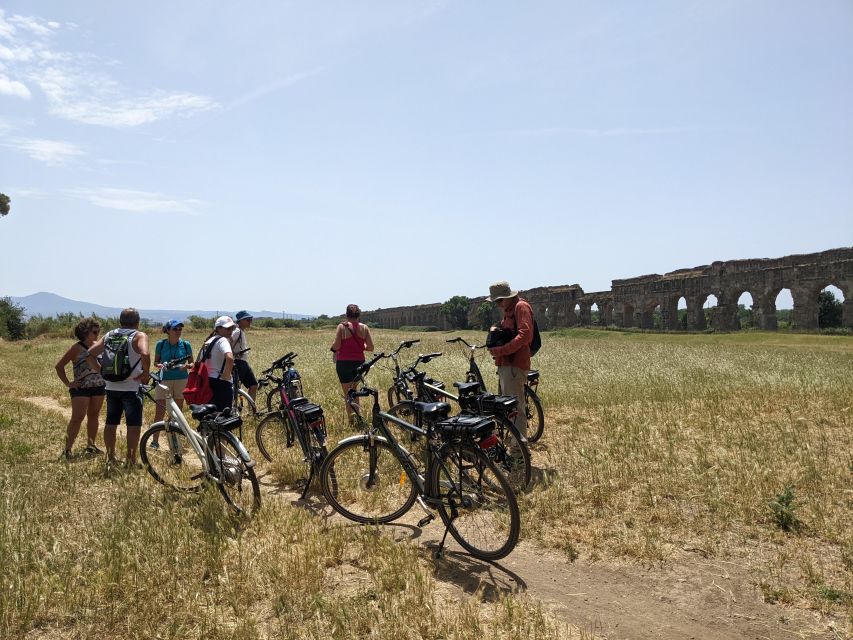
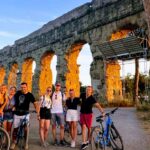
Then comes Parco degli Acquedotti, where the aqueduct arches are the centerpiece. You get a guided segment here, which I think is key. Aqueducts can feel like “big stone lines” until someone explains how they were used and why the engineering mattered.
This is the point where you can stop thinking only like a sightseer and start thinking like a planner of ancient systems. Aqueducts weren’t decoration; they were infrastructure. Seeing them in person—especially in a protected park setting—makes it clear that Roman engineering could be both functional and visually dramatic.
The e-bike helps here too, because you can cover the park without losing the “stay in the moment” feeling. You’re moving, but not sprinting.
Parco della Caffarella: countryside breathing room inside the city’s shadow
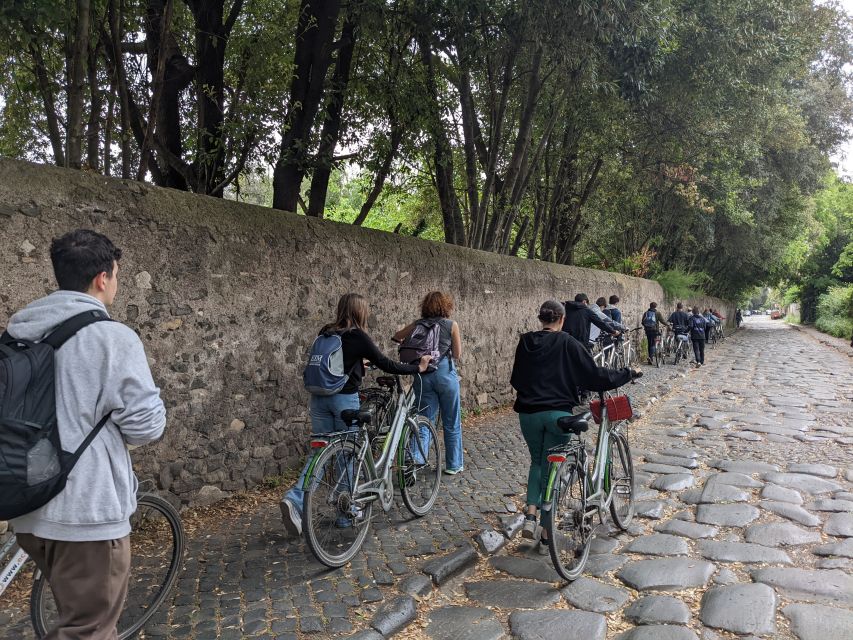
After the aqueduct payoff, you continue into Parco della Caffarella, with another guided segment. This part shifts the vibe from strict monuments to a more pastoral sense of the park—space to look around rather than only up at structures.
It’s a good contrast because Rome’s central sights can feel packed. This section lets your brain reset. You still have history under your feet, but the park gives you room to take in spacing, paths, and how the ruins fit into the natural corridor.
The ride style: e-bike ease, but still be traffic-aware
A few practical points make or break your experience.
First, yes, the bike setup is designed for ease: helmets, locks, and maps are included, along with high-quality e-bikes and about 1/2 liter of mineral water. The guide also gives you an introduction so you’re not dropped into a moving situation with zero prep.
Second, this is not a fully off-road hike disguised as cycling. The route includes some stretches with traffic and is available just on e-bike, not walking. So pay attention at junctions and crossings. The guides I saw highlighted in feedback—people like Alex, Federico, and Sara—were specifically praised for caring about safety around crossings and keeping an eye on the group.
Third, pace is real. If you’re slow to accelerate or you freeze at intersections, it can create gaps and delay the group. E-bikes help, but you still need basic bike confidence. If you’re a nervous rider, tell the guide early and ask for a strategy: how to keep steady spacing and what to do at the busier moments.
Value check: $59 for 3.5 hours in a big protected area
At $59 per person for 3.5 hours, this isn’t just “rent a bike and go.” You’re paying for a professional guide, the e-bike, safety gear (helmet and locks), maps, and water—plus narration that connects the dots between road legends, Roman sites, and the engineering of the aqueducts.
The value angle for me is coverage. This area is huge and spread out (4500 hectares), and the tour is built to get you through key landmarks without you having to figure out route planning, parking, or which stops matter most. If you tried to do this self-guided, you’d likely spend time deciding where to go and how to connect segments safely.
If your goal is specifically “a lot of Appian Way context plus aqueduct arches in one go,” this tour pricing can feel fair, especially because the big payoff stops are guided and the e-bike makes the route efficient.
Who this tour suits best (and who should skip it)
This experience is a strong match if you:
- Already did the classic Rome highlights and want something different but still unmistakably Roman.
- Like history that’s tied to place (roads, engineering, burial sites), not only museum artifacts.
- Want active time outdoors without exhausting your legs.
It may not suit you if:
- You’re under 13 (the tour lists children under 13 as not suitable).
- You’re pregnant (also listed as not suitable).
- You have back problems (listed as not suitable).
- You’re not comfortable riding near traffic sections, even with e-bike assistance.
One more note: the e-bike specs mention adult e-bikes are homologated up to 90 kg, and bikes are available from 9 years old up (with a height minimum of 135 cm). But since the tour itself is listed as not suitable for kids under 13, you’ll want to treat 13 as your real baseline and ask if any exceptions apply.
Should you book Appia Antica & Aqueducts by e-bike?
I think you should book if you want a smart mix of Appian Way archaeology and Roman engineering in a protected area, with an English-speaking guide and a ride that’s mostly manageable thanks to the e-bike. The aqueducts stop is the kind of sight that’s worth your travel time, and the guided storytelling makes the route more than a scenic pedal.
Skip it if you strongly prefer to avoid any traffic exposure, dislike the idea of riding with a group pace, or you’d rather pick your own stops at your own rhythm. Also, remember there’s no lunch included, so plan for snacks or a meal after.
If the idea of touching ancient road stones and seeing Maxentius’s circus complex plus the aqueduct arches sounds like your kind of Rome day, this is a very practical way to do it.
FAQ
How long is the e-bike tour?
It runs for about 3.5 hours.
Is there a live guide, and what language do they speak?
Yes, there is a live English tour guide.
Do I have to visit the catacombs?
No. Catacomb visits (Saint Sebastian or Saint Callixtus) are optional. You can add them by paying €10 on site for each catacomb.
What’s included in the price?
Included are a professional guide, high-quality e-bikes, helmets, locks, maps, and 1/2 liter of mineral water.
What should I bring?
Bring a passport or ID card (a copy is accepted). Dress appropriately for riding and follow the rule against bare feet. Alcoholic drinks are not allowed in the vehicle.
What should I know about weather?
The tour takes place rain or shine.
Who should avoid this tour?
It’s listed as not suitable for children under 13, pregnant women, and people with back problems. The route includes some traffic stretches as part of the ride.