REVIEW · ROME
Jewish Ghetto Walking Tour with gelato
Book on GetYourGuide →Operated by Vitus · Bookable on GetYourGuide
Rome’s Jewish Ghetto history feels personal. This guided walk connects ancient landmarks, survival stories, and everyday Rome in about three hours.
I especially like how the tour uses the street-level setting to explain big-picture history, not just names and dates. And the homemade kosher gelato stop feels like a well-timed reward that also fits the neighborhood’s story.
One thing to consider: you’ll be on your feet most of the time, so planning for uneven sidewalks and long stretches matters.
In This Review
- Key things you’ll notice on this walk
- Starting the Jewish Ghetto walk from Trajan’s Column to Piazza Venezia
- Theater of Marcellus: Ancient Rome as your first backdrop
- Portico d’Ottavia: When street life meets ancient structure
- Gelato with a kosher focus: what to order and why it’s timed right
- Piazza Mattei and the Turtle Fountain: a memorable visual marker
- The ghetto walls, the Great Synagogue, and resilience in the details
- Crossing to Tiber Island: Rome’s oldest functioning bridge
- Asclepius to a church: how older sites get reused
- What you really get for $46 (and what you pay extra for)
- How long it takes and how to plan your walking day
- Who this tour fits best
- Should you book this Jewish Ghetto walking tour with gelato?
- FAQ
- Where does the tour start and where does it end?
- How long is the tour?
- What’s included in the price?
- Are entrance fees included?
- What landmarks do you see?
- Is the tour in English?
- What should I bring?
- Is flash photography allowed?
- Is it suitable for wheelchair users?
Key things you’ll notice on this walk
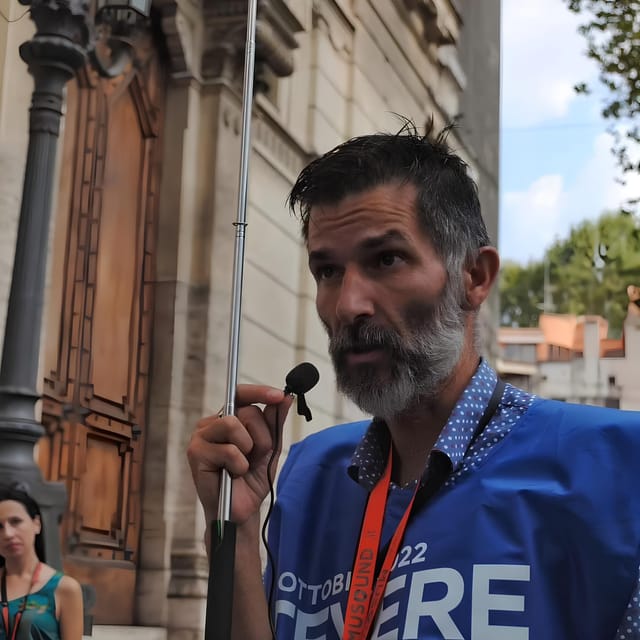
- Ancient landmarks you can still spot today, including the Theater of Marcellus and Portico d’Ottavia
- Piazza Mattei’s Turtle Fountain as a natural pause point in the route
- A gelateria break with homemade kosher gelato, plus tips on how to order for better flavor
- A real sense of place on Tiber Island, reached via Rome’s oldest functioning bridge
- Survival-focused stories, including WWII-era hospital accounts and later religious reuse of older sites
Starting the Jewish Ghetto walk from Trajan’s Column to Piazza Venezia
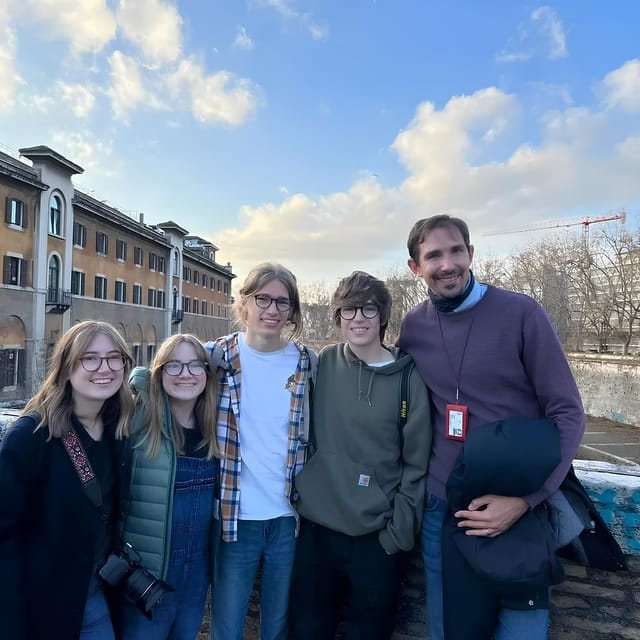
This tour’s energy is simple: you start with your guide in central Rome, then you walk through some of the city’s most historically layered blocks. The meeting details are listed as in front of a church, and the overview also points you to Trajan’s Column as the starting landmark—so double-check your exact pickup spot when you book. You’ll end at Piazza Venezia, which is a great hub if you want to keep exploring afterward.
At $46 per person for about 3 hours, the value comes from three things you can’t DIY easily: a guide who can connect the architecture to the community’s timeline, a route that’s built around key stops, and the included gelato. Entrance tickets aren’t part of the price, which also means you’re mainly relying on what you can see from the streets and squares.
Pace is walking-focused rather than museum-focused. If you want lots of time to sit and read, bring patience and a water bottle. I’d wear comfortable shoes and plan for sun if you’re there in warmer months.
You can also read our reviews of more walking tours in Rome

Theater of Marcellus: Ancient Rome as your first backdrop
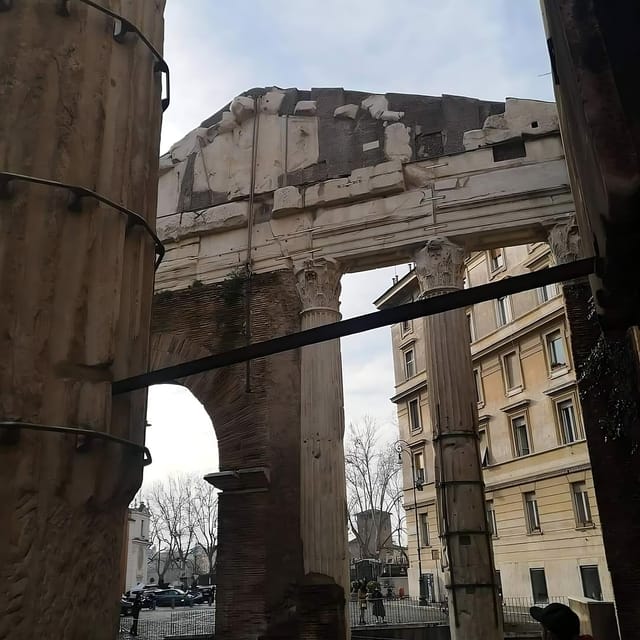
Early on, you pass the Theater of Marcellus, one of the impressive surviving reminders that Rome’s entertainment world goes way back. Even without going inside, the theater’s presence helps you frame what the neighborhood was built alongside—Rome didn’t grow in a straight line. It grew in layers, with new identities added to older stones.
Why this stop matters: it sets context fast. Before you reach the ghetto itself, you’re already seeing the Roman city that existed before later restrictions and transformations. It’s a useful mental warm-up if you usually think of Rome as only “classical ruins” with no human story attached.
The practical side is easy: you’re just walking by, listening, and moving on. That keeps the tour moving, but it also means this stop won’t feel like a deep architectural lecture unless your guide is especially talkative.
Portico d’Ottavia: When street life meets ancient structure
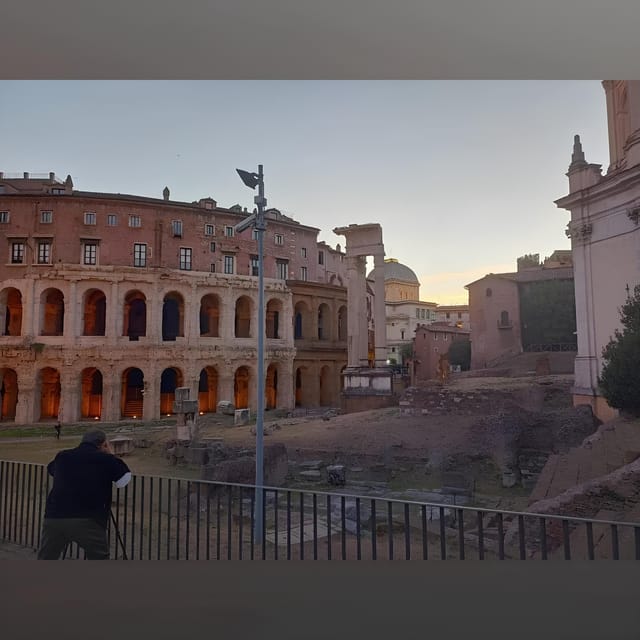
Next you’ll see the Portico d’Ottavia, a covered arcade that still gives you a strong sense of continuity. It’s the kind of place where the city feels functional, not frozen in time. That’s a big part of why this tour works: you’re not just looking at artifacts; you’re walking through spaces that can still shape how people move and gather.
From a value perspective, this kind of stop is “high impact, low cost.” You get major Rome architecture without paying separate entry fees. And because your guide connects it to the Jewish community’s changing place in the city, it becomes more than a pretty corridor.
One consideration: covered areas can still be busy, and the route can be a little stop-and-go depending on the group. If you hate crowds, aim for an off-peak start time when possible.
Gelato with a kosher focus: what to order and why it’s timed right
A highlight for most people is the gelato break at a local gelateria, where you’ll have homemade kosher gelato. This is more than dessert. It’s a palate break that fits the theme of the day, and it also gives you a few minutes to reset before the walk turns toward Tiber Island’s heavier stories.
In particular, one useful tip that a guide emphasizes is to look for the real stuff—think raw gelato for the truer flavors. It’s a small detail, but it can make a big difference when you’re comparing gelato texture and taste. If you’re a gelato person, this stop is worth paying attention to rather than rushing through.
Timing-wise, the gelato stop works because it breaks up the history. You don’t want a full three hours of nonstop context. You want a pause where you can digest what you’ve learned, and then keep going with clearer attention.
Piazza Mattei and the Turtle Fountain: a memorable visual marker
After the gelato, you’ll reach Piazza Mattei and see the Fontana delle Tartarughe, the famous Turtle Fountain. It’s a striking landmark in the route, and it gives you a “meet the eye” moment when you’ve been walking through history-heavy architecture.
Why this stop is smart: fountains in Rome are never just decoration. They anchor a square, attract people, and act like natural wayfinding points. For you, that means the tour doesn’t feel like a long string of facts. You get at least one classic photo-and-rest moment that still connects to the neighborhood’s street map.
If you’re planning your own pace later, this piazza is also a good place to reorient. Once you’ve seen it with your guide explaining what surrounds it, you’ll be better at navigating the surrounding blocks on your own.

The ghetto walls, the Great Synagogue, and resilience in the details
As you continue, your route includes the last remaining piece of the wall that helped define the Jewish community in this area for centuries. That’s one of those moments that hits differently when you’re physically near what’s left. It’s not abstract history anymore; it’s visible in fragments.
You’ll also pass the Great Synagogue, and your guide explains the tumultuous past and the community’s resilience. This part of the tour is where the storytelling matters most. You’re learning how restrictions, community life, and survival shaped the neighborhood over time.
Because you’re walking and not entering a museum, the guide’s ability to connect the “why” to the “what you see” is the key ingredient. This is the part where a good guide makes the tour feel like a living narrative, not a checklist.
A note on expectations: this is historically focused, and the tone can turn serious. If you prefer light sightseeing only, plan for that shift.
Crossing to Tiber Island: Rome’s oldest functioning bridge
One of the most practical and memorable moments is crossing to Tiber Island. You do it by crossing the oldest functioning bridge in Rome, and that small piece of infrastructure adds weight to the story. It’s a reminder that important events often happen because of geography and access—how people can cross, reach safety, or get to services.
Once you’re on the island, your guide continues with stories that add layers beyond what you’d guess from the island’s calm appearance today. You’ll hear about a hospital that saved people during WWII, which turns Tiber Island into something more than a scenic stop. It becomes a place tied to protection and survival.
Asclepius to a church: how older sites get reused
Your tour also includes the story of Asclepius, connected to a temple now used as a church. This is one of Rome’s recurring themes: older sites don’t always disappear. They often change roles, absorbed into later religious and civic life.
I like how this kind of stop helps you read the city. When you understand reuse, you stop seeing Rome as disconnected eras and start seeing continuity and adaptation. And because the guide brings it to you while you’re still in motion, the theme sticks.
The end of the tour is on the island, with the walk concluding there and then your route ending at Piazza Venezia. That ending location is convenient if you want to get back to central Rome’s main corridors.
What you really get for $46 (and what you pay extra for)
Here’s the honest pricing logic: you’re paying for a professional guide, a structured walking route, and included gelato. You’re not paying entrance fees for the stops mentioned, which keeps costs simpler.
At $46, it’s in the “worth it if you care about history” category. If you love guided context—how buildings relate to people, restrictions, survival, and daily life—you’ll get value fast. If you mainly want pretty streets and photos, you could piece together a similar route on your own, but you’d miss the connective tissue your guide provides.
Entrance fees are not included if any site along the way requires them. Based on what you’re seeing, you’re largely relying on street views and outdoor landmarks, but always check what you’ll actually enter—your guide can confirm day-of.
How long it takes and how to plan your walking day
The duration is about three hours, and the route covers several classic stops: Theater of Marcellus, Portico d’Ottavia, Turtle Fountain at Piazza Mattei, the remaining ghetto wall, the Great Synagogue area, then crossing to Tiber Island and finishing near Piazza Venezia.
That length works well if you’re already planning other Rome highlights the same day. It’s long enough to feel like a real neighborhood experience, but not so long it eats your entire day.
To make it smoother:
- Bring water and sunscreen.
- Wear comfortable shoes first, fashion second.
- If you plan to visit sacred areas, bring a head covering (or a kippah if you have one).
Also, flash photography isn’t allowed in certain places during the tour. If you use a phone camera a lot, switch off any habits that involve bursts or flash.
Who this tour fits best
This is a great fit for you if you want Rome with a human storyline. You’ll enjoy it most if you care about how communities lived, adapted, and endured, and if you like walking between architectural landmarks while someone explains what they mean.
It’s also a good choice if you’re a gelato fan who likes artisanal, not just touristy. The included homemade kosher gelato gives you a legitimate food break without turning the day into a full detour.
It may not be the right fit if:
- you struggle with long walking routes or uneven sidewalks
- you want a mostly outdoor, low-interpretation sightseeing loop
One important note: the activity information lists wheelchair accessibility, but it also says it isn’t suitable for wheelchair users and people with mobility impairments. If that’s relevant for you, contact the provider ahead of time and ask what the walking surfaces and pace look like on your specific date.
Should you book this Jewish Ghetto walking tour with gelato?
If you’re the type of traveler who likes your history grounded in real streets, this is an easy yes. The route is practical, the landmarks are strong, and the guide-led storytelling is the main reason it feels worth the money. Add the included homemade kosher gelato, and you get a satisfying break that doesn’t feel random.
I’d book it especially if you want a route that connects ancient Rome (like the Theater of Marcellus and Portico d’Ottavia) with the Jewish Ghetto’s later story, then carries you onto Tiber Island for WWII survival accounts and the Asclepius-to-church reuse narrative. That combination is hard to replicate well on your own in just three hours.
FAQ
Where does the tour start and where does it end?
You meet your guide near the Church area in central Rome, with the overview also pointing to Trajan’s Column. The tour ends at Piazza Venezia.
How long is the tour?
The tour duration is about 3 hours.
What’s included in the price?
The price includes a professional guide, a walking tour of Rome’s Jewish Ghetto, and homemade kosher gelato.
Are entrance fees included?
Entrance fees to any sites are not included.
What landmarks do you see?
You’ll see the Theater of Marcellus, Portico d’Ottavia, Fontana delle Tartarughe (Turtle Fountain), Piazza Mattei, and areas including the Great Synagogue and Tiber Island.
Is the tour in English?
Yes, the live tour guide is English.
What should I bring?
Bring comfortable shoes, water, sunscreen, and a head covering or kippah for visiting sacred places.
Is flash photography allowed?
Flash photography is not allowed.
Is it suitable for wheelchair users?
The information is mixed: it lists wheelchair accessibility, but it also says it is not suitable for wheelchair users and people with mobility impairments. If this matters for you, confirm details with the provider before booking.